
REVIEW · LUXOR
River Cruise Tour on the Nile Luxor to Aswan- Sightseeing & Guide & Meals Inc
Book on Viator →Operated by Look at Egypt Tours · Bookable on Viator
Ancient Egypt, delivered door to door. This Luxor to Aswan cruise takes you between the big sites on the Nile without working out transport, tickets, or timing—and you’ll travel with a qualified Egyptologist guide aboard a luxury 5-star ship. It’s the kind of trip where you can focus on the story in front of you, not the logistics behind you.
I like two things most: first, the pacing feels designed for reality. You’ll hit Karnak and Luxor Temple on Day 1, then the West Bank highlights the next day without wasting half your vacation in transit. Second, I love that meals and entry fees are included, so your budget stays calmer once you arrive.
One drawback to plan for: the cruise schedule can be adjusted based on Nile water levels, so the exact flow of sailing and sightseeing may shift a bit.
In This Review
- Key Things I’d Watch For
- A Luxor-to-Aswan Nile cruise that removes the planning pain
- Price and what $1,015 covers (and why it may feel fair)
- Day 1 in Luxor: Karnak and Luxor Temple without rushing
- Day 2 on the West Bank: Valley of the Kings, Hatshepsut, and Colossi of Memnon
- Day 3: Kom Ombo’s double temple and the Temple of Horus
- Day 4 in Aswan: Philae temples and the UNESCO move to Agilika
- Your 5-star ship days: comfort between major sights
- Transfers, tickets, and how to avoid day-one stress
- Who this Nile cruise is best for
- Should you book this Luxor to Aswan cruise?
- FAQ
- How long is the Luxor to Aswan cruise?
- What stops are included on this itinerary?
- Are meals included?
- Is an Egyptologist guide included?
- Are entry fees included?
- What time does the tour start?
- Does the cruise include transfers?
- Is this a private tour?
- Will the cruise schedule ever change?
- What is the cancellation policy?
- What is included in the price and what isn’t?
Key Things I’d Watch For
- A real Egyptologist guide: look for names like Ahmed El Sayed or Ahmad Gad if your operator assigns a guide from that pool of staff.
- Meals built into the cruise days: breakfast plus lunches and dinners are covered for the sailing portion.
- West Bank access, with ticket rules: the Valley of the Kings ticket covers visits to 3 tombs, with specific exclusions.
- Philae’s UNESCO rescue story: you’ll see temples moved from Philae Island to Agilika as part of the preservation effort.
- Nile water levels can change details: your day-to-day routing may be tweaked.
- Private for your group: it’s not a public bus tour where you’re stuck with strangers all day.
A Luxor-to-Aswan Nile cruise that removes the planning pain
A Nile cruise like this is a smart way to see Upper Egypt when you only have a few days. Instead of chasing buses or ticket counters, you roll from sight to sight with a private vehicle pickup/transfer and an onboard guide who explains what you’re seeing in plain language.
What makes this style of trip feel different is the combination of guidance and convenience. Karnak isn’t just “big ruins”—a guide can point out how Amun’s cult shaped the complex, and what details to notice while the setting is still quiet enough to take it in. Same for the Valley of the Kings, where the tombs are close enough to feel real, but the history needs decoding.
If you care about doing things efficiently and respectfully, this format helps. You get the key stops—no scavenger hunt. Just keep an open mind: you’re moving through multiple heavy sites, and the day starts early enough that you’ll want a good night’s sleep before arrival.
You can also read our reviews of more boat tours in Luxor


Price and what $1,015 covers (and why it may feel fair)
At $1,015 per person for about five days, the headline cost is only useful if you understand what’s bundled. Here, your money is paying for a luxury 5-star cruise, a qualified Egyptologist guide, entry tickets, and the meals across the cruise portion (breakfast, lunch, dinner).
You’re also getting transport by private vehicle plus transfers to and from the airport, station, or hotel. That matters because in Egypt, time and friction add up fast when you’re coordinating everything yourself. A guide plus included admissions can shrink your “planning tax” dramatically.
What’s not included is also clear: drinks and alcoholic drinks are extra, even though meals are covered. If you tend to spend heavily on bottled water, soda, or cocktails, estimate that cost before you book. Otherwise, this package can feel like good value for the amount of ground you cover.
Day 1 in Luxor: Karnak and Luxor Temple without rushing
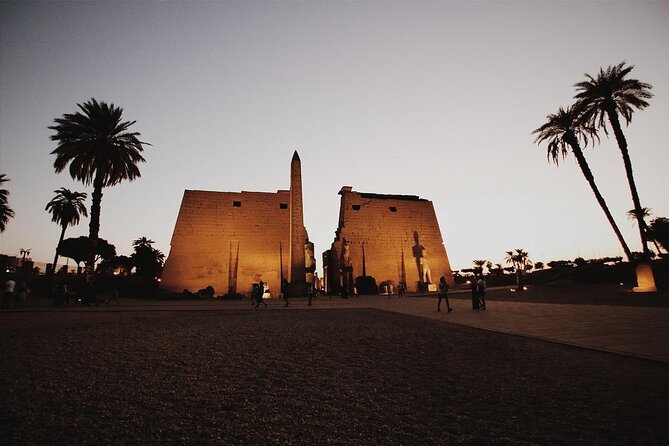
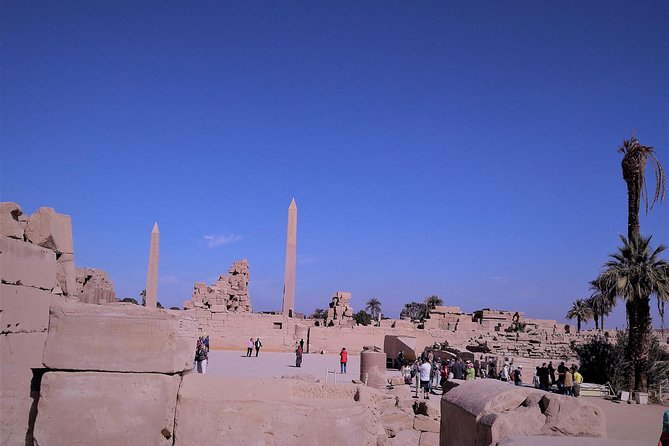
Your first day is classic Luxor: Karnak Temple followed by Luxor Temple. Karnak is the kind of place where “vast” isn’t a marketing word—it’s an actual experience. You’re walking through a monumental complex dedicated primarily to Amun, stretching back to very early eras. With a guide, you’ll catch the logic behind the layout and understand why this site became a power magnet over centuries.
Then you shift to Luxor Temple, which feels more human in scale and more readable as a sacred structure. It was built around 1400 BCE and linked to the idea of a “southern sanctuary,” tied closely to how worship worked on the east bank.
This day is also a great introduction because it trains your eye. Once you’ve seen Karnak’s scale, you’ll notice different architectural choices at Luxor Temple—and you’ll be less likely to treat each stop like a random photo backdrop.
Practical note: wear comfortable shoes. Even a “short” walk through carved stone sites adds up.
Day 2 on the West Bank: Valley of the Kings, Hatshepsut, and Colossi of Memnon
Day 2 is where Luxor shows its darker, older side. You start at the Valley of the Kings, the burial ground for many New Kingdom pharaohs. The ticket included here lets you visit 3 tombs out of the many at the site, and it specifically notes that Tutankhamen’s tomb isn’t included on this option.
That tomb access detail matters. Three tombs can still feel like a lot, especially if you move slower and stop to read. I’d treat these as “quality stops,” not checklist stops. Pick your pace, and let the guide explain symbols and scenes rather than trying to memorize everything on the walls.
You’ll also want to follow conservation rules. Tomb interiors can be sensitive, and the information provided notes damage risk from things like humidity, friction from foot traffic, and flash photography. So keep to allowed photography, avoid flash if it’s restricted, and don’t rush your time inside.
After the tombs, you head to the Temple of Hatshepsut. Visiting Hatshepsut’s temple is like meeting a political mystery in stone. She ruled for about 16 years, and the temple was connected to her funerary role. A good guide helps you understand the tension behind her story—how gender and power were negotiated in ancient Egypt.
Finally, you finish with the Colossi of Memnon, two huge stone statues of Amenhotep III. It’s a short stop, but it’s a powerful one. You’ll see how the Theban Necropolis shaped the west-bank skyline long before modern Luxor grew around it.
Day 3: Kom Ombo’s double temple and the Temple of Horus
Day 3 focuses on the temples of the Nile’s middle stretch. You begin with Kom Ombo, known for its unusual double-temple layout. One side connects to Sobek, the crocodile god tied to fertility and creation, while the temple’s other half is dedicated to another major divine tradition linked with Hathor and Khonsu.
Double temples can feel confusing at first glance. With an Egyptologist, you’ll get the explanation quickly—what’s paired, what’s separate, and why the design reflects a deeper religious structure rather than random construction choices.
Then you go to the Temple of Horus, described as one of the best-preserved ancient monuments in Egypt. It’s also tied to the way desert conditions helped preservation, and it’s said to have its roof intact, which can make the interior feel more atmospheric than you’d expect from an outdoor ruin.
A practical thing I appreciate about temple-heavy days is that they repeat certain patterns. After Karnak and Luxor, you start recognizing motifs and shifts in artistic style. By Kom Ombo and Horus, you’re not only seeing temples—you’re starting to compare them.
You can also read our reviews of more guided tours in Luxor


Day 4 in Aswan: Philae temples and the UNESCO move to Agilika
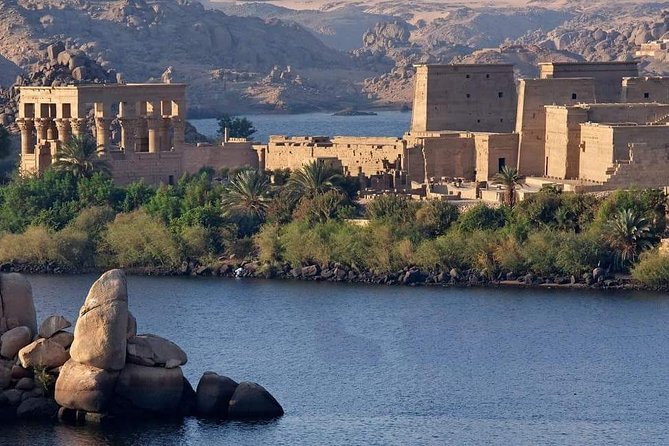
Day 4 is Aswan’s star power: Philae Temple. This is where the Nile’s drama shows up as real history. The temples were a major pilgrimage center for the cult of Isis, and worship continued across different eras—pharaonic, Greek, Roman, and Byzantine—each adding their own marks.
The key story here is preservation. The temples were saved from a watery grave through a UNESCO rescue project, which moved the monuments block by block from Philae Island to Agilika Island. You’re not just looking at stone—you’re standing in front of a survival plan, one that still shapes how you experience the site today.
On a “temple day,” I like to slow down. Let your eyes adjust to how carvings sit in the light, and use your guide to connect religious symbolism to what you see on the walls. Philae’s mix of sacred purpose and rescue history makes it more than a pretty stop.
Time-wise, expect to spend a few hours here. It’s worth it, because the site feels like it has layers—literal layers from different rulers, and emotional layers from its rescue.
Your 5-star ship days: comfort between major sights
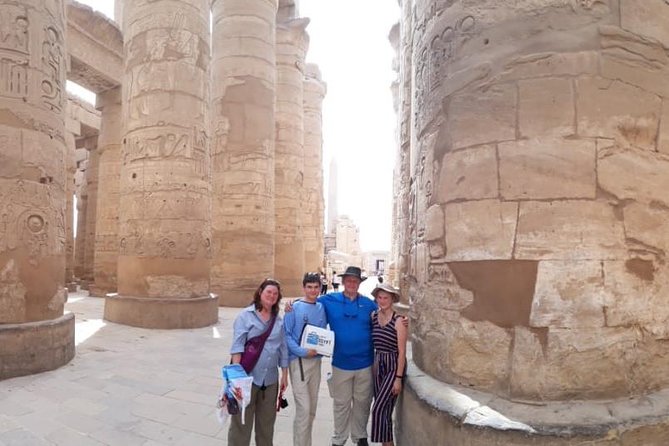
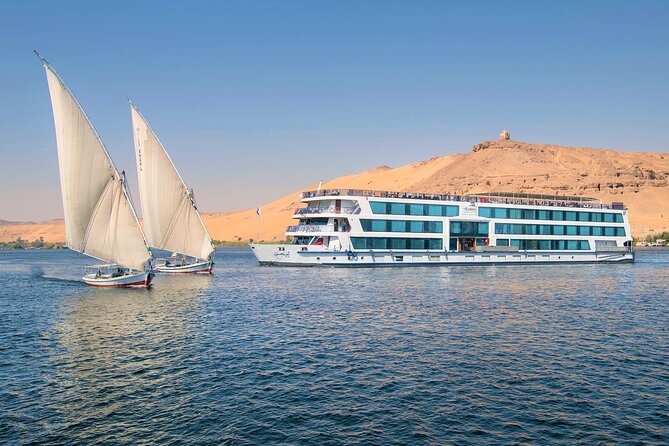
Between the temples and tombs, the cruise ship is more than a place to sleep. It’s your buffer against Egypt’s pace. You travel by water between stops, which means you’re not constantly switching modes: no constant taxis, no endless border-like checks, and no stressful “what time is the next ride?” feeling.
The operator describes this as a luxury 5-star cruise, with the sightseeing supported by the ship experience. Meals are also handled as part of the program: breakfast plus lunch and dinner are included for the cruise days, which helps keep your energy up for long walks and a lot of standing.
One reality check: the itinerary notes that the cruise can be subject to change based on Nile water levels. That can affect what you do each day, or the order of events. The good part is that the operator says the sightseeing is customized according to travel dates, so you shouldn’t feel like you’re stuck with an inflexible plan.
If you dislike uncertainty, you’ll want to pack patience. If you enjoy adapting, you’ll likely find the cruise flow still feels cohesive.
Transfers, tickets, and how to avoid day-one stress
The trip starts at 8:00 am. That’s early enough to catch the best light and to keep your days from turning into travel marathons. Pickup is offered, and transfers are included, so you’re not expected to solve transportation on your own.
You’ll also have a mobile ticket, which is helpful if you don’t want to carry paper everywhere. Confirmation is received at booking time, and the exact cruise name is shared after confirmation. That means you may not know every ship detail upfront, but you should know what you’re buying: a luxury 5-star cruise with guide and included admissions.
Day 5 ends with a transfer to the airport or station. This matters because it reduces that last-day scramble. You can plan your flight timing more calmly if you understand the transfer is part of the package.
My practical advice: before you go, make sure you can handle early starts, since the schedule is built around efficient sightseeing windows.
Who this Nile cruise is best for
This tour-style cruise is built for travelers who want major monuments with an expert translator and minimal logistics headaches. If you’re short on time and you want Luxor and Aswan in one go, the itinerary makes sense.
It’s also a strong fit if you prefer structure. You’re not choosing tomb tickets yourself or figuring out which sites are worth your limited hours. A guide helps you prioritize and gives you the context that makes each stop feel connected.
If you’re traveling as a couple or a small group, the private setup can feel especially good. The tour is described as private for your group, so you’re not swallowed by a huge bus crowd.
If you’re the type who loves total DIY freedom—booking every ticket, hiring guides on the fly, and staying flexible on daily routes—then a package like this may feel a bit “planned.” But if you’d rather get the Egypt experience without paperwork, this is a comfortable middle ground.
Should you book this Luxor to Aswan cruise?
If your top priority is seeing the Nile’s headline sites with a guide and getting meals and entry fees handled, I think this is a solid choice. Karnak, Luxor Temple, the West Bank highlights, Kom Ombo, Horus, and Philae are all the kind of places where context changes everything—and having an Egyptologist can turn photos into understanding.
I’d book it if you want a smooth flow: private transfers, included admissions, and time saved. I’d also book it if you like the idea of resting on a luxury ship between heavy sightseeing days.
I’d think twice if you’re extremely sensitive to schedule changes, because Nile water levels can shift details. And if you know you’ll spend a lot on drinks, factor that into your budget since drinks aren’t included.
Overall: this is a “do it right, without the hassle” Nile cruise plan. For many people, that’s the whole point.
FAQ
How long is the Luxor to Aswan cruise?
The tour duration is listed as 5 days (approx.), including sightseeing and transfers.
What stops are included on this itinerary?
The included sights are Karnak Temple and Luxor Temple (Day 1), Valley of the Kings, Temple of Hatshepsut, and Colossi of Memnon (Day 2), Temple of Kom Ombo and Temple of Horus (Day 3), and Temple of Philae (Day 4), with an airport/station transfer on Day 5.
Are meals included?
Yes. Lunch (4), dinner (4), and breakfast (4) are included. Drinks are not included.
Is an Egyptologist guide included?
Yes. The tour includes a qualified Egyptologist guide.
Are entry fees included?
Yes. Admission tickets are included for the listed sightseeing stops.
What time does the tour start?
The listed start time is 8:00 am.
Does the cruise include transfers?
Yes. Transfers are included by private vehicle, including round-trip airport, station, or hotel transfers.
Is this a private tour?
Yes. It’s described as private for your group only.
Will the cruise schedule ever change?
It can. The cruise is subject to change depending on Nile water levels, and the operator customizes sightseeing and check-in according to your travel date.
What is the cancellation policy?
You can cancel up to 6 days in advance of the experience for a full refund. If you cancel 2–6 full days before, you receive a 50% refund; within 2 days there is no refund.
What is included in the price and what isn’t?
Included: private transport, qualified Egyptologist guide, meals, and entry tickets (plus transfers). Not included: drinks, including alcoholic drinks (available to purchase).