REVIEW · PARIS
Paris: Montmartre Private Guided Tour & River Cruise Option
Book on GetYourGuide →Operated by Exploring Tours and Services · Bookable on GetYourGuide
Montmartre hits hard when it is your guide. This private tour trades crowded group chaos for a tailored walk with an expert who explains how Montmartre became Paris’ art nerve center. I also love that you get big, breathtaking views both from Sacré-Cœur’s hill and from an optional Seine cruise. One thing to weigh: this is a real uphill neighborhood walk, and it is not for wheelchair users or people with mobility issues.
You’ll start at Anvers metro (line 2), then work your way through Sacred Heart Basilica, Place du Tertre (where artists paint and sell), Monmartre vineyards, Picasso/Cubism landmarks, and the Wall of Love. The day ends near Moulin Rouge—plus you can add that Seine cruise ticket if you choose the option.
In This Review
- Key reasons this Montmartre tour works
- Meeting at Anvers: Where your Montmartre day starts
- Sacré-Cœur and the hill views that make Montmartre famous
- Place du Tertre: Artists at work, and a real place to pause
- Clos Montmartre vineyards: a quieter side of the same hill
- Moulin de la Galette: wind-up points for art on the slope
- Le Bateau-Lavoir: the studio vibe you can almost feel
- The Wall of Love: a pause that turns corny into cool
- Moulin Rouge at the foot of the hill: the big finale
- Optional Seine cruise: how the open ticket fits into your schedule
- What makes the price of $85 feel fair
- Guides matter: what to expect from the narration
- Who this tour is best for (and who should skip it)
- Should you book this Montmartre private tour?
- FAQ
- Where is the meeting point?
- How long is the tour?
- What’s included in the private tour?
- What does the Sacred Heart Basilica visit include?
- If I choose the Seine cruise option, can I use the ticket on a different day?
- Where do the Seine cruises depart?
- Do I need to bring anything or pay for funicular tickets?
Key reasons this Montmartre tour works
- Private group time so you can ask questions and keep your pace
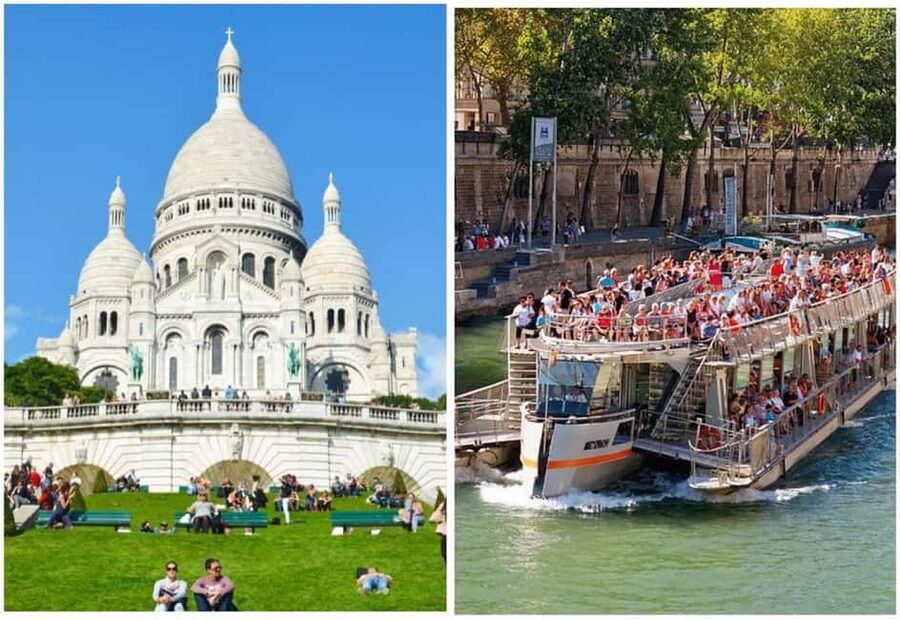
- Sacré-Cœur guided visit with standout views over Paris
- Place du Tertre stop to see artists at work and grab a proper break
- Art-history walking trail through vineyards, studios, and Cubism-related spots
- Optional open Seine cruise ticket (you can use it any day and time)
Meeting at Anvers: Where your Montmartre day starts
Your tour meets at the exit of Anvers metro station, line 2, and your guide will be holding a Get Your Guide sign. Show up about 10 minutes early. It matters because late arrivals are not guaranteed to join once the walking plan is underway.
From that first step, you’re set up for an easy start: no hunting for your guide in a maze, and no waiting around for a busload of strangers. It’s one of those small logistics wins that makes the whole neighborhood feel less stressful.
Also note the practical stuff: comfortable shoes are a must. This is a hilly area, and even if you don’t go into every side street, you’ll still be moving.
You can also read our reviews of more boat tours in Paris


Sacré-Cœur and the hill views that make Montmartre famous
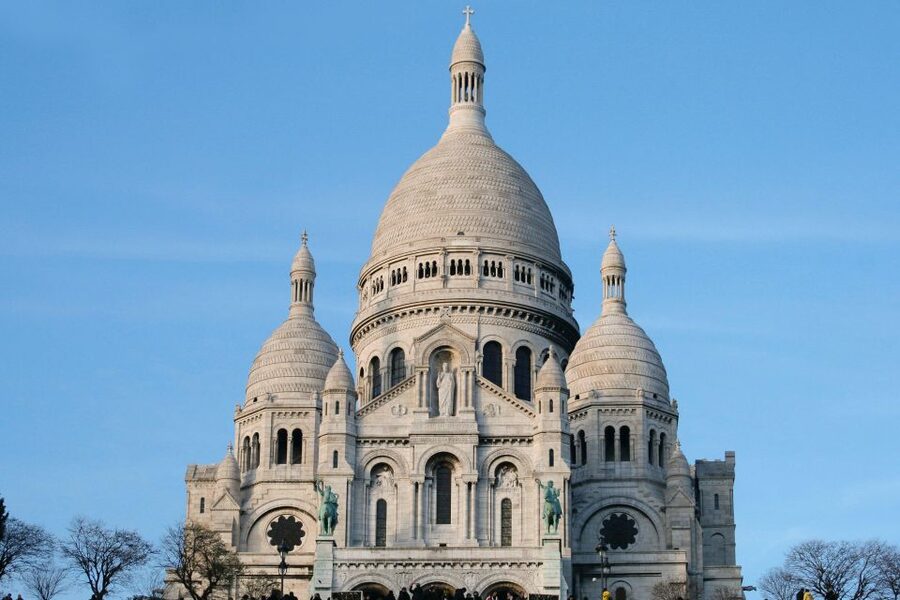
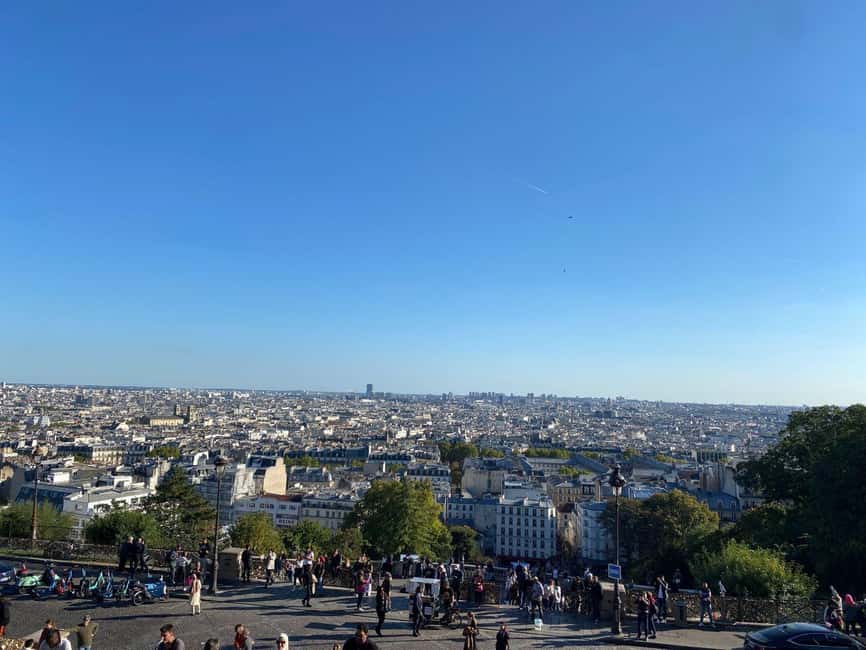
The tour heads from Anvers toward Sacré-Cœur Basilica. Along the way you get the first big “wow” moment: Paris spreads out below you as the hill does its job. If you can’t handle the climb, you can take the funicular together with your guide—but you’ll need to arrange for the funicular ticket yourself (it is not included).
A guided Basilica visit is the key difference between seeing Sacré-Cœur as a postcard and understanding it as part of the neighborhood’s story. You’re not just passing by a famous building; you’re getting context on why this place matters and how it fits into Montmartre’s identity.
And yes, there is a skip-the-ticket-line benefit for the Basilica visit, which helps you avoid that annoying slowdown while other groups bunch up outside.
Place du Tertre: Artists at work, and a real place to pause
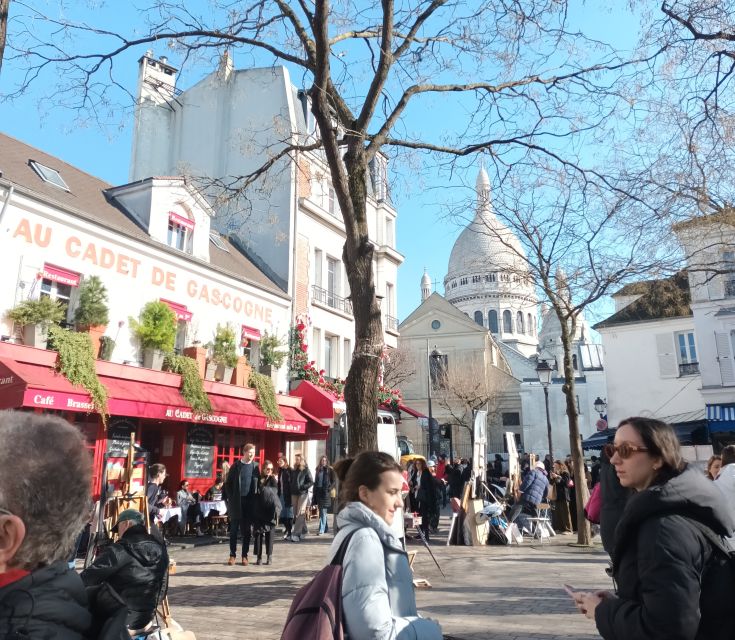
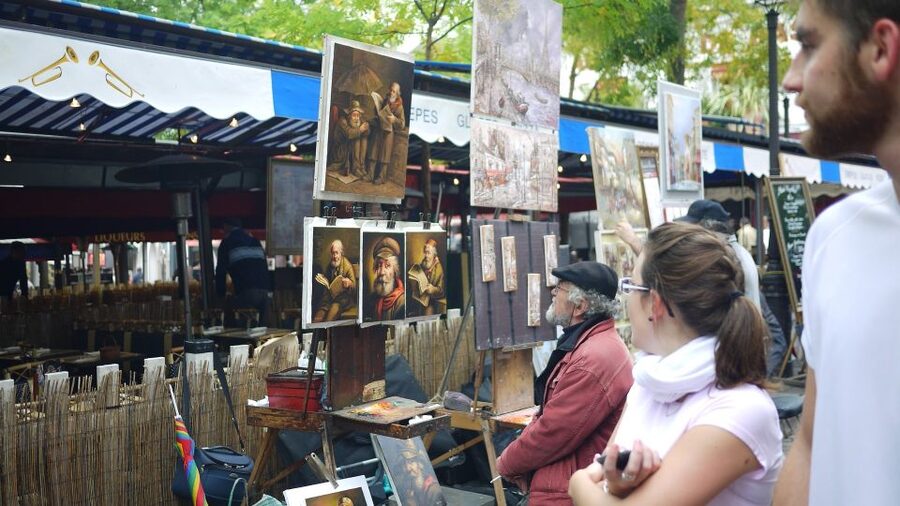
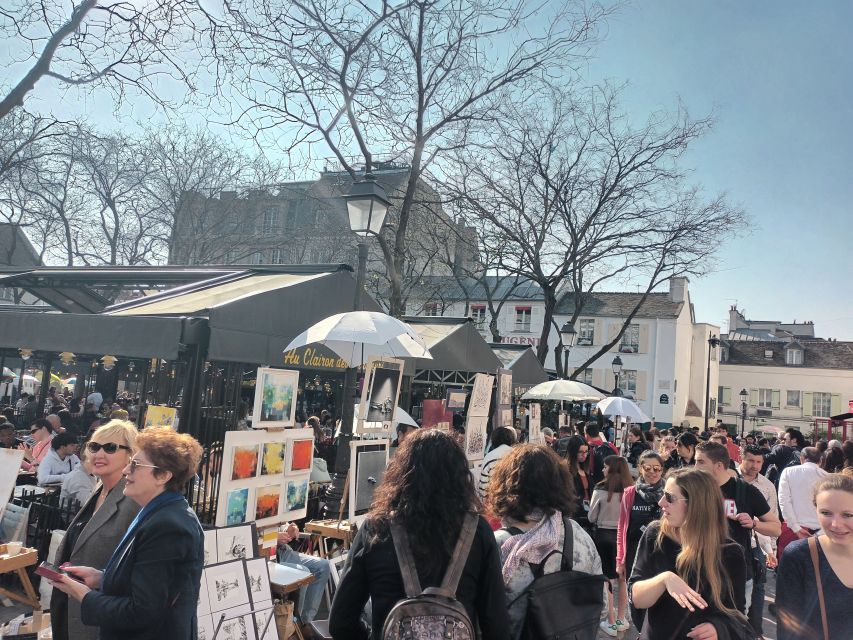
Next is Place du Tertre, Montmartre’s classic square. You get time to look around, take photos, and actually watch the art scene in motion. This is where you’ll see artists working—painting and selling their paintings—so you’re not just hearing about creativity. You’re watching it happen in real time.
The tour also builds in a break. You can sit down in one of the bars around the square for a drink and a snack, the way locals do on off moments. This stop is where the tour turns from sightseeing into atmosphere.
Is it perfect for everyone? If you hate crowds at all costs, this square can feel busy. The private format helps, because your guide can steer you toward better angles and help you keep your focus. But you should still expect it to be an active, tourist-visible plaza.
Clos Montmartre vineyards: a quieter side of the same hill
After the square energy, you shift into a more unexpected corner of the neighborhood: the Vignes du Clos Montmartre. This is a great palate cleanser. One minute you’re in a busy artist hub, and the next you’re looking at vines on the slope—an odd, charming contrast that makes Montmartre feel layered.
You get a photo stop here, plus guided sightseeing. Even if you already know Paris has food and wine history, it’s still a surprise to see vineyard terrain right inside the city grid.
It is also a good moment for pacing. The tour doesn’t rush you through everything, and the vineyard pause gives your legs a chance to catch up.
Moulin de la Galette: wind-up points for art on the slope
From there you head toward Moulin de la Galette for another photo stop and guided context. This is one of those places where the name rings a bell because Montmartre’s art identity has been told in cafés, paintings, and stories for generations.
The practical benefit of having a guide here is direction. Without someone narrating the connections, it’s easy to see a building and move on. With guidance, you connect it to why artists were drawn to this area and how daily life turned into art material.
This is also a good section for your camera. The hilllines and stair angles give you lots of visual variety, and you’ll likely get a few frames you’ll actually want to keep.
You can also read our reviews of more guided tours in Paris





Le Bateau-Lavoir: the studio vibe you can almost feel
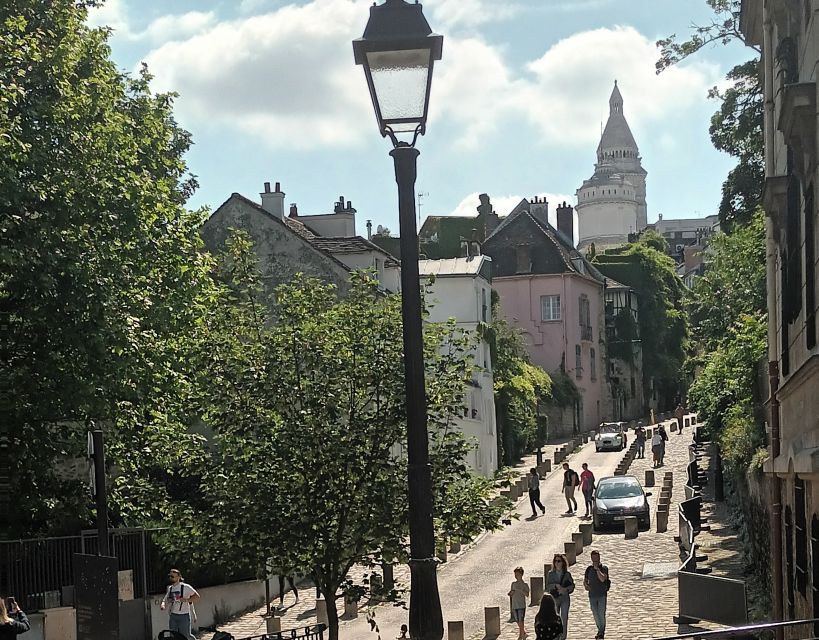
Next up is Le Bateau-Lavoir, another stop designed for sight and story. It’s listed as a photo stop plus guided sightseeing and a short walk.
This part matters because Montmartre wasn’t only about views. It was about creative work. Even if you only spend a few minutes here, you start to understand how spaces and light and street life can influence art styles and movements.
This is also where the tour leans into real art history: you’ll learn about the neighborhood where artists like Picasso and Van Gogh lived and worked. And later you’ll connect that to Cubism and key Picasso-related locations in the area.
The Wall of Love: a pause that turns corny into cool
Now for the stop that people either love or roll their eyes at: the Wall of Love. The tour gives you time to break, take photos, and absorb the idea behind it.
You’ll see the artwork where the words I love you appear in many languages. That sounds simple, but it works because it’s playful in a neighborhood that can feel heavy with history. It’s a quick reset before you head back toward the big cabaret finish.
If you want to do something useful here, do it slowly. Step back, frame the wall, then let your guide’s explanation put it into Montmartre’s broader creative story. That way it stops feeling like a photo stop and starts feeling like a small cultural moment.
Moulin Rouge at the foot of the hill: the big finale
The final walk brings you to Moulin Rouge, the neighborhood’s famous cabaret. It’s described as the largest and most important one, and it sits right where you’ll feel the hill’s slope under your shoes.
You’ll get time for photos and a guided look, plus a bit of free time. This stop is great for two reasons: it’s recognizable enough that you’ll feel satisfaction, and it’s close enough to the earlier art-heavy stops that it doesn’t feel random.
If you’re into theater, you can take a moment and notice how Montmartre’s art scene doesn’t stop at painting. It spills into performance, nightlife, and the whole show-world vibe.
And if you’re tired, this is the last major button before your day opens up.
Optional Seine cruise: how the open ticket fits into your schedule
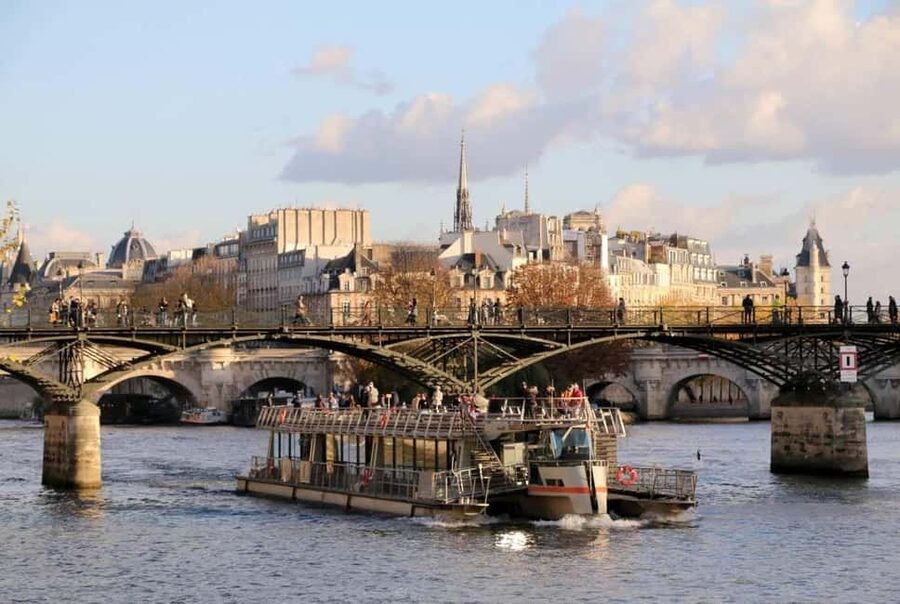
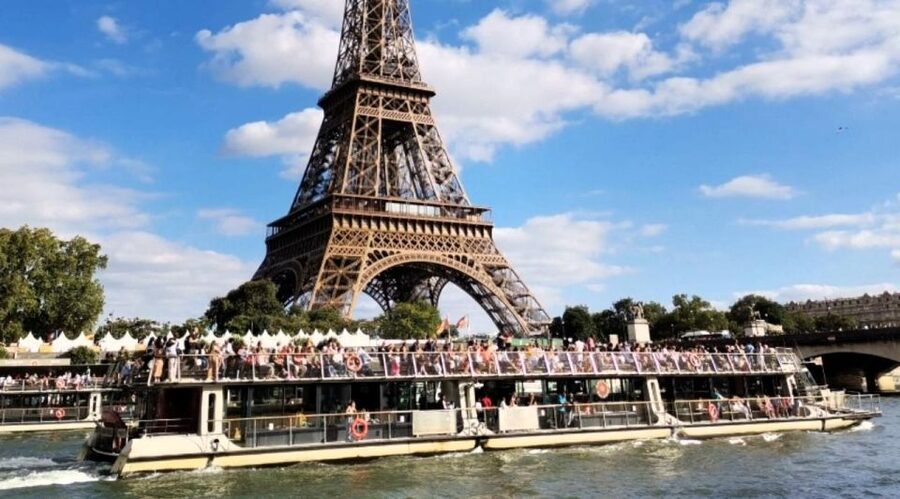
If you choose the Seine river cruise option, your guide will hand you tickets for a Bateaux Parisien one-hour cruise. The starting point is at the base of the Eiffel Tower, and you get an open ticket you can use any day and any time within the stated daily window.
Key details that make this option valuable:
- It is an open ticket, not tied to the day you take the tour
- You don’t need reservations; you just show up at the starting point
- Boats depart about every 30 minutes
- The cruise is designed to work in different weather: boats are heated in winter, air-conditioned in summer, and covered in rain
Time windows change by season:
- Between 10:00 AM and 10:00 PM during spring, summer, and French school holidays (zone C)
- Between 10:30 AM and 9:00 PM during autumn and winter
That flexibility is the big win. Paris days can swing wildly—weather, lines, museum time. This cruise ticket acts like a safety net. If Montmartre runs long, you can still take your cruise later without losing the plan.
And from the viewpoint side: Montmartre gives you the city from up top; the Seine gives you the city laid out along the water. Together, they complete the geometry of Paris.
What makes the price of $85 feel fair
At $85 per person for a private 2.5-hour guided Montmartre experience, the value comes from three places, not just the name-brand stops.
First, you’re paying for a true private guide—not a voice lost in a crowd. That matters on Montmartre because the streets, angles, and art landmarks connect in a way that’s hard to spot on your own.
Second, you’re getting a guided flow that strings together different Montmartre identities: the Basilica viewpoint, Place du Tertre’s live art scene, vineyard terrain, and the cabaret finish. That sequencing saves you time and helps you understand what you’re looking at.
Third, if you add the Seine option, the one-hour cruise ticket is a real add-on value because it is open and flexible. You’re not buying a single rigid slot; you’re buying a reusable plan for later in the week.
Of course, you should also factor what is not included: food and drinks, and the funicular ticket if you need it. If you plan a sit-down break at Place du Tertre, budget for it like you would for any café stop.
Guides matter: what to expect from the narration
The written feedback highlights that guides can be very prepared and good at making history fun—not dry, not robotic. Names like Jasmine, Joaquín, and Rebecca have been mentioned in connection with being patient, detailed, and engaging.
You’ll want that kind of guide here. Montmartre art history is easy to turn into trivia. With a strong narrator, it becomes a walk you can follow—where you understand why Picasso, Van Gogh, and Cubism link to the streets you’re actually standing on.
Language is another plus. The tour runs in English, Spanish, Italian, and French, so you can choose the guide language that feels easiest for listening.
Who this tour is best for (and who should skip it)
This experience is a good fit if you want:
- A private style of Montmartre sightseeing
- Expert storytelling while you walk
- Flexible add-on time with the optional Seine cruise
It’s less suitable if you:
- Have mobility issues or use a wheelchair (the walking up the hill is part of the plan)
- Need lots of storage for big bags (oversize luggage and large bags are not allowed)
If your legs are fine but you still fear the hill, the funicular option can help you pace the day—just remember those tickets are not included.
Should you book this Montmartre private tour?
Book it if you want Montmartre with less friction and more meaning. The private format keeps you from getting swallowed by crowds, and the combination of Sacré-Cœur, Place du Tertre, and the art-history walking stops gives you a fuller picture than a quick hop-on tour.
Choose the Seine cruise option if you like the idea of matching a hill-view day with a water-view finale—and if you want flexibility to take it any day and any time within the daily windows.
Skip it if you know you can’t handle uphill walking or if you prefer to build your day entirely on your own with no guided structure at all.
If you’re the type of traveler who likes your photos to come with context, and your itinerary to feel thoughtfully timed, this is a strong Montmartre pick.
FAQ
Where is the meeting point?
The guide waits at the exit of Anvers metro station, line 2, holding a Get Your Guide sign. Arrive about 10 minutes early.
How long is the tour?
The tour duration is 2.5 hours.
What’s included in the private tour?
You get a private guided tour, a guided visit to the Sacred Heart Basilica, and (if you choose the option) tickets for a one-hour Seine cruise.
What does the Sacred Heart Basilica visit include?
The tour includes a guided visit to the Basilica of the Sacred Heart, and it includes a skip-the-ticket-line benefit.
If I choose the Seine cruise option, can I use the ticket on a different day?
Yes. The cruise ticket is open and can be used any day and any time within the stated daily departure window. On the tour day, the guide gives you the ticket and points you to where the boats depart.
Where do the Seine cruises depart?
The tickets are for a Bateaux Parisien cruise that departs from the base of the Eiffel Tower.
Do I need to bring anything or pay for funicular tickets?
Bring comfortable shoes (you’ll be walking on a hill) and a charged smartphone. Funicular tickets are not included, though you can take the funicular together with your guide if you can’t walk up.