REVIEW · PARIS
Paris Big Bus Hop-On Hop-Off Tour with Optional River Cruise
Book on Viator →Operated by Big Bus - France · Bookable on Viator
Paris can feel like a lot. This bus route turns it into a plan. The Big Bus hop-on hop-off tour is built for fast orientation, with an open-top double-decker ride plus audio commentary in nine languages so you’re not just staring at buildings. You get a simple circuit of major landmarks, then you hop off to explore your favorites and hop back on when you’re done.
What I like most is the flexibility of a 24- or 48-hour ticket that starts when you first use it, not when you arrive. I also like that you’re not stuck guessing—free headphones, on-board WiFi, and a Big Bus app with route info and real-time bus tracking do the heavy lifting. That said, it’s not a magic wand: you’ll still walk between sights and the optional river cruise can mean long waits at the dock.
In This Review
- Key points before you ride
- Big Bus Red Route: the 24- vs 48-hour ticket rhythm
- Louvre Museum and Pont des Arts: start where the city’s story begins
- Notre Dame stop to Musée d’Orsay: the Seine crossing that shapes your route
- Champs-Élysées and Grand Palais: the mile where you’ll want a break
- Place d’Iéna to the Eiffel Tower: how to get your best views without sprinting
- Palais Garnier: a graceful finisher to your sightseeing loop
- Optional Seine River Cruise: a great add-on with one big catch
- Optional Arc de Triomphe tickets: when it fits best
- Price and value: is $46.85 worth it?
- Tips to avoid common problems (and keep the day smooth)
- Should you book the Big Bus hop-on hop-off tour with the optional cruise?
- FAQ
- FAQ
- How long is the Paris Big Bus Hop-On Hop-Off tour?
- Is there a 24-hour or 48-hour ticket?
- What does the ticket include for the bus ride?
- Which sights are on the Red Route?
- Does the tour include entrance tickets to monuments?
- What optional upgrades are available?
- How do I find and board the buses?
- Are mobile tickets accepted?
- Is the tour offered in English?
Key points before you ride
- Red Route coverage: Louvre, Eiffel Tower, Champs-Élysées, Palais Garnier, and Musée d’Orsay in one loop
- Audio with headphones: commentary in 9 languages plus on-board WiFi
- Open-top views: great for photos and learning the city’s layout from above
- Hop-on, hop-off pacing: stay on for overviews, then jump off for closer time
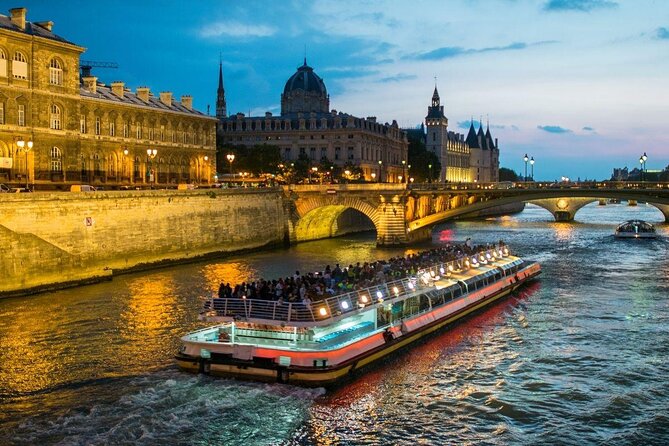
- Optional add-ons: a 1-hour Seine cruise and Arc de Triomphe entrance ticket (if selected)
Big Bus Red Route: the 24- vs 48-hour ticket rhythm
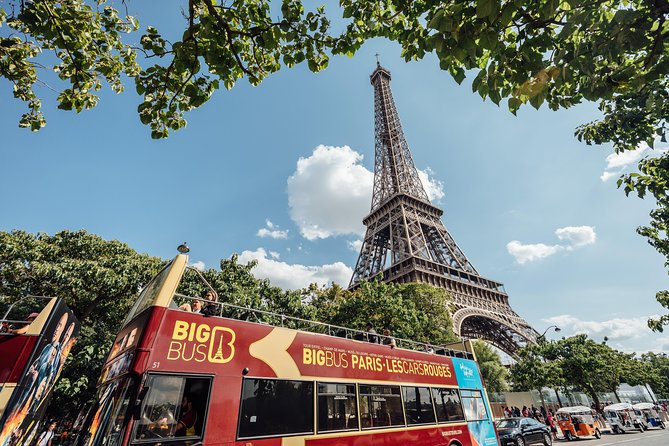
This is a classic hop-on hop-off setup. You board an open-top, double-decker bus, ride the loop, and disembark at any stop you want. When you’re ready to move again, you climb aboard the next bus and continue.
You choose a 24- or 48-hour ticket, and it’s valid starting the first time you use it. Practically, that means you should start your ticket when you’re ready to see sights, not the day you just want to “swing by.” The tour’s planned ride time is about 2 hours 15 minutes for the full loop, but your real time will expand once you start hopping off.
One more thing that makes a big difference: the audio commentary. You get free headphones and commentary in nine languages, so you can understand what you’re seeing instead of relying on guesswork and silhouettes. Add the Big Bus app for real-time bus tracking and route info, and you can time your walks with less stress.
You can also read our reviews of more boat tours in Paris


Louvre Museum and Pont des Arts: start where the city’s story begins
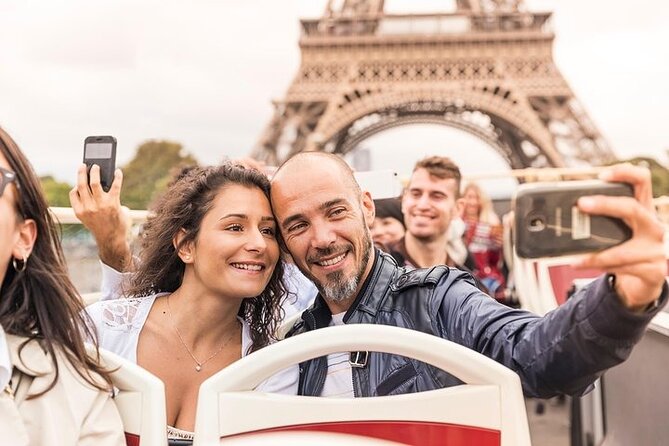
The tour begins at the Louvre Museum area with a stop at Louvre/Big Bus Information Centre, 11 avenue de l’Opéra. This is a smart launch point because you can orient yourself around the big sights without committing to a museum ticket right away. If you only have a morning, you can also use this stop to decide what deserves your limited energy.
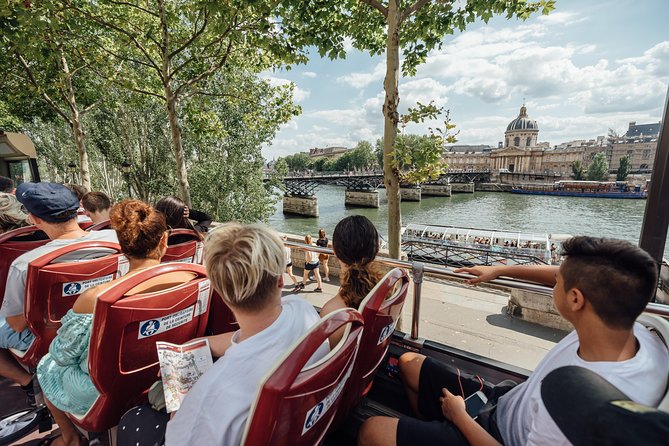
Next comes Pont des Arts at Louvre – Ponts des Arts, 56 Quai François Mitterand. Even if you don’t go inside anything, the bridge area is useful because it gives you a quick sense of how the Seine slices through the city. It’s also a good photo pause if the weather’s behaving.
One drawback to keep in mind: the tour does not include monument entrances. So your hop-off time at Louvre can be “watch from nearby” unless you purchase admission separately. For many people, that’s still a win—Louvre’s setting alone is a feast—but budget your time if you want more than views.
Notre Dame stop to Musée d’Orsay: the Seine crossing that shapes your route
From Pont des Arts, the loop heads to Notre Dame at 3 Rue Lagrange. This is a prime example of why hop-on hop-off works: you can jump off for a focused look at the area, then get back on without trying to connect everything by memory. Since this stop is tied to a landmark zone, it’s especially helpful if you’re arriving with jet lag and a brain full of travel math.
The next big contrast is Musée d’Orsay at 58 Place Henry de Montherlant. The museum area is one of those places where you can easily spend more time than you planned—just by walking, looking, and drifting. The advantage of the bus stop is that you don’t have to rush. You can take a slow lap, then ride onward to the next neighborhood.
The main consideration here is pacing. If you’re the type who tries to “fit in” every museum, you may burn your whole ticket day fast. Use the bus as your backbone, then pick one museum (or none) and spend the rest of your time outside.
Champs-Élysées and Grand Palais: the mile where you’ll want a break
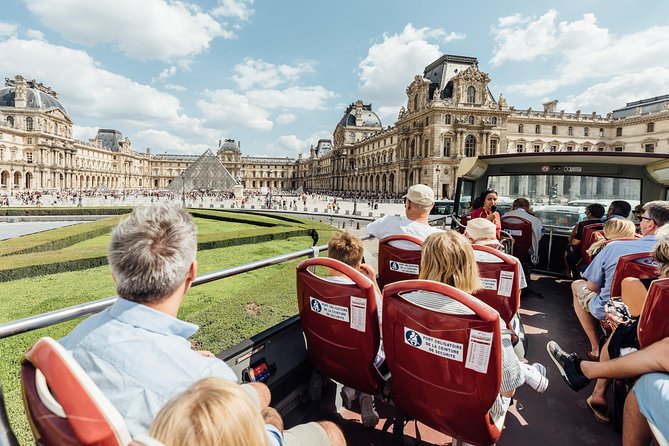
When you reach Champs-Élysées at 156 avenue des Champs-Élysées, you’re stepping into the famous stretch everyone recognizes—wide sidewalks, big storefront energy, and lots of people. From the bus, it’s an easy way to get the overview. If you hop off, do it for a coffee pause, a photo moment, or a slow walk toward the nearby grand architecture.
Next is Grand Palais at Avenue Winston Churchill. This area feels different from the shopping boulevard—more monumental, more dramatic. It’s also a great stop for “eyes up” sightseeing because the surrounding buildings do a lot of the talking.
Here’s a practical tip: Champs-Élysées can eat time. If you’re using the 24-hour ticket, plan one hop-off here and one later for the Eiffel Tower zone. That leaves you enough fuel to still enjoy the quieter walking parts without running on fumes.
Place d’Iéna to the Eiffel Tower: how to get your best views without sprinting
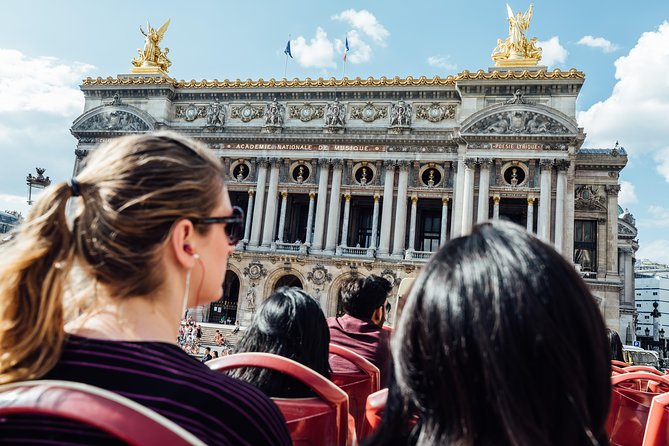
The tour includes Place d’Iéna at Avenue Iéna, facing hôtel Shangri-La Paris. From here, you’re positioned for panoramic thinking—this is the kind of spot where the city’s geometry starts to make sense. It’s also a gentle “setup” stop before you commit to the Eiffel Tower area.
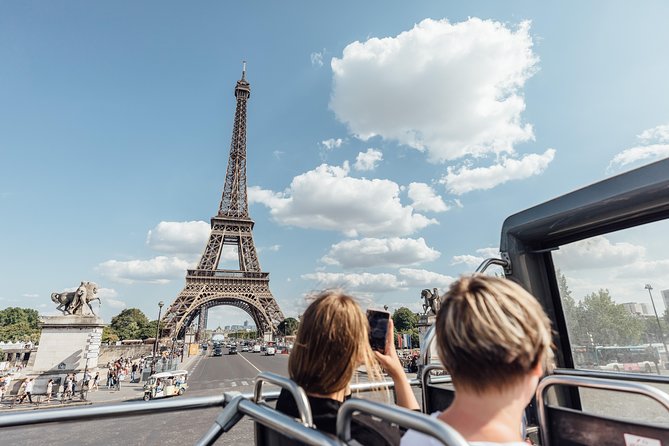
Then it’s Eiffel Tower at Quai Branly, Entrée 2 Tour Eiffel. The open-top ride is already great for photos, but hopping off near the official entry zone helps you decide quickly if you’re doing the climb or simply enjoying the views. After that comes Champ de Mars at Avenue Joseph Bouvard, another key location for wide-angle pictures and a slower stroll.
This is where I’d be most strategic. The Eiffel Tower zone is popular, so don’t plan on a “quick in and out” if you also want time to enjoy the setting. Let the bus loop act like your safety net: if crowds frustrate you, you can hop back on and reset.






Palais Garnier: a graceful finisher to your sightseeing loop
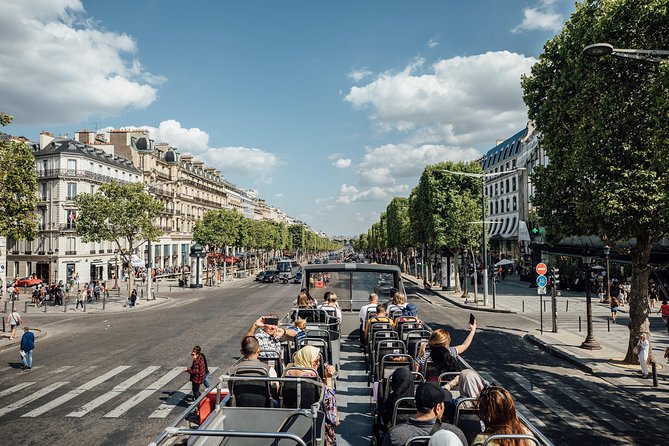
The tour ends its Red Route circuit at Palais Garnier at 15 bis Rue Scribe. Even if you never step inside, this stop makes the whole loop feel satisfying. You’ve seen the grand icons, and then you land at a classic Paris landmark that’s all about elegance and theatrical scale.
This is also a useful last stop for your evening plans. If your legs are tired, you can choose to keep things simple. If you still have energy, the Opera area is lively enough to extend the day without needing a car or complicated navigation.
One note: the bus stops can be spread out, and sometimes it can be a 20-minute walk from where you’re staying depending on your hotel. Use the app and treat the bus stop as a meeting point, not a doorstep.
Optional Seine River Cruise: a great add-on with one big catch
If you upgrade, you can add a 1-hour Seine River Cruise. This can be a highlight because it turns the city’s landmark list into one continuous visual story. Sitting back on the water, you get a different perspective on the bridges and waterfronts than you do from streets.
Now the catch: plan for waiting. Some experiences include very long lines—people have reported 2–3 hours to board. Also, when selecting cruise time, you may see only one time slot for the day, which can affect how efficiently you plan your arrival at the dock.
My practical advice: if you add the cruise, do it early in your plan so delays don’t crush your rest of the day. If you’re tight on time or sensitive to lines, keep the cruise optional in your thinking and decide once you’re in Paris and can judge crowd levels.
Optional Arc de Triomphe tickets: when it fits best
The package can also include an Arc de Triomphe entrance ticket. This is a logical add-on if your sightseeing priorities include major monuments with big viewpoints and “from above” energy.
Because the tour itself focuses on the Red Route loop, Arc de Triomphe is best treated as a planned follow-up. You’ll get the bus orientation around central Paris, then you add the Arc entry if it matches your interests and schedule.
A key reminder: entrance tickets aren’t included unless you choose the optional upgrades. So if Arc is a must-do, make sure it’s in your selected package.
Price and value: is $46.85 worth it?
At about $46.85 per person, this tour is priced for convenience as much as sightseeing. What you’re paying for isn’t just transport. You’re paying for an organized route, hop-on hop-off freedom, and commentary that covers major landmarks while you ride.
Here’s what you get for your money:
- A 24- or 48-hour bus pass (starting from first use)
- Free headphones and audio commentary in nine languages
- WiFi on board
- An app with route info and real-time bus tracking
- The flexibility to choose what you actually want to see
What you don’t get:
- Entrance tickets to monuments, unless you add optional upgrades
That’s why I think it’s good value for first-timers or time-crunched visitors. You can get the “big picture” quickly, then choose what’s worth your paid time inside. If you’re the type who already knows exactly where you want to go and prefers walking nonstop, you might decide it’s not worth it. But if you want a low-effort way to cover Paris’s top hits, this tends to make sense.
Tips to avoid common problems (and keep the day smooth)
A few small details can make or break this kind of tour. Here are the most practical things to do:
- Use the Big Bus app before you walk. Stops may feel spread out, and the app helps you line up your timing.
- Don’t assume the stop is at the exact landmark entrance. Some stops are close, but you might still need a short walk to reach the point you’re aiming for.
- Plan for bus hours. The buses run between 9:45 AM and 6:00 PM, so don’t count on riding late into the evening on this ticket.
- Dress for the open-top reality. If it’s cold or rainy, upper-deck weather can be unpleasant. Layer up and consider a light rain layer.
- Start your ticket with intention. A 24-hour pass is valid for 24 hours from first use, not “until midnight” or “until the day ends.”
These are the habits that keep you from feeling like you paid for something that didn’t match your expectations.
Should you book the Big Bus hop-on hop-off tour with the optional cruise?
Book it if you want a simple plan for Paris without overthinking. This is especially solid for first-time visitors, short stays, and anyone who wants to cover the big landmarks—Louvre area, Notre Dame zone, Musée d’Orsay, Champs-Élysées, Grand Palais, Eiffel Tower, and Palais Garnier—then decide what to revisit later.
Skip the optional Seine cruise upgrade if you hate long queues or if you’re traveling on a tight schedule. The cruise can be a highlight, but waiting times can be rough, and the way time slots are presented may complicate planning.
If you’re deciding last-minute, my rule is easy: use the bus first to find what grabs you, then add the extra monument and river time only if your energy and timing still make sense.
FAQ
FAQ
How long is the Paris Big Bus Hop-On Hop-Off tour?
The duration is listed as approximately 2 hours 15 minutes.
Is there a 24-hour or 48-hour ticket?
Yes. You can choose either a 24-hour or 48-hour hop-on hop-off ticket, and it is valid starting from your first use.
What does the ticket include for the bus ride?
It includes the hop-on hop-off bus tour, audio commentary in 9 languages with free headphones, WiFi on board, and an app with route information and real-time bus tracking.
Which sights are on the Red Route?
The Red Route includes stops at the Eiffel Tower, Louvre Museum, Champs-Élysées, Palais Garnier, and Musée d’Orsay.
Does the tour include entrance tickets to monuments?
No. Entrance tickets are not included unless you select optional add-ons.
What optional upgrades are available?
You can add a 1-hour Seine River Cruise and/or Arc de Triomphe entrance tickets to your package.
How do I find and board the buses?
You redeem your voucher at any designated Big Bus stop, and you can use the Big Bus app for real-time bus tracking and route information.
Are mobile tickets accepted?
Yes. The tour uses a mobile ticket.
Is the tour offered in English?
Yes, it’s offered in English.