REVIEW · PARIS
Paris: Big Bus Hop-on Hop-off Tour and Seine River Cruise
Book on GetYourGuide →Operated by Big Bus Tours/LES CARS ROUGES · Bookable on GetYourGuide
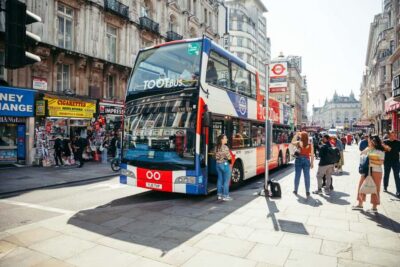
Paris moves faster from a bus. This Big Bus combo pairs a hop-on hop-off tour with a 1-hour Seine cruise, so you can see the big sights without turning your day into a long walkathon.
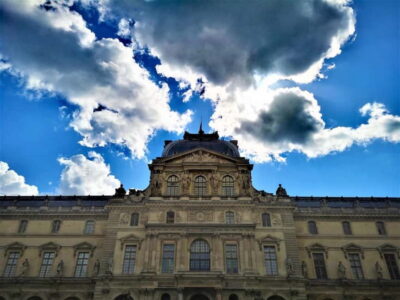
I really like how the route hits the landmarks most people want first: Eiffel Tower, Louvre, and Notre Dame, plus classic Paris streets like the Champs-Elysées.
I also like the included audio with headphones and the app with live tracking, which reduces the stress of figuring out where to get on next. One thing to plan for: the Seine cruise can get crowded at popular times, and traffic can slow down the bus, so build a little buffer.
In This Review
- Key things to know before you go
- Big Bus + Seine Cruise: A smart way to cover Paris without wasting your legs
- The bus route: where the stops make your day easier
- Louvre-Pyramide / Big Bus Information Centre (11 avenue de l’Opéra)
- Louvre – Pont des Arts (56 Quai François Mitterand)
- Notre Dame (3 Rue Lagrange)
- Musée d’Orsay (58 Place Henry de Montherlant)
- Champs-Elysées (156 avenue des Champs-Elysées)
- Grand Palais (Avenue Winston Churchill)
- Iéna (Avenue Iéna)
- Eiffel Tower (Quai Branly, Entrée 2 Tour Eiffel)
- Champ de Mars (Avenue Joseph Bouvard)
- Opéra Garnier (Facing 15, rue Scribe)
- Invalides (2 Avenue de Tourville)
- The Seine cruise: how to pick the right departure time
- Where it departs
- When it runs
- What to expect as you glide
- The queue reality
- Audio, WiFi, and the app: fewer headaches, more seeing
- Audio commentary: what it feels like on the ride
- Languages
- If something goes wrong
- A stop-by-stop game plan for your day
- Option A: Museums + landmarks, then lights
- Option B: Eiffel Tower first, then the city rotates around you
- Option C: Architecture and boulevards
- Where to slow down
- Pricing and value: does $61 make sense?
- Who should book this tour, and who should think twice?
- Best fit
- Consider if…
- My verdict: should you book the Big Bus and Seine combo?
- FAQ
- How long is the hop-on hop-off bus tour?
- How long is the Seine River cruise?
- Where does the Seine cruise depart?
- When do Seine cruise boats depart?
- What languages are available for the audio commentary?
- Can I start the bus tour at any stop?
- Is WiFi available on the bus?
- What is included in the price?
Key things to know before you go
- You can start the bus tour at any stop along the route, so your day stays flexible.
- The Seine cruise leaves from Pontoon No. 3 at Port de la Bourdonnais, near the Eiffel Tower.
- Headsets and multilingual audio are included, with commentary available in many languages.
- Buses run frequently and you’ll find assistants at stops to help you get lined up.
- Queue time is real for the boat, especially if you pick a prime departure slot.
Big Bus + Seine Cruise: A smart way to cover Paris without wasting your legs
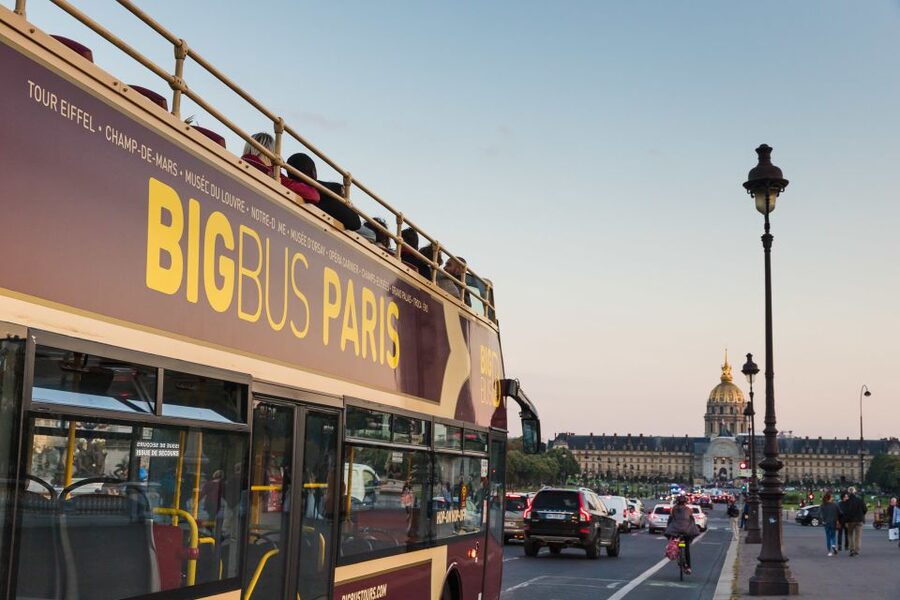
If you’re coming to Paris for the first time, you need two things on day one: speed and context. This ticket gives you both. You ride an open-top hop-on hop-off bus through central sights, and then you cap it with a Seine River cruise that lets you watch the city slide by from the waterline.
The best part is the pacing. You’re not locked into a walking route where every missed train stop turns into a sprint. Instead, you can hop off when something grabs your attention, wander at street pace, then hop back on when you’re ready. That flexibility matters a lot in Paris, where a busy corner can either be a quick stop or an hour detour depending on crowds and timing.
You can also read our reviews of more boat tours in Paris


The bus route: where the stops make your day easier
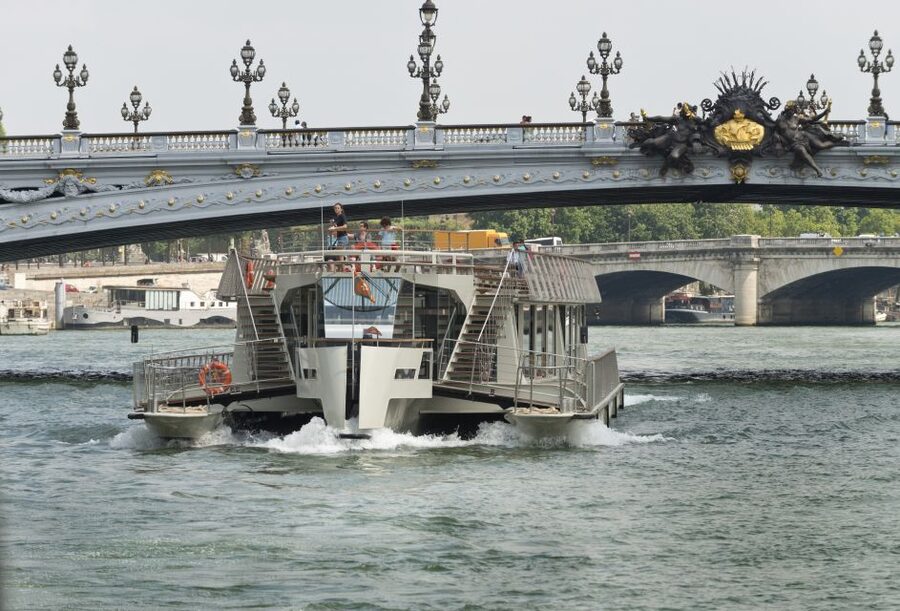
The Big Bus route is designed for tourists who want maximum “icon-to-icon” coverage. You get stops around the areas people most often build plans around, including the Louvre, Notre Dame, Musée d’Orsay, the Champs-Elysées, Grand Palais, Iéna, the Eiffel Tower, Champ de Mars, Opéra Garnier, and Invalides.
Here’s how I’d use that in real life:
Louvre-Pyramide / Big Bus Information Centre (11 avenue de l’Opéra)
This is a great starting point if you want to orient fast. From here, the Louvre complex is right there, and so is the area around Opéra. It’s also handy for grabbing a plan before you commit to a museum ticket later. If you’re trying to fit museum time into a limited stay, this stop helps you map which side streets and entrances you’ll want.
Consideration: if you time it wrong, this part of central Paris can feel like a slow-moving crowd. The bus helps, but you still need patience on foot.
Louvre – Pont des Arts (56 Quai François Mitterand)
I like this stop for the views and the easy connections. Pont des Arts is one of the classic “Paris-from-a-bridge” moments, and it’s also a clean way to bounce between river sights and museum areas. If you want photos that show the city’s geometry (the kind you don’t get from inside a museum), this is a solid hop-off.
Notre Dame (3 Rue Lagrange)
This stop is practical even if you’re not planning a long visit. It drops you near one of the most recognizable silhouettes in Paris. If you’re walking into the neighborhood, it helps you arrive without fighting for position on crowded sidewalks.





Musée d’Orsay (58 Place Henry de Montherlant)
Orsay is one of those places where “quick peek” can turn into real time fast. This stop is useful because it lets you decide on the spot. If you have museum energy, hop off and go in. If you don’t, you can still enjoy the riverside/left-bank atmosphere and save your energy for later.
Champs-Elysées (156 avenue des Champs-Elysées)
The Champs-Elysées is famous for a reason, but it’s also a good road-test for how you handle big-city crowds. The bus stop makes it easy to sample the avenue without walking from far away. I’d use it as a controlled taste: hop off, see what you came for, then move on.
Grand Palais (Avenue Winston Churchill)
This stop is excellent if you like architecture and big public spaces. Even if you don’t go inside, the surrounding area gives you a sense of what makes Paris feel grand. It also pairs well with the nearby museum and boulevard areas—you can hop off, look around, then reboard when you’re ready to keep your circuit going.
Iéna (Avenue Iéna)
This is a strong “photo + perspective” stop. The area gives you great sightlines toward the Eiffel Tower zone, and it helps you connect the river banks with the taller monuments. If you like getting your bearings through landmarks rather than maps, this is a good one.
Eiffel Tower (Quai Branly, Entrée 2 Tour Eiffel)
If your first priority is the Eiffel Tower, you’ll appreciate having a stop that places you where you want to be. One review note that helped me: if you want to catch the evening atmosphere, plan your day so you can return with lights on. This area becomes even more magical after dark.
Tip from experience: don’t aim to do everything around the Eiffel Tower in one stop. Use it as an anchor, then rotate around it with the other nearby stops.
Champ de Mars (Avenue Joseph Bouvard)
This stop is for the “I want space and views” version of Eiffel Tower time. It can feel like a different neighborhood vibe than the tower entrance zone. If you want a place to sit, take photos, or just breathe between busy stretches, Champ de Mars fits that.
Opéra Garnier (Facing 15, rue Scribe)
This is a favorite stop for people who want Paris to feel theatrical. Opéra Garnier is a built-in wow moment from the street. Even if you don’t tour inside, walking the area after you hop off feels like you’re in a scene from a movie.
Invalides (2 Avenue de Tourville)
This stop helps you reach a different side of central Paris. It’s a nice counterweight to the major museum grid: you get a monument-heavy area that also feels calmer than some of the busiest shopping streets.
The Seine cruise: how to pick the right departure time
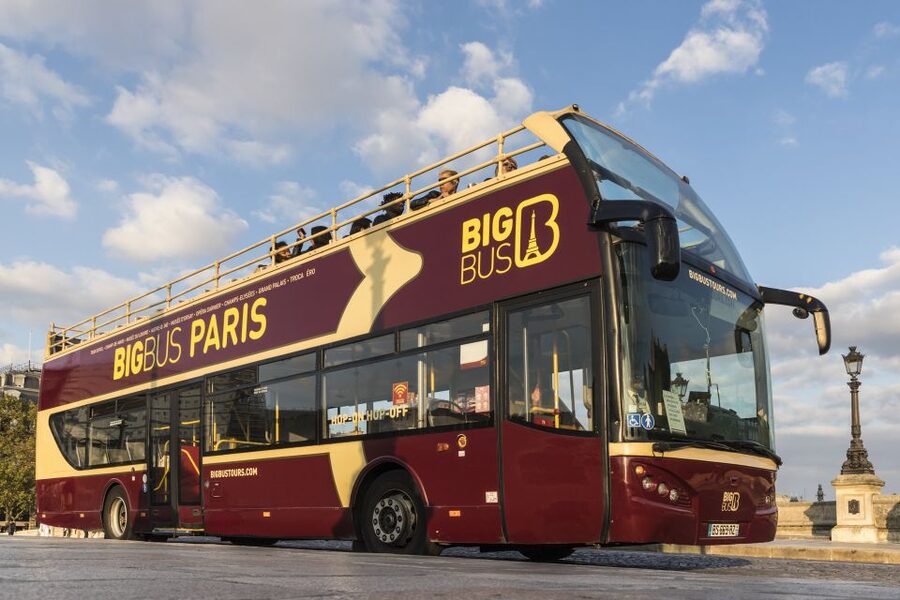
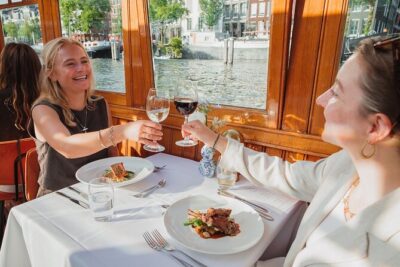
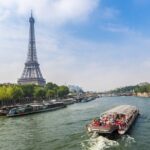
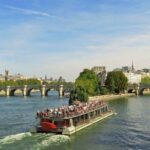
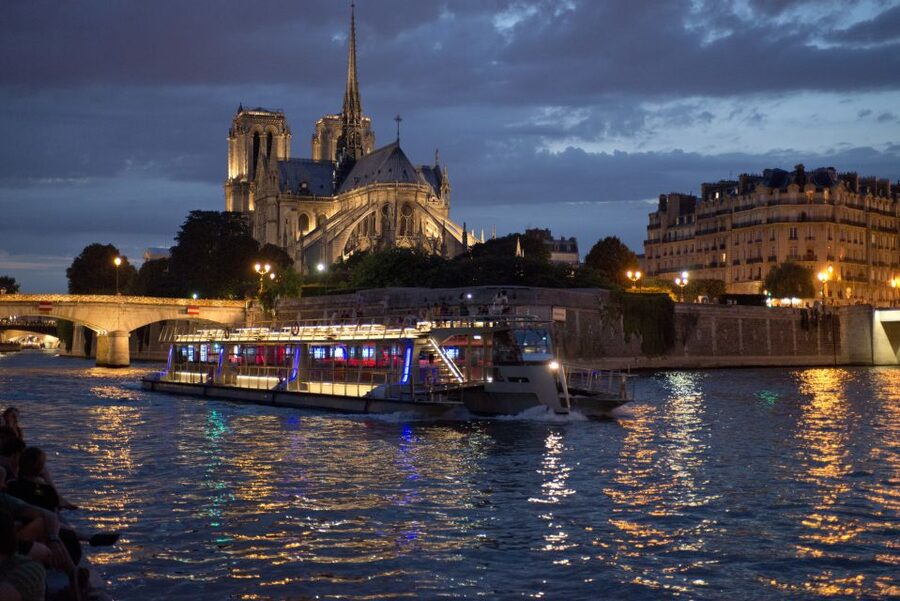
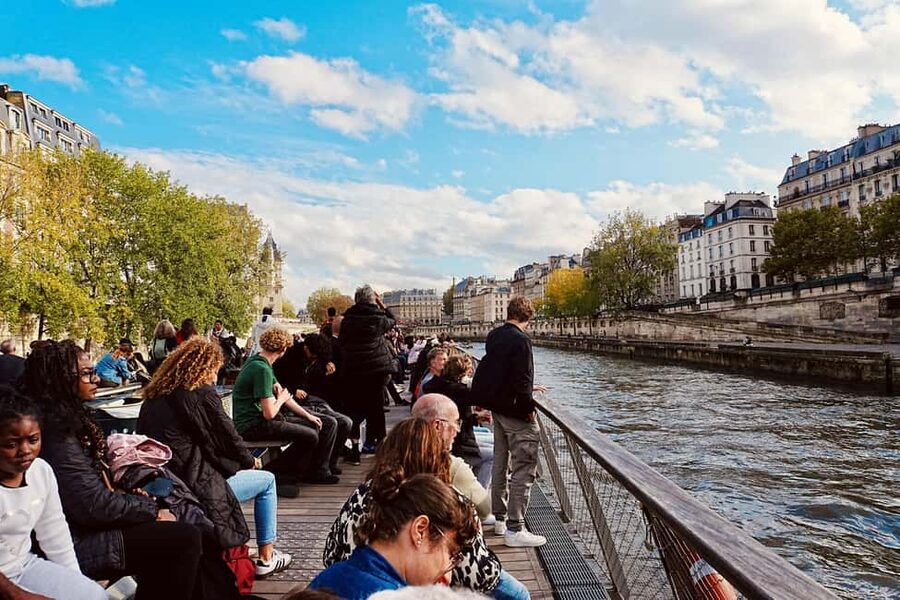
The cruise part is the emotional payoff. It’s 1 hour on Les Bateaux Parisiens, and it’s designed to show Paris as a connected city—bridges, embankments, and landmark facades lined up along the water.
Where it departs
The departure point is Pontoon No. 3 at Port de la Bourdonnais, near Stop 8 around the Eiffel Tower zone. This matters because one wrong boat stop can turn your day into a hunt. If you’re planning dinner later, leave time so you’re not rushing to find the right pontoon.
When it runs
Departures go every 45 minutes from 10:30am to 9:00pm, and every 30 minutes on weekends. You choose your time slot before boarding, using the app or online management, or in person with staff.
What to expect as you glide
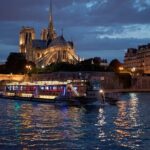
You’ll sail past major sights like Notre Dame and the Musée d’Orsay, plus you’ll travel under Paris’s picturesque bridges. The water gives you cleaner lines for photos too—less angled, less crowded (though not empty).
The queue reality
This is the main consideration. Some departures can line up for a while—one passenger described boat queues taking 60–90 minutes. If you care about a specific time window (like early evening for lights), treat it like a timed event and plan your bus hopping so you arrive with slack.
Audio, WiFi, and the app: fewer headaches, more seeing
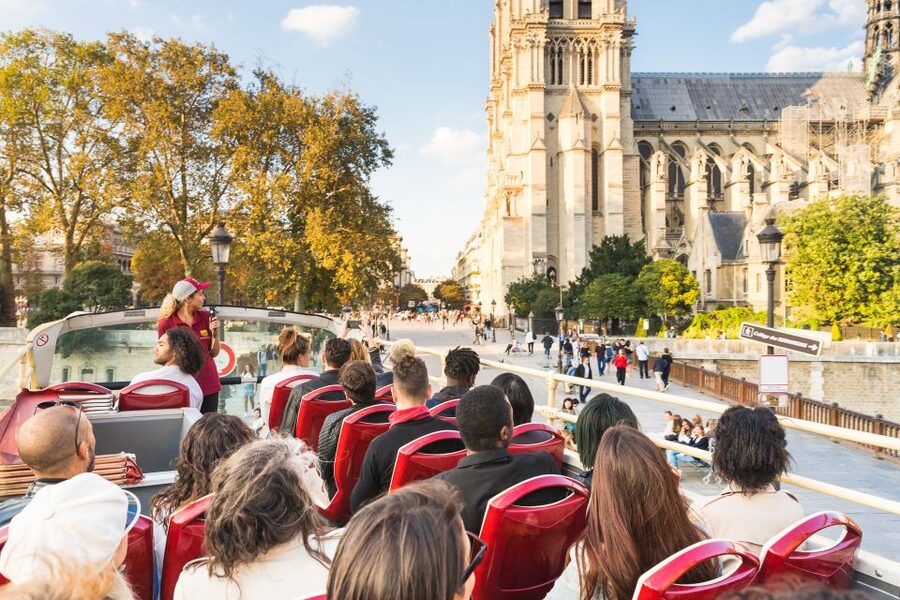
Part of why this combo works is that it’s built for people who don’t want to constantly “figure it out.” You get audio commentary in multiple languages and headphones provided, plus WiFi onboard. The bus app also includes live bus tracking, so you can see what’s coming rather than guessing.
Audio commentary: what it feels like on the ride
The narration is not just background filler. In the morning it’s often more informative, and later it can shift so the experience feels more music-forward. That’s useful if you want the first pass for context, then later use the ride for relaxed sightseeing.
Languages
Audio is available in Spanish, Chinese, English, French, German, Italian, Portuguese, Russian, and Korean. If you’re traveling as a group with mixed language needs, that’s a big plus.
If something goes wrong
I’ve seen enough travel tech problems in general to give you a practical rule: if the headphones don’t work on one bus, ask staff and switch buses if offered. At least one passenger reported that swapping solved the audio issue.
A stop-by-stop game plan for your day
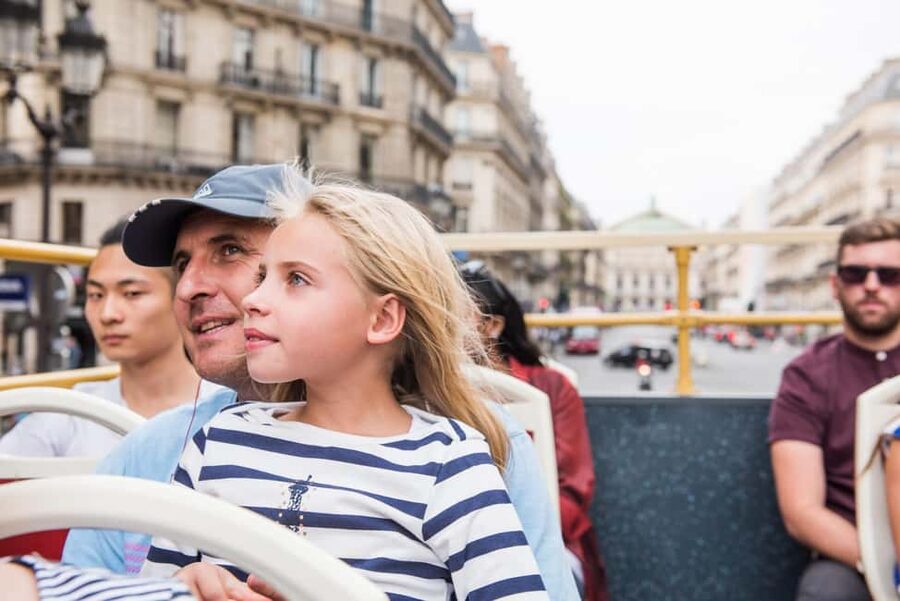
You can build this route many ways. Here’s a practical approach that fits most first-timers and helps you avoid “see everything, feel nothing.”
Option A: Museums + landmarks, then lights
Start around the Louvre-Pyramide area (Opéra/central zone), then hop to Pont des Arts for river views. Continue to Notre Dame, then ride toward Musée d’Orsay for a left-bank museum vibe. Finish on the Eiffel Tower/Champ de Mars side so you’re positioned for the Seine cruise later.
This works well because it uses your daylight for museums and architecture, then uses evening for the Seine’s best viewing angles.
Option B: Eiffel Tower first, then the city rotates around you
If Eiffel Tower is your must-do, begin with the Eiffel Tower and Champ de Mars stops. Then use Grand Palais, Iéna, and Invalides to keep things moving without backtracking. You still get the Louvre/Notre Dame side of Paris thanks to the bus network.
This option is ideal if you’re traveling with kids or anyone who gets tired from long walks. The bus does the legwork.
Option C: Architecture and boulevards
Use Champs-Elysées and Grand Palais as anchors, then add Opéra Garnier. Hop when you feel like photographing facades and walking streets, then reboard for the next big landmark.
Where to slow down
Whenever you hop off, give yourself a 30–60 minute buffer before you reboard. The bus frequency is strong, but traffic and crowd flow can add time. One practical detail from the field: buses can be late when traffic gets heavy, so it’s smart not to schedule dinner for right when you think the next bus will arrive.
Pricing and value: does $61 make sense?
At around $61 per person, this ticket looks like a “do both” deal: bus tour plus a 1-hour Seine cruise. The value comes from what you’d otherwise pay for separately and the time you save.
Here’s how I weigh it:
- You’re buying time and simplicity. Hop-on hop-off is a way to cover ground without constantly taking taxis or planning exact routes.
- You’re buying a second viewpoint. The Seine cruise is not just another stop. It’s a different angle on the same landmarks, and the evening feel is the big payoff.
- You get planning flexibility. With hop-on hop-off, you can adjust mid-day if crowds are worse than you expected or if you want to linger.
If you only have a short stay, this combo can be one of the most efficient ways to hit the major sights while still keeping your day calm.
If you already know you’ll only be comfortable with minimal crowds and you hate boat lines, then it may be less satisfying. But for most people, the trade-off is worth it.
Who should book this tour, and who should think twice?
Best fit
This tour fits you if you want:
- an easy way to cover top sights like Eiffel Tower, Louvre, and Notre Dame
- a flexible schedule with hop-on hop-off convenience
- a Seine cruise that adds a different view without extra planning
- audio help so you can understand what you’re seeing while moving
Parents and multi-generation groups also tend to like it because you can reduce walking when heat or tiredness hits.
Consider if…
- You’re set on a very specific cruise departure time and don’t want to deal with possible lines.
- You want a quieter, more local feel. This is a mainstream route, so it’s meant for seeing the icons.
In one case, a passenger noted a slower bus day and even mentioned cooling differences; that’s not something you can control, so plan for comfort with water and a flexible mindset.
My verdict: should you book the Big Bus and Seine combo?
Yes, I’d book it if you’re looking for a practical first-pass through Paris. The combo is built for people who want to see a lot, understand what they’re seeing through multilingual audio, and still control your own pace. The Seine cruise is the part that often feels like the payoff, especially around evening.
I’d only skip it if you’re the type who prefers to wander on foot with zero crowds and you’re confident you can plan a similar day on your own without wasting time. If that’s not you, this is a straightforward way to get your bearings fast and enjoy Paris from both the streets and the water.
FAQ
How long is the hop-on hop-off bus tour?
The bus ticket is valid for either 24 or 48 hours, so you can use it over one or two days.
How long is the Seine River cruise?
The Seine River cruise is 1 hour.
Where does the Seine cruise depart?
It departs from Pontoon No. 3 at Port de la Bourdonnais, near Stop 8 around the Eiffel Tower.
When do Seine cruise boats depart?
Cruises depart every 45 minutes from 10:30am to 9:00pm, and every 30 minutes on weekends. You select a time slot before boarding.
What languages are available for the audio commentary?
Audio commentary is available in Spanish, Chinese, English, French, German, Italian, Portuguese, Russian, and Korean.
Can I start the bus tour at any stop?
Yes. You can begin your hop-on, hop-off tour from any of the Big Bus stops along the route.
Is WiFi available on the bus?
Yes, WiFi is included onboard the bus.
What is included in the price?
Included are the 24- or 48-hour Big Bus hop-on, hop-off ticket, the 1-hour Seine River cruise, digital multilingual commentary with headphones provided, WiFi onboard, and the downloadable app with live bus tracking. Hotel pickup and drop-off are not included.