REVIEW · FLORENCE
Florence River Cruise on a Traditional Barchetto
Book on Viator →Operated by Towns of Italy · Bookable on Viator
Float past Florence in a little boat. This 1-hour Arno River cruise from central Florence lets you see major landmarks while you rest your feet and look at the city from water level. You’ll pass key squares and bridges from the ground first, then glide under Ponte Vecchio with stories about the Medici and the architecture lining both banks.
I especially loved two things: the traditional barchetto feel on the water, and the way the guide turns outside views into clear, human-sized history. Even with the short duration, it feels like you get a guided “why it looks like that” lesson, not just scenery.
One thing to consider: the experience is weather-dependent, and the meeting point can be a little tricky to spot—so I’d plan to arrive early with your confirmation ready, especially after dark.
In This Review
- Key Highlights You’ll Actually Notice
- A Traditional Barchetto on the Arno: What to Expect in Real Life
- Meeting at Via dei Vagellai: Quick Start, Easy to Miss if You Rush
- Piazza della Signoria to Ponte Vecchio: Sightseeing Without the Full Footslog
- Cruising the Arno River: The View Shift You Can’t Get Elsewhere
- Ponte Vecchio Underway: Classic Florence, Reframed
- Uffizi From the Water: How to See More Without Buying More Tickets
- Vasari Corridor and Medici Secrets: The Story Behind the River-Facing Palaces
- Corsini Palace, Santa Trinita Bridge, and Other Stops That Add Depth
- Wine, Soft Drinks, and That Timing Everyone Asks About
- How the 1-Hour Format Fits a Busy Florence Day
- Price and Value: What You’re Really Paying For at $71-ish
- Comfort, Sound, and One Real World Caution
- Who Should Book This Florence Arno Cruise (and Who Might Not)
- Should You Book This Florence River Cruise?
- FAQ
- How long is the Florence river cruise on a traditional barchetto?
- What’s included in the ticket price?
- Is the tour offered in English?
- Where do I meet for the tour?
- Is food included?
- What if it rains?
- How far in advance should I book?
- Are pets allowed?
Key Highlights You’ll Actually Notice
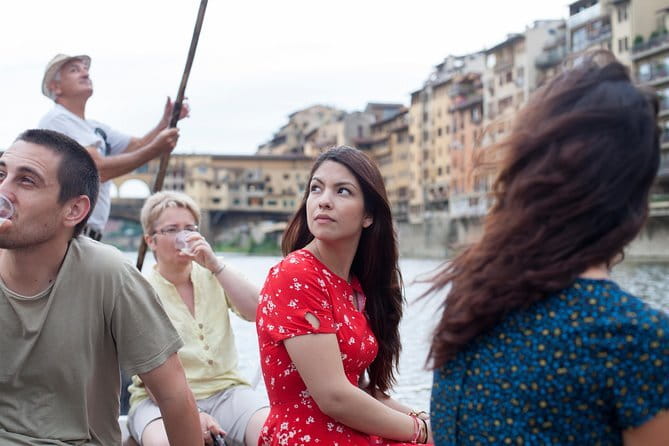
- Traditional barchetto on the Arno: centuries-old style of boat, short and easy going
- Ponte Vecchio from the water: a viewpoint most people never get
- Uffizi views without the ticket line: see the building’s river-facing side
- Vasari Corridor story over a drink: the Medici secret passage explained
- Small-group vibe (max 14): easier questions, more personal pace
- Chilled rosé or white wine (or soft drink): included, served during the ride
A Traditional Barchetto on the Arno: What to Expect in Real Life
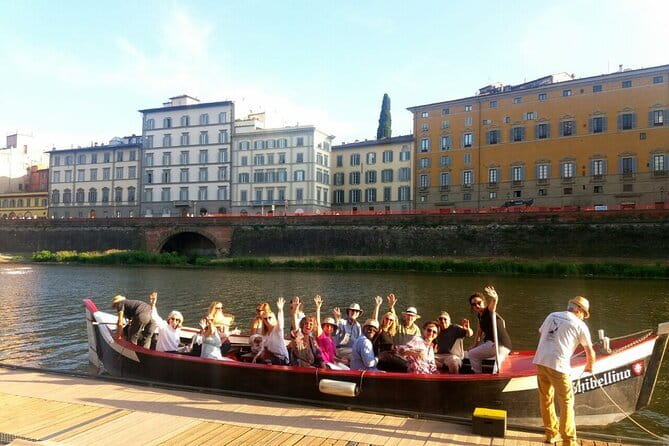
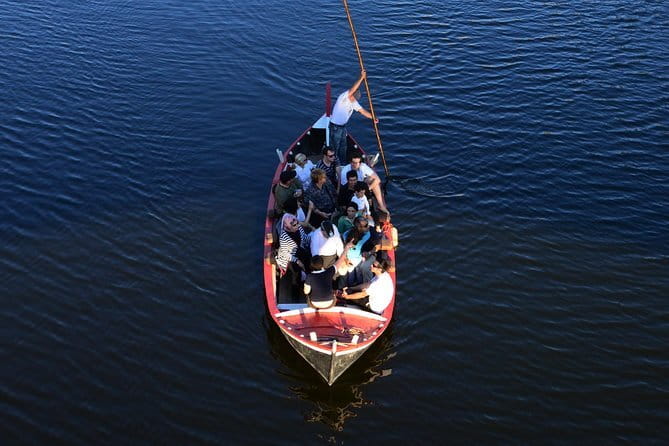
There’s something calming about being in a small boat on a big city river. The tour uses a traditional barchetto—the name literally points to a small boat—and it’s designed for a relaxed, scenic stretch rather than a long, exhausting day of transfers. You’re in Florence, but for about 45 minutes you’re mostly in “watch mode,” with the guide talking as the buildings slide by.
The boat time matters because Florence is all about walking. You’ll still do some getting around downtown to meet your guide and reach the water area, but the core payoff is that you get to view the city’s top sights from a perspective that’s tough to replicate on foot.
Also, you’ll be with an English-speaking fully licensed history guide. That’s not a small detail. It changes the experience from sightseeing to understanding what you’re seeing—especially when the guide connects palace facades, bridges, and river curves into one story.
You can also read our reviews of more boat tours in Florence
Meeting at Via dei Vagellai: Quick Start, Easy to Miss if You Rush
You meet at Via dei Vagellai, 22, 50122 Firenze. Starting from 2025, the only meeting point is Via dei Vaggellai 22/red, so double-check you have the updated pin before you go. The address is near public transportation, but “near” doesn’t always mean “obvious,” especially if you arrive later in the evening.
My practical advice: arrive a bit early and take 2 minutes to confirm you’re at the right side of the street. One person mentioned difficulty finding the exact spot because there wasn’t clear signage, even though the directions were accurate. That kind of issue is fixable if you give yourself a buffer.
Once you’re checked in, you’ll follow your guide to the dock area. You’re not trying to thread your way through a maze—this is meant to be straightforward—but it’s still Florence, and timing matters when you’re working with a scheduled departure.
Piazza della Signoria to Ponte Vecchio: Sightseeing Without the Full Footslog
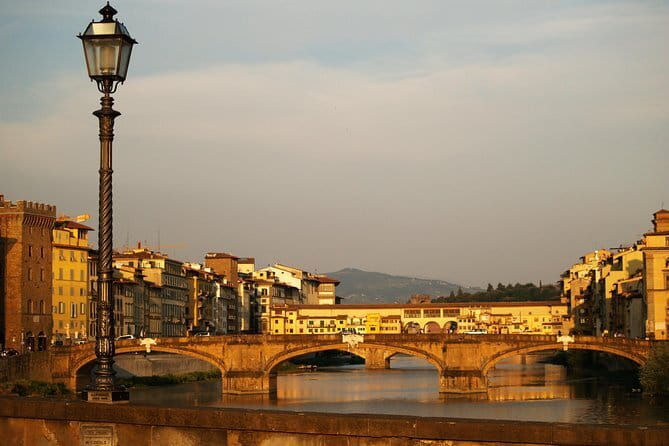
Before you ever step on the boat, your guide walks you through the heart of Florence’s best-known landmarks. You’ll pass through Piazza della Signoria—one of those places where you can feel the city’s power and art history in the open space. The route also includes the area around Palazzo Vecchio and Uffizi Gallery as you approach the river crossing near Ponte Vecchio.
Here’s why that land portion is useful: it gives context. When you later see the same sights from water level, you know what you’re looking at. Without that setup, Ponte Vecchio is just “a famous bridge.” With it, it becomes part of a bigger pattern: palaces facing the river, political wealth, and how the Medici used the city’s layout.
Then comes the main moment—boarding and beginning the cruise. The group stays small (max 14 travelers), which helps because you’re not being herded like a crowd. You can actually hear what’s being said when the guide pauses and points things out.
Cruising the Arno River: The View Shift You Can’t Get Elsewhere

Once you’re on the water, the Arno becomes a moving viewpoint. You’ll cruise along the river as your guide explains what you’re seeing on both banks—especially the big architectural statements that face outward toward the water corridor.
This is where the tour really differs from a standard city walk. From the river:
- You see the city’s buildings at a flatter angle, so details that look small on land become easier to notice.
- You get “breathing room” between stops. Florence can wear you down fast, and the boat time gives your legs a real break.
- The river path also makes the bridge and palace sequence easier to follow. Things line up in a way that can feel confusing from streets.
One of the most common positives was that the boat ride feels peaceful. Several comments mentioned how relaxing it is, and how the short duration works well if you’re worried about motion sickness. The ride is brief enough that you don’t feel trapped on the water for hours.
Ponte Vecchio Underway: Classic Florence, Reframed
Ponte Vecchio is the star, but the tour’s approach matters. You don’t just look at the bridge from a crowded walkway. You get to see Ponte Vecchio from the Arno as you cruise—then you also get an eye-level moment that feels more like viewing a living set than a static landmark.
When you’re underneath it, you notice how the bridge changes the river’s rhythm. The guide’s storytelling helps you connect the bridge to Florence’s power center rather than treating it like a photo stop.
Also, this is one of those sights where timing affects your experience. If you book later in the day, you may find the lighting more flattering. The tour itself runs for about an hour, so it’s flexible enough to fit into an evening plan—without eating your whole afternoon.
Uffizi From the Water: How to See More Without Buying More Tickets
Most people associate the Uffizi Gallery with lineups and ticket planning. This cruise gives you the exterior perspective instead. As you head along the river, you’ll get a riverside view of the gallery from the water—one that emphasizes its relationship to the river corridor.
For a lot of visitors, that’s a smart add-on because it helps you place the museum in the geography of the city. It also gives you a different takeaway: not what’s inside the museum, but how the building sits as part of Florence’s public-facing design.
Even if you already plan to visit the Uffizi during your trip, this river view can help you feel oriented. You’ll recognize the scale and location later when you’re on foot.
Vasari Corridor and Medici Secrets: The Story Behind the River-Facing Palaces
This is the part that turns the cruise into more than a scenic ride. Your guide explains the Vasari Corridor, the secret passageway connecting the Palazzo Vecchio and the Palazzo Pitti. The idea was that members of the Medici family could move stealthily through the city without exposure to the street.
You’ll hear this story while you pass major architecture along the Arno. That pairing matters. Instead of hearing a historical tidbit in isolation, you see the urban layout that made it possible. The river route also makes it easier to imagine how the city’s elite spaces were connected—especially when you’re looking at palaces and institutional buildings from the same line of sight they would have depended on.
Some guides also sprinkle in extra Medici-era detail and city lore, and multiple named guides in English-speaking roles have been cited in past departures—people like Gloria, Lorenzo, Gia, Fabio, and Francesca. You won’t choose your guide, but it’s a good sign that the narration tends to be personal and story-driven.
Corsini Palace, Santa Trinita Bridge, and Other Stops That Add Depth
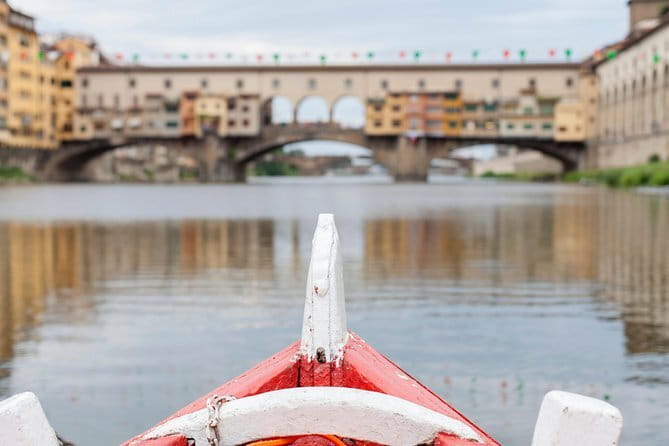
Along the way, you’ll also get views of Palazzo Corsini—noted for its Baroque design—and the Santa Trinita Bridge. These aren’t just “more buildings.” The guide uses them to show how Florence’s river edge evolved into a showcase for wealth, taste, and political influence.
Here’s the practical value: these stops help you avoid the common mistake of treating Florence as one big cluster of famous names. When the guide connects one palace style to another bridge, you start to see patterns. You also come away with more than just a memory of photos—you have a mental map of what you saw and why it matters.
If you want to do Florence at a pace that still feels connected to the city, this kind of guided “small landmarks, big meaning” approach is exactly the sweet spot.
Wine, Soft Drinks, and That Timing Everyone Asks About
You’ll be served a glass of chilled rosé or white wine, plus you can also choose a soft drink. It’s included, and it’s served during the cruise as part of the flow of the narration.
A couple of people talked about the drink experience in different ways. One concern was about wine temperature and timing; the response clarified that the bottle is typically opened halfway through the tour so the storytelling rhythm stays consistent. Translation for your planning: don’t expect the first sip immediately at boarding every time, and assume the “chilled” part matters more than a rapid service schedule.
If you’re sensitive to heat or strong sun, pay attention to what the guide offers during the ride. One person noted umbrellas were provided if needed. That kind of small care can make the difference between tolerable and comfortable in Florence.
How the 1-Hour Format Fits a Busy Florence Day
This cruise is short by design: about 1 hour total, with approximately 45 minutes on the water. For many people, that’s the ideal shape. Florence can easily turn into too much museum time and too many staircases. This gives you:
- a break from constant walking
- a focused chunk of guided interpretation
- a comfortable “reset” between bigger activities
It also works well for people who don’t want to gamble on a half-day tour. You can pair it with a morning museum, lunch, and an evening stroll. Or you can slot it after you’ve already done the main sights and want a calmer end.
On the downside, because it’s brief, you don’t get long, deep stops. This is about seeing and understanding key highlights quickly, not touring every building up close.
Price and Value: What You’re Really Paying For at $71-ish
At $71.20 per person, you’re paying for a specific mix:
1) a licensed English history guide,
2) a small-group format,
3) time on the Arno from the boat’s viewpoint, and
4) a drink included.
If you compare it to the cost of museum tickets plus extra guided time, the math can feel different. The cruise isn’t a museum substitute, but it does give you a guided city perspective you can’t easily DIY. It’s also the kind of experience where the value spikes when you care about viewpoint photography, architecture stories, or resting your legs.
That said, if you’re expecting a long, extensive tour or a premium service like a private boat for the price, you might feel squeezed. A couple of negative comments criticized the value, often pointing to how short the ride felt or how timing/service didn’t match expectations. In other words: it’s priced like a short, guided scenic experience—so go in with that mindset.
Comfort, Sound, and One Real World Caution
A short boat ride sounds easy. Usually it is. But there are two comfort issues you should plan around.
First: sound. One person said they had trouble hearing because the guide was softly spoken, especially with nighttime conditions. That doesn’t mean you’ll have the same issue, but it does mean you should get to a spot where your view and hearing overlap with the guide. Small groups help, but wind and distance can still affect clarity.
Second: meeting point stress. When people feel rushed before the cruise, the whole start gets tense. Arriving early and confirming the correct address reduces that risk.
And one more practical note: pets aren’t permitted on these tours. If you’re traveling with an animal, you’ll need an alternative plan.
Who Should Book This Florence Arno Cruise (and Who Might Not)
This is a strong choice if you:
- want Ponte Vecchio + Uffizi context without extra lines
- like architecture explanations more than museum deep dives
- want a leg-resting activity that still feels meaningful
- travel with someone who enjoys “see the city, learn the why”
It’s probably not your best bet if you:
- need a restroom during the activity and want on-site facilities (one reviewer specifically wished the meeting office had one)
- expect a long tour with lots of walking afterward—it’s primarily boat time and storytelling
- have mobility limitations and need a smoother access experience (one comment explicitly flagged that it’s not suitable for mobility-limited people)
Should You Book This Florence River Cruise?
Yes—if your goal is a short, scenic break that also teaches you how Florence connects its palaces, bridges, and river layout. The big draw is the river viewpoint: Ponte Vecchio and Uffizi look different when you’re actually on the Arno, and the Vasari Corridor story gives the trip a “how did they do that” payoff.
No—if you’re hoping for a long, in-depth tour or you’re very sensitive about audio and meeting-point stress. In that case, you might prefer a quieter, more flexible option with fewer timed constraints.
If you’re the kind of traveler who loves a good guide and wants to feel oriented fast in Florence, this cruise is a smart use of time.
FAQ
How long is the Florence river cruise on a traditional barchetto?
The experience lasts about 1 hour.
What’s included in the ticket price?
You get a mini cruise on the Arno River on a traditional Florentine gondola/barchetto for about 45 minutes, plus a cool wine or soft drink, and an English-speaking fully licensed history guide.
Is the tour offered in English?
Yes, it’s offered in English.
Where do I meet for the tour?
The tour meets at Via dei Vaggellai 22/red in Florence (the only meeting point starting in 2025). The end returns to the meeting point.
Is food included?
No. Food isn’t included.
What if it rains?
The tour requires good weather. If it’s canceled due to rain, you can choose a rain check (voucher) for another date subject to availability, or you can get a 100% refund.
How far in advance should I book?
On average, it’s booked about 42 days in advance.
Are pets allowed?
No, pets aren’t permitted on these tours.