REVIEW · PARIS
Side-car Paris Visit with a River Cruise
Book on Viator →Operated by Wild Side Tour · Bookable on Viator
Paris has layers. This one starts underground. You get pre-booked admission to Notre-Dame’s archaeological crypts and then roll through central sights with a small private group, all while your guide brings the story to life in clear English. It’s a fast, focused way to get your bearings in Paris without turning your day into a line-camping contest.
I also like how the itinerary is built for momentum: a short guided walk at the cathedral, quick landmark stops, and then a relaxing break on the water with the Seine cruise after comfortable transport. One consideration: the time and format can be affected by real-world disruptions, and some guests have warned about late cancellations and about differences in what you may get inside other underground sites if your expectations don’t match the specific package.
In This Review
- Key highlights that make this tour worth your time
- The sidecar-and-cruise rhythm: how you see more without rushing
- Notre-Dame’s archaeological crypts: what you learn before the crowds
- What to look for when you’re inside
- The cathedral walk: fast anecdotes that actually help you notice
- Photo-stop Paris: Eiffel Tower to Musée d’Orsay and the Arc views
- Bridges, royal leftovers, and the Seine as a moving picture
- Napoleon, Art Deco viewpoints, and the Beaux-Arts architecture quick hits
- Sainte-Chapelle and the Gothic stained-glass moment you’ll want later
- When timing gets weird: how to plan for disruptions
- Price and value: what $170.05 buys you and what it doesn’t
- Who should book this sidecar Paris + Seine cruise?
- Should you book it?
- FAQ
- How long is the Sidecar Paris visit with the river cruise?
- Where does pickup happen?
- Is the tour offered in English?
- Is the Notre-Dame archaeological crypt admission included?
- Are entrance tickets to places like the Eiffel Tower included?
- Is this a private tour?
- Is the tour dependent on weather?
- Can I cancel for a full refund?
Key highlights that make this tour worth your time
- Pre-booked Notre-Dame crypt entry so you avoid the worst of the waiting game
- A small private group that keeps the pace human and questions easy
- Motorcar/sidecar-style touring between stops so you spend more time looking and less time walking
- A Seine cruise that turns the landmarks into something you can actually enjoy, not just photograph
- Guide-led storytelling that points out small details you’d likely miss on your own
The sidecar-and-cruise rhythm: how you see more without rushing
This tour is designed like a Paris crash course, but with enough structure to keep it pleasant. You’re not stuck with one giant walking circuit. Instead, you do a guided block at Notre-Dame, then you bounce between major sights quickly, with private transport helping you keep your energy for the parts that really matter.
That’s the big value of this format. In about 90 minutes, you’re set up to understand where everything sits along the Seine and on Île de la Cité. Even if you come to Paris planning to pick a few museums, having the geography locked in makes the rest of your trip feel easier.
You’ll also appreciate the group size. A private tour means you’re not fighting over hearing range or trying to interpret a guide through a crowd. And because the tour is offered in English, you’re not stuck with guesswork about what you’re looking at when you turn a corner or exit a monument area.
You can also read our reviews of more boat tours in Paris


Notre-Dame’s archaeological crypts: what you learn before the crowds
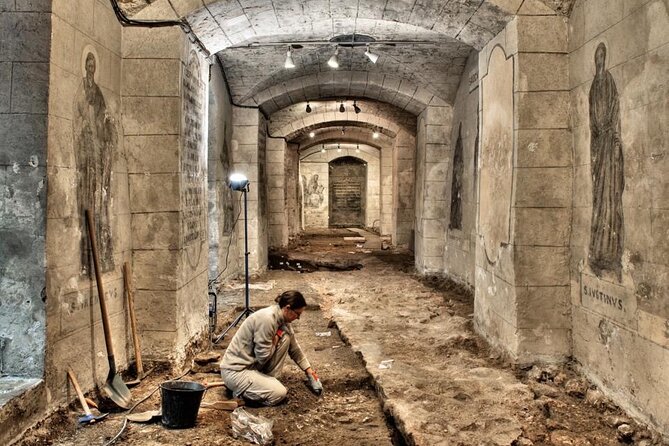
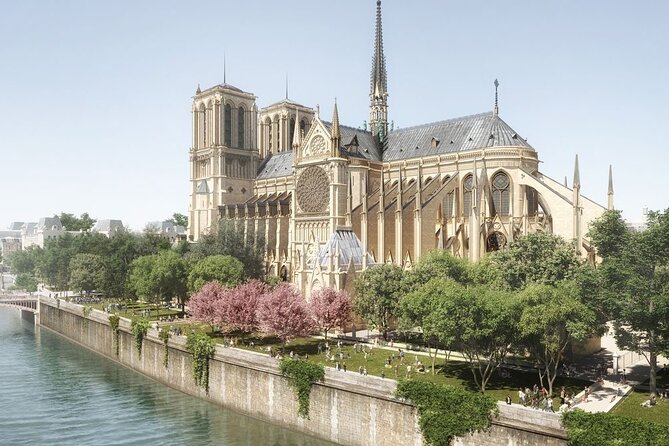
The tour’s heart is the archaeological crypt beneath Notre-Dame de Paris. You’ll gather at the cathedral meeting point, then head into a guided experience with an archaeologist who explains what the site actually is and why it matters.
This part lasts around 30 minutes, and it’s the time when the story becomes tangible. The crypt isn’t just a dark room of old stones. It’s presented as layered Paris: Roman-era elements up through later periods of the city. One guide-led theme that shows up in multiple accounts is how the guide connects the remains you’re seeing to bigger changes in Paris over time. You may hear about how structures on the cathedral site evolved, what’s preserved underground, and how archaeologists read the physical clues.
You’ll also get the benefit of skipping the line chaos. The experience is built around pre-booked admission, so you’re less likely to lose your schedule to unpredictable queue lengths. That’s a real advantage in Paris, where the “time you planned” rarely survives contact with reality.
One more practical bonus: guides in these tours sometimes provide audio support. For example, one review specifically called out a wireless speaker and earbud system that worked well. If you’re sensitive to noise in crowded areas, this kind of setup can make a huge difference.
What to look for when you’re inside
You won’t have time to study every stone like you’re writing a thesis. The goal is context, not mastery. Focus on what the guide calls out: key traces of different eras, how the layout is organized, and the way the site connects to the cathedral above. If something stands out as a detail you don’t fully understand, ask immediately. In a small group, you can get a straight answer instead of waiting your turn.
The cathedral walk: fast anecdotes that actually help you notice
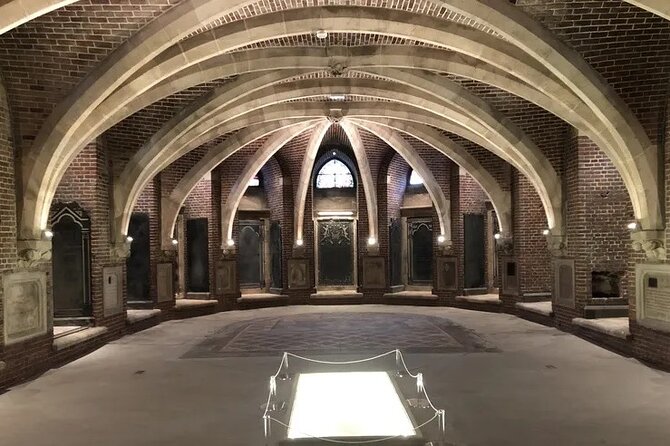
Before or alongside the underground visit, you’ll do a short walking segment around Notre-Dame. The point here isn’t a long sightseeing marathon. It’s a guide-led set of context pieces that make the cathedral’s details click when you’re above ground.
This is where you learn the amusing, human-scale stories that make a site memorable. Expect a friendly, family-friendly approach, with the guide pointing out historical quirks rather than treating everything like a textbook. If you’re the type who likes architecture but gets bored by overlong lectures, this format usually hits the sweet spot.
And because you’re moving on quickly, you won’t get stuck feeling mentally drained before the best part of the day.
Photo-stop Paris: Eiffel Tower to Musée d’Orsay and the Arc views
After the crypt experience, the tour shifts into “big landmarks in a short time” mode. Several stops are designed as brief viewing moments (often only a few minutes) rather than full entry visits.
Here’s what that looks like in the real world:
- Eiffel Tower: a quick stop to see the tower and orient yourself. Entry is not included, so don’t plan on going up unless you buy separate tickets.
- Musée d’Orsay: a short glimpse of the museum’s setting (also not included). This is more for location and appearance than for a gallery deep dive.
- Arc photo stop: you’ll get the classic angle people want for their Paris photos, but you won’t be spending time inside any paid spaces.
This “see it, frame it, move” rhythm is perfect if you’re short on time or if you’ve already got museum plans later. It’s also great for your first day in Paris, because you can decide what you want to do in depth once you see where it all sits.






Bridges, royal leftovers, and the Seine as a moving picture
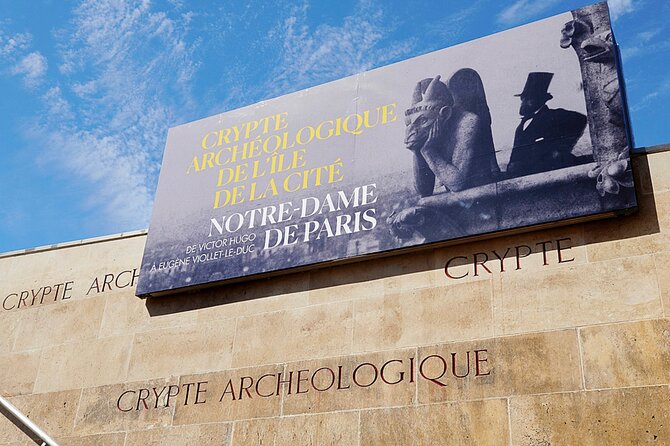
One of the smartest choices in this itinerary is how much of it is about the Seine corridor. Paris is easier to understand when you see it from multiple directions, and this tour helps you do that quickly.
You’ll pass and photo-stop at places like Pont des Arts, a bridge known for romantic symbolism and classic Louvre-and-Seine views. You’ll also get a stop around Île Saint-Louis, a quieter residential island where the mood shifts from landmark frenzy to something calmer. Even in a few minutes, it helps you feel the city beyond the postcards.
Other stops keep the storyline moving:
- Conciergerie on Île de la Cité, tied to France’s Revolution-era history and housed in striking medieval Gothic spaces
- Palais de Chaillot across from the Eiffel Tower, which gives you a sense of the wider scene and viewpoints people chase
- Pont Alexandre III, famous for ornate Belle Époque details and one of those bridges you remember even if you don’t linger
Then you circle back toward the older heart of Paris with another look at Île de la Cité itself. This is one of those areas where the city feels genuinely old, not just “historic-looking for tourists.”
Napoleon, Art Deco viewpoints, and the Beaux-Arts architecture quick hits
A chunk of the itinerary is built around architectural variety. You’re not just stacking monuments. You’re sampling different styles and eras in a compact route.
Stops in this stretch include Musée de l’Armée des Invalides (Napoleon’s tomb is inside), Grand Palais with its signature glass-domed roof, and Palais de Chaillot with the terrace view opposite the Eiffel Tower. There’s also Place de la Concorde, a large square that matters historically and also helps you understand how Paris opens up into major avenues.
These aren’t “spend an hour inside” stops. They’re quick looks that give you enough visual information to plan the rest of your trip. If you later decide you want to enter Invalides or photograph Grand Palais more closely, you’ll know exactly where you’re going.
Sainte-Chapelle and the Gothic stained-glass moment you’ll want later
One of the most visually striking stops on the route is Sainte-Chapelle. The famous feature here is the stained-glass, and even when you’re only seeing it briefly, it’s hard not to imagine why people treat it as a must-see.
Because entry is not included, this stop works best as an orientation and inspiration moment. If stained glass is your thing, you’ll likely end up adding a separate ticket later. The good news: after seeing the cathedral crypt first, Sainte-Chapelle feels less random. The Gothic story starts to feel connected across the island.
When timing gets weird: how to plan for disruptions
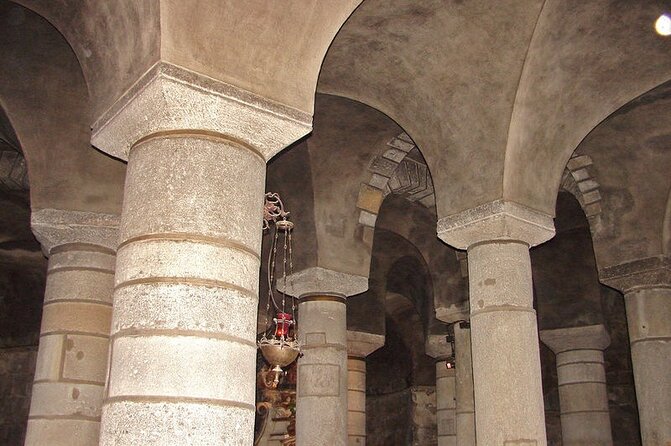
Paris runs on crowds, security, and weather. Even great tours can get thrown off.
There’s evidence of two kinds of disruptions in this experience:
- Last-minute cancellations can happen due to personal emergencies on the provider side. That’s rare, but it’s real enough that you should build in flexibility on the day you book.
- Site security events can cause evacuations and delays. One guide reportedly kept the group moving by driving to the river cruise when Notre-Dame security slowed things down.
My practical advice: if you have a tight itinerary, keep a low-stress block nearby on your schedule. If you’re the type who can handle change without spiraling, you’ll roll with it. If your day is already packed with non-refundable timed tickets right after this, consider choosing a calmer buffer day.
Price and value: what $170.05 buys you and what it doesn’t
At $170.05 per person for about 1 hour 30 minutes, this is not a budget impulse buy. You’re paying for convenience and guidance, not for unlimited museum time.
Here’s what you’re getting for your money:
- Pre-booked admission for Notre-Dame’s archaeological crypts
- A private tour with only your group
- Pickup at your address
- Multiple major Paris landmarks in a tight window
- A Seine river cruise plus comfortable transport between key parts of the day
What you’re not getting (based on the way stops are described):
- Entrance tickets for places like the Eiffel Tower, Musée d’Orsay, and others listed as quick stops.
So when is it good value? It’s best when you want three things in one package:
- a guided underground Notre-Dame experience with line-saving
- an easy overview of Paris’s core landmarks
- a cruise break that lets you enjoy the city instead of just sprinting through it
When might it feel overpriced? If you’re expecting a long, slow, fully guided experience at each major site, this itinerary is intentionally quick. And if you’re trying to match your expectations about underground sites beyond Notre-Dame, be careful. Some confusion shows up when people expect one type of underground experience but book another. For you, that means check what’s included for your exact date and ticket type, especially around any catacombs-style content.
Who should book this sidecar Paris + Seine cruise?
This tour fits best if you:
- want a guided Notre-Dame crypt visit and care about the story behind what you’re seeing
- like an efficient day with major landmarks and a Seine cruise
- value a small private group and English-friendly guiding
- prefer transport between sights over long walking segments
It may be less ideal if you:
- need lots of time inside specific monuments right now
- dislike rushed photo stops and prefer deep museum hours
- have a schedule where any security delay or cancellation would seriously derail your plans
Should you book it?
I’d book this if you’re trying to get the Notre-Dame underground experience plus an easy landmark overview with a Seine cruise in a short window. The price makes sense when you treat it as a time-saver with a strong guided core, not as a replacement for separate entry tickets everywhere.
If your priorities are ultra-flexible timing or long stays inside major attractions, you may prefer building your own day with tickets you control. But for most first-timers, or anyone who wants a guided “Paris in motion” day, this is a smart way to spend 90 minutes.
FAQ
How long is the Sidecar Paris visit with the river cruise?
It runs for about 1 hour 30 minutes.
Where does pickup happen?
The guide meets you at your address.
Is the tour offered in English?
Yes, it’s offered in English.
Is the Notre-Dame archaeological crypt admission included?
Yes, the experience includes pre-booked admission for the Notre-Dame archaeological crypts.
Are entrance tickets to places like the Eiffel Tower included?
No. The Eiffel Tower and several other landmarks on the route are listed as not included for admission.
Is this a private tour?
Yes. It’s private, and only your group participates.
Is the tour dependent on weather?
Yes. It requires good weather, and if it’s canceled due to poor weather you’ll be offered a different date or a full refund.
Can I cancel for a full refund?
You can cancel for free up to 24 hours in advance for a full refund. If you cancel less than 24 hours before the start time, the amount paid won’t be refunded.