REVIEW · BEIJING
11 Days 10 Nights Leisure China Tour with Yangtze River Cruise
Book on Viator →Operated by China Top Trip · Bookable on Viator
Beijing to Shanghai in 11 days sounds fast. That’s the point: you get major sights plus a real Yangtze River Cruise break, with guides keeping the details moving. I love how this trip bundles “must-sees” like the Forbidden City and Great Wall with genuine everyday stops like hutong lanes and local markets. I also like that the Yangtze portion slows things down with sightseeing tied to the river, not just bus rides. One consideration: some of the best views come with long walking days, and a few scenic stops on the cruise side have admission not included, so check your comfort level and budget for add-ons.
In prior departures, people highlighted careful organization and clear explanations from guides like Hannah Liang and Maurizio. That matters on a trip like this, because the sights are big and the details are even bigger. You’ll want a guide who can connect what you’re seeing to what it meant, without turning every stop into a lecture.
This is a strong fit if you like classic China highlights but also want a human-scale feel in the cities. It’s also a decent value if you’re the type who hates scrambling for tickets and trying to piece together routes on your own.
In This Review
- Key things I’d plan around on this tour
- Starting in Beijing: Tiananmen, Forbidden City, Temple of Heaven
- Great Wall at Mutianyu and the Olympic Green sites
- Hutongs and the Summer Palace: Beijing’s everyday side plus imperial gardens
- Xi’an’s Terracotta Warriors and the Muslim Quarter shopping time
- Xi’an City Wall on two wheels and Big Wild Goose Pagoda
- Boarding the Yangtze: Fengdu shore options and the Three Gorges build-up
- Three Gorges Dam Site: where engineering meets the river’s scale
- Shanghai day: Jade Buddha Temple, Oriental Pearl Tower, Yu Garden, and the Bund
- Nanjing Road energy, a final free day, and getting to Pudong
- Price and value: what you get for $2,484
- Who this tour suits best (and who should think twice)
- Should you book this 11-day Beijing–Yangtze–Shanghai tour?
- FAQ
- How long is the tour?
- Where does the tour start and end?
- What major cities are included?
- Is the Yangtze cruise included in the price?
- Are entrance tickets included for key sights like the Forbidden City and Great Wall?
- Is Fengdu Ghost City included?
- How many meals are included?
- Is there any free time during the trip?
- How do you get to the airport on the last day?
- What is included and not included regarding transport and flights?
- What info is needed when booking?
- Can I cancel for a full refund?
Key things I’d plan around on this tour
- A true Yangtze cruise break between the palace-and-temple days, with buffet lunch served on board during the cruise shore-excursion day
- Included entry tickets for many headline sites, especially across Beijing and Shanghai (not every stop, but enough to matter)
- Great Wall at Mutianyu with breath-taking scenery and fewer tourists than some other sections
- Xi’an with both history and local life, from Terracotta Warriors to the Muslim Quarter shopping time
- Shanghai big three: Jade Buddha Temple, Oriental Pearl Tower, and Yu Garden, plus iconic river views at the Bund
- A free day at the end, with an option for Maglev to Pudong or a direct drive
Starting in Beijing: Tiananmen, Forbidden City, Temple of Heaven
Beijing can hit you like a wave. You’ll start at Tiananmen Square, the world’s largest central city square, paved with specially processed light-colored granite. The morning and evening flag ceremony adds a very real sense of occasion, and the square’s sheer scale gives you quick context for modern China’s political center.
Then comes the Forbidden City (Palace Museum). This isn’t just “one palace.” It’s a whole imperial world: over 720,000 square meters, more than 9,000 buildings, and 500 years of use by 24 emperors. You get about two hours here, and that’s enough time to spot the layout, understand what you’re looking at, and not feel like you’ve seen only doorways and dragons.
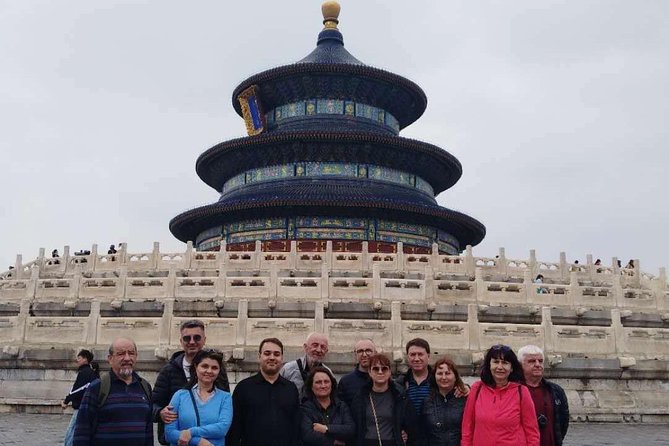
The Temple of Heaven rounds out day 2 with a different mood: less power-at-a-glance and more ritual and belief. Emperors of the Ming and Qing dynasties used this site to worship the god of heaven and pray for good harvests, so it feels like a bridge between architecture and agriculture—between governance and survival.
Practical note: two hours at each major site is a tight but workable plan. Wear shoes that can handle uneven stone and long indoor-outdoor transitions. If you get museum-fatigue quickly, this day could feel like a lot, but the variety helps.
You can also read our reviews of more boat tours in Beijing
Great Wall at Mutianyu and the Olympic Green sites
The next day shifts from imperial centers to something you can feel in your legs. Mutianyu Great Wall is one of the best-preserved and best-known sections, and it’s known for breath-taking scenery with fewer tourists. That’s a big deal. When crowds are smaller, you spend more time looking and less time constantly shuffling.
You’ll have about three hours for the Great Wall. That’s long enough to see the main stretch, take photos without racing, and settle into the rhythm of climbing and stopping.
Later you’ll head to Beijing Olympic Park, also called the Olympic Green. It’s the venue area for the 2022 Winter Olympics and also includes key structures from the 2008 Summer Olympics. You’ll see the Bird’s Nest and the Water Cube area as part of the park visit. The Water Cube admission is listed as free, and in practice that means you can spend more time simply absorbing the design and less time thinking about entry costs.
Practical note: this is a “photo-and-walk” day. Keep water and take breaks when you need them. The Great Wall portion is the anchor; the Olympic Park is more about modern architecture and quick context.
Hutongs and the Summer Palace: Beijing’s everyday side plus imperial gardens
If you only see palaces, Beijing feels untouchable. The hutong portion changes that. You’ll take a hutong tour through older lanes laid out during the Ming and Qing eras. The point isn’t just sightseeing; it’s shopping, dining, and understanding street life. Even a couple hours can give you a feel for how neighborhoods work: small-scale, personal, and practical.
Then you’ll shift to a different world at the Summer Palace (Yiheyuan). It’s described as the best-preserved imperial garden in the world, and it’s also the largest of its kind still in existence in China. You get about six hours, which is about right. Gardens are layered: pavilions, paths, water views, and changing perspectives as you move.
The Summer Palace is only about 15 km from central Beijing, but it feels like you left the city. That contrast is one of the best reasons to do these two stops back-to-back: it stops Beijing from feeling one-note.
Consideration: six hours is a commitment. Plan to slow down. If you try to power through like a checklist, you’ll miss what makes a garden special.
Xi’an’s Terracotta Warriors and the Muslim Quarter shopping time
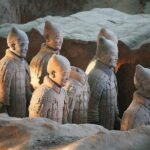
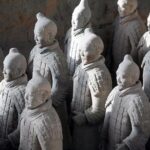
Then you head west to Xi’an, where history becomes very physical. The highlight is the Museum of Qin Terracotta Warriors and Horses. You’ll spend about six hours here, and this is the kind of stop where time adds up quickly because you’re not just looking—you’re decoding formations, scale, and purpose. Seeing troops, horses, and carriages laid out in battle formation turns “a famous artifact” into something you can almost picture in motion.
Next is the Xi’an Bell Tower, about one hour. It sits in the center of the ancient city area and was built in 1384 (during the Ming dynasty). It’s a neat counterpoint to the Terracotta Warriors: less ancient battlefield, more city rhythm and ceremony.
Then you’ll get shopping time in Muslim Quarter for about three hours. This is where you get a more everyday China experience—small streets, local food and goods, and the bustle of a neighborhood that’s been shaped by long-standing community life. Admission is listed as free here, which usually means you can control your budget better.
Practical note: Xi’an can be cooler or warmer depending on the season, but the Terracotta time is usually the longest mental effort. Pace yourself in the museum so you’re still curious by the time you reach the Bell Tower and markets.
Xi’an City Wall on two wheels and Big Wild Goose Pagoda
Xi’an gives you another big stage the next day: the Ancient City Wall (Chengqiang). You’ll have about two hours, and the tour arranges either bicycle or a sightseeing car for wall circulation. That matters because the wall is long enough that “just walking” can exhaust you fast. Riding helps you cover more and also keeps the experience fun rather than purely strenuous.
After that, you’ll visit the Big Wild Goose Pagoda (Dayanta) for about one hour. This Buddhist site has a history of over 1,300 years and is a well-preserved holy place. Even if you’re not focused on religion, it gives you a sense of how the region’s spiritual story fits into the city’s larger history.
Consideration: with the City Wall experience and then a pagoda visit, this can feel like “outdoors plus stairs plus sun” depending on weather. Bring a hat and take shade breaks when needed.
Boarding the Yangtze: Fengdu shore options and the Three Gorges build-up
Now the trip changes its tempo. You get into the Yangtze River Cruise portion, with buffet lunch served on board during the shore-excursion day. That’s a real sanity saver. Cruise days are more relaxed, but you still want that one meal that doesn’t become a hunt.
On day 7, you’ll have a morning shore plan connected to Fengdu. The Jade Emperor is arranged in the morning. You also have the option of an additional shore excursion to Fengdu Ghost City for extra cost, but it’s not included by default. That’s a nice setup: you can choose based on your interest in the supernatural-themed folklore side of the region.
Day 8 gets you closer to the gorges. You’ll visit Baidicheng scenic area, also referenced as Fengjie White Emperor City. It’s described as a dramatic, water-surrounded area linked to the Yangtze and the Three Gorges route, with lots of waterfall scenery around it. Admission is not included here, so keep that in mind if you plan to be on the strict “included-only” side.
You’ll also take in Qutang Gorge, the shortest of the Three Gorges at about 8 km. Many people consider it the most dramatic, and the description points to sheer cliffs and the Meng Liang staircase from the Song dynasty. Qutang Gorge starts at the White Emperor City in the west and ends at Daxi Stream in the east.
Practical note: the gorge scenery is the payoff, but conditions matter. Even when you stay comfortable, the best views are usually on schedule. Stay flexible and don’t expect a stop to be as long as a land museum.
Three Gorges Dam Site: where engineering meets the river’s scale
Day 9 focuses on the Three Gorges Dam Site, located upstream from Yichang at Sandouping Town. The tour marks its position upstream from Gezhouba Dam lock and inside the third of the Three Gorges. It’s listed as part of the experience without included admission.
Here’s why this stop is worth your attention: it changes how you understand the Yangtze itself. The Three Gorges area isn’t only famous because it looks good on a postcard. It’s famous because people built a major solution to a major problem—then the river and surrounding communities had to adjust.
Consideration: dam sites can be less emotional than temples or walls, and that’s okay. If you like practical, real-world “how society works” moments, you’ll likely enjoy it. If you only want scenic views, it may feel more informational.
Shanghai day: Jade Buddha Temple, Oriental Pearl Tower, Yu Garden, and the Bund
After the river comes the city energy. Shanghai on day 10 is a greatest-hits blend of faith, design, gardens, and skyline drama.
You start at Jade Buddha Temple for about two hours. The key detail here is the white jade Buddha installed after a monk brought it from Burma to the Zhejiang area in 1882. It gives the temple a concrete story, not just a pretty setting.
Next is Oriental Pearl Tower (Dongfang Mingzhu) for about three hours. At 468 meters it’s a recognizable landmark, and the description highlights its architectural concept of big and small pearls dropping onto a jade plate. It’s a good choice for first-timers because the tower gives you an instant sense of scale for Shanghai.
Then you’ll spend about two hours at Yu Garden (Yuyuan). It’s a classical Chinese garden that was inaugurated in the Ming dynasty, and even though it’s under five acres, it’s designed as a world in miniature—pavilions and corridors, hills and rocks, lotus ponds, bridges, and winding paths. This is the spot that slows you down, even if the rest of Shanghai feels fast.
You also have time for Nanjing Road and the Bund. Both are listed as not included, but they’re major stops for how Shanghai feels in motion. Nanjing Road is China’s No. 1 commercial street in the tour description, and the Bund gives you the classic riverfront skyline view across the Huangpu River.
Practical note: Shanghai’s day can be long. If you want the most out of it, keep one mindset: switch modes. Temple calm, tower views, garden walking, then riverfront energy.
Nanjing Road energy, a final free day, and getting to Pudong
Day 11 is flexible. You’ll have a free day, and the tour team can arrange transport to Pudong International Airport at the end. One option is the Maglev train to Pudong airport; the other is a direct drive.
This is valuable because Shanghai can be so big that you’ll want extra time for what you liked most—shopping, a return visit, or simply wandering. A free day also helps if you’re trying to recover after full days of walking.
Consideration: since the end is at Pudong, don’t leave anything important for the last hours without confirming your timing. The tour plan can arrange transport, but you’ll still want to stay aware of departure windows.
Price and value: what you get for $2,484
The published price is $2,484 per person for about 11 days and 10 nights. For a trip that includes a multi-day river cruise plus many major entrance tickets, the value comes from what’s bundled.
Included highlights:
- Entrance fees and the Yangtze Cruise (so you’re not constantly paying on the spot)
- Driver/guide
- Hotel accommodation
- Hotel/port pickup and drop-off
- Bottled water
- Meals listed as 10 breakfasts, 9 lunches, and 2 dinners
Not included:
- International airfare or train tickets in and out of China
- Optional tours and activities, plus meals not included
- Private expenses
Here’s how I’d judge the value for you: if you’d otherwise pay for a Yangtze cruise and then separately buy tickets for Forbidden City, Temple of Heaven, Great Wall (Mutianyu), Terracotta Warriors, major Xi’an stops, and the Shanghai trio, the “all-in” structure tends to save time and stress. It also helps group travel because schedules line up more cleanly.
One more detail that can matter: the tour uses a mobile ticket feature and includes group discounts. That’s not the headline, but it usually means fewer headaches when you’re scanning in and out.
Who this tour suits best (and who should think twice)
This fits best if you:
- Want a high-ROI highlights route across Beijing, Xi’an, the Yangtze, and Shanghai
- Like a mix of iconic sites plus at least a few local-feeling stops like hutongs and the Muslim Quarter
- Prefer guided pacing over independent logistics during big-city transitions
You might think twice if you:
- Want lots of free time in every city (this trip packs stops)
- Plan to skip nearly all optional add-ons on the cruise side (some gorge-area visits have admission not included)
- Dislike structured days with limited on-the-ground flexibility
Light humor, heavy truth: this is a “see China fast, then take your time on the river” plan. If you need the opposite, you’d probably want a slower itinerary.
Should you book this 11-day Beijing–Yangtze–Shanghai tour?
I’d book it if you want a clean path through the classic hits, with the Yangtze acting as your reset button. The best reason is the balance: palace-and-wall intensity early, historic city layering in Xi’an, then a cruise that gives you a break from constant transit, followed by a Shanghai finish with major landmarks and a free day to breathe.
If you hate schedule intensity, wait. Also, budget a little for the few places marked as not included, especially on the Yangtze shore-excursion side.
If you’re on the fence, decide this way: are you the type who would rather pay once for a guided bundle than spend your vacation threading tickets and maps? If yes, this trip is built for you.
FAQ
How long is the tour?
It runs for about 11 days and 10 nights.
Where does the tour start and end?
It starts at Beijing Capital International Airport and ends at Pudong International Airport in Shanghai.
What major cities are included?
Beijing, Xi’an, the Yangtze River cruise route (including shore excursions around the Three Gorges area), and Shanghai.
Is the Yangtze cruise included in the price?
Yes. The price includes the entrance fees and the Yangtze Cruise.
Are entrance tickets included for key sights like the Forbidden City and Great Wall?
Many are included, including Tiananmen Square, the Forbidden City, the Temple of Heaven, and Great Wall at Mutianyu, plus several major sites in Xi’an and Shanghai.
Is Fengdu Ghost City included?
The Jade Emperor is arranged in the morning. Fengdu Ghost City is an optional shore excursion with extra cost.
How many meals are included?
The tour lists 10 breakfasts, 9 lunches, and 2 dinners, plus bottled water.
Is there any free time during the trip?
Yes. You have free time on day 1 after hotel check-in, and day 11 is a free day.
How do you get to the airport on the last day?
You can use a Maglev train to Pudong airport, or you can be driven directly to the airport.
What is included and not included regarding transport and flights?
International airfare or train tickets in and out of China are not included. Hotel/port pickup and drop-off are included.
What info is needed when booking?
You’ll need the passport name, number, expiry date, and country for all participants.
Can I cancel for a full refund?
You can cancel up to 6 days in advance for a full refund, based on local time cut-offs.