REVIEW · VENICE
Private Venice Canal Cruise: 2-Hour Grand Canal and Secret Canals
Book on Viator →Operated by Avventure Bellissime · Bookable on Viator
Venice feels different from the water. I love the quiet back-canal detours and the Jewish Ghetto walk, and I’d plan for one possible drawback: boat seating can feel tight, so you might be standing for the best views and photos.
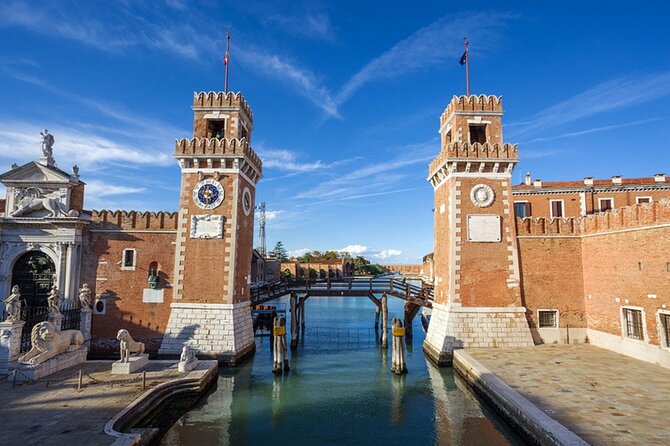
This route also pulls you through Porta dell’Acqua into the Arsenale shipyard, then breaks the day up with a hand-craft stop in Dorsoduro.
You’ll start and finish near St Mark’s Square, so it works well as a first-day plan when you want orientation without spending half your morning getting lost.
In This Review
- Key highlights worth caring about
- Venice Canal Cruise in 2 Hours: The Rhythm You’ll Actually Like
- Meeting at Giardini Reali near St Mark’s Square
- St Mark’s Square to the Grand Canal: where the water does the sightseeing
- Rialto Bridge from beneath: the quick photo moment you’ll want to plan for
- Porta dell’Acqua and the Arsenale: Venice’s shipyard power, up close
- Jewish Ghetto Ebraico: time to walk, not just look
- Cannaregio, Santa Croce, and the “secret canals” question
- Dorsoduro gondola workshop area: watching the craft survive
- Accademia bridge views, church façades, and the Santa Maria di Nazareth moment
- Boat comfort, seating, and hearing the guide: what to plan for
- Price and value: $521.33 per person, and what you get for it
- Who this cruise suits best
- Should you book this private Venice canal cruise?
- FAQ
- How long is the canal cruise?
- Where does the tour start and end?
- Is the tour private?
- Do I need to be picked up from my hotel?
- Is the guide available in English?
- How much time do you spend in the Jewish Ghetto?
- Does the tour include the Grand Canal?
- Do you enter the Arsenale shipyard?
- Is there a gondola workshop stop?
- Does the tour run in bad weather or high water?
Key highlights worth caring about
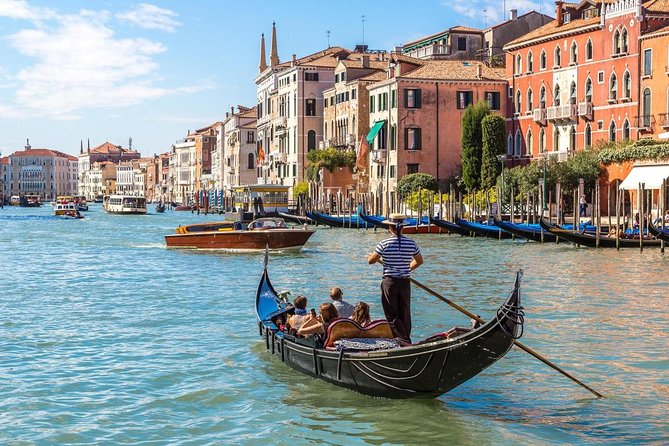
- Jewish Ghetto stop with time to walk: you get a real break from the boat for photos and a short stroll around the main square.
- Porta dell’Acqua entrance to the Arsenale: you see one of Venice’s power centers from inside the historic shipyard gates.
- Grand Canal ride plus minor canals: big views early, then smaller waterways where Venice feels more lived-in.
- Dorsoduro gondola workshop area: you can watch the handwork behind the classic gondola shape.
- Small-group feel (about 8/9 on the Grand Canal segment): more listening time, less elbow-to-elbow chaos.
Venice Canal Cruise in 2 Hours: The Rhythm You’ll Actually Like
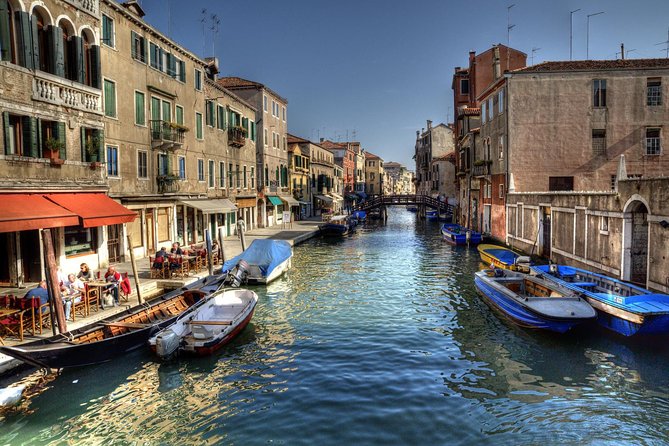
A lot of Venice tours try to cram too much into too little time. This one has a better pace. You spend your short window on the water, then add two key foot moments: the Jewish Ghetto and photo-friendly neighborhood time.
The overall route is built for variety. You get star-name views from the Grand Canal area, then you cut sideways into canals that usually stay off most first-time itineraries. That blend matters because Venice rewards different angles: grand façades look best from the wide water, while daily-life scenes feel real in the narrower passages.
And since the tour is private as an activity, it’s designed for your group only. In practice, that often means you can hear the guide better and move at a more human pace than big-group shuffles.
Meeting at Giardini Reali near St Mark’s Square
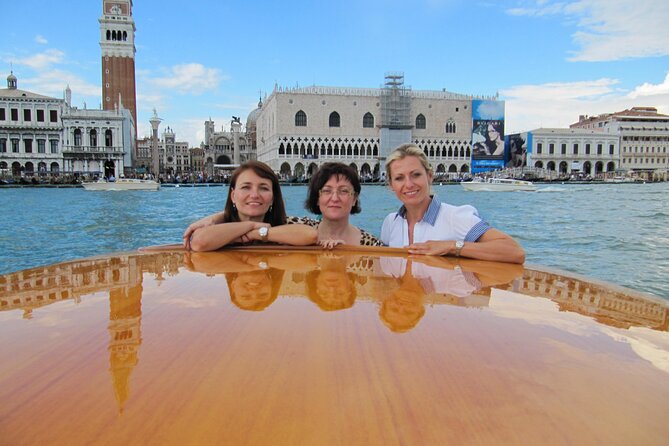
You meet at Giardini Reali, in Piazza San Marco (30124 Venezia). It’s a handy spot because it puts you close to the action without forcing you to start inside the thickest crowds.
From the water, you’ll get your first big Venice impressions quickly. The tour begins with views over St Mark’s Square and the Doge’s Palace from the boat—exactly the kind of “wait, that’s real” moment you want early in the trip.
Practical tip: Venice streets can slow you down fast, especially if you’re wrangling bags or trying to find the right little walkway to the launch point. Give yourself a bit of buffer. One frustrating thing with water tours is that the boat usually doesn’t wait long.
St Mark’s Square to the Grand Canal: where the water does the sightseeing
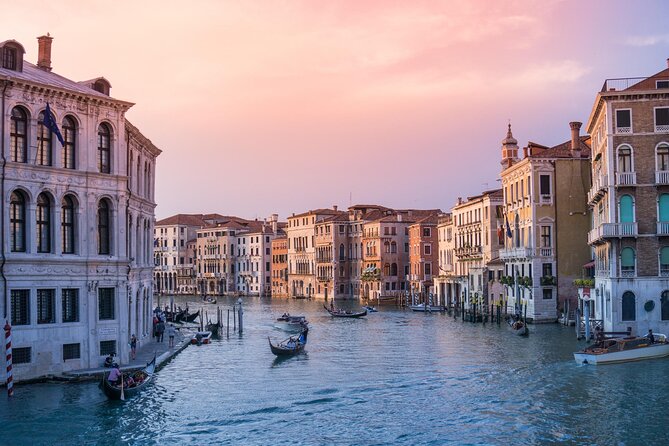
The core of the experience starts right away with a Grand Canal segment led by your English-speaking guide in a small group (around 8/9 people for that main part). Expect about an hour of cruising with commentary—enough time to get oriented without feeling like you’re stuck on the boat the whole trip.
As you go, you’ll pass landmarks and church façades that you can’t properly appreciate from street level. Venice is tall and tight in most places, so from the canal you finally see the full height of buildings and how the city lines up along the water.
What I like about this approach: you’re not just seeing sights. You’re learning how the canal system shapes Venice. That helps later when you decide what to explore on foot (and what to skip because it’s too far, too crowded, or too annoying).
Rialto Bridge from beneath: the quick photo moment you’ll want to plan for
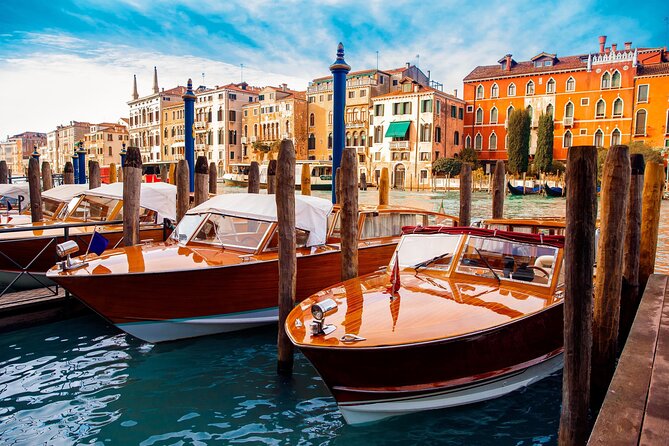
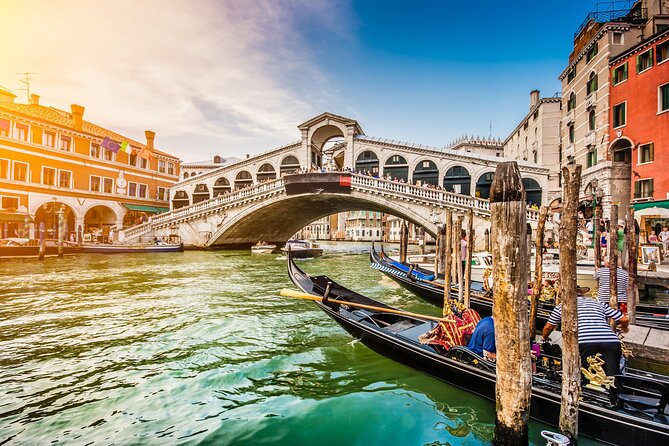
You’ll pass under the Rialto Bridge during the cruise. This is one of those sights that looks slightly different from every direction, and from the water it has a “frame” effect. You’ll also get a better sense of how busy that crossing really is.
If your goal is photos, stand where you can see both the bridge and the bank details. On this style of motor-launch, not everyone always has perfect sightlines at the same time, especially if some passengers choose to sit inside when it’s chilly.
So here’s the trick: take a first photo while you’re still moving through the area, then take a second when the boat slows enough for you to aim cleanly. You’ll get more keepers that way.
Porta dell’Acqua and the Arsenale: Venice’s shipyard power, up close
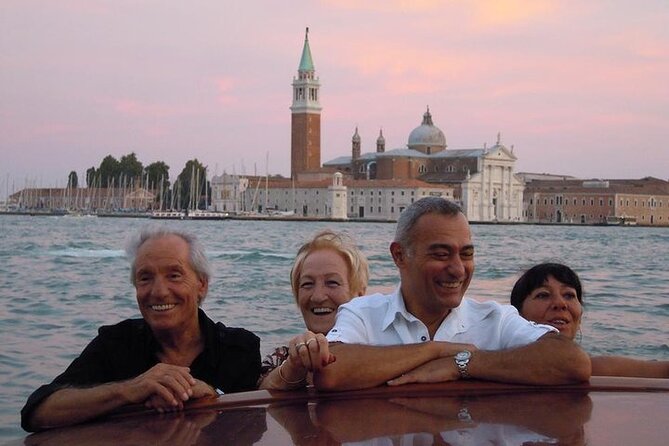
One of the strongest parts of the tour is the visit to the Arsenale. You enter via Porta dell’Acqua, the gates that connect the city to the shipyard through the waterways.
This isn’t just a pretty exterior stop. The Arsenale was Venice’s 12th-century shipyard, once among Europe’s biggest naval production centers. Even if you don’t go deep into engineering details, the experience makes the point: Venice didn’t become powerful by luck. It had infrastructure.
What to watch for as you glide near and through this area: the sense of purposeful architecture. Shipyards are built for function, not romance, and that contrast is part of the value. It’s a good antidote to the usual “Venice = canals and gondolas” simplification.
If you’re the type who likes understanding how a city actually worked, this stop will land well.
Jewish Ghetto Ebraico: time to walk, not just look
Next comes the Jewish Ghetto stop. You’ll disembark for about 15–20 minutes (and on the tour structure you’ll see it as roughly a short walk segment).
This is not a long museum-style visit. It’s a focused window to step onto the street and absorb what you’d miss from a boat ride. You’ll spend time around the main square and take photos of the centuries-old buildings that line the area.
A short walk here also helps you connect the neighborhood’s character to the water. Venice’s canals don’t sit beside the city; they shape how people lived and traveled. Getting your feet on the ground briefly makes that real.
If you have any mobility limits, keep in mind this part includes walking on uneven Venetian surfaces. Wear supportive shoes; you want sure footing more than fashion.
Cannaregio, Santa Croce, and the “secret canals” question
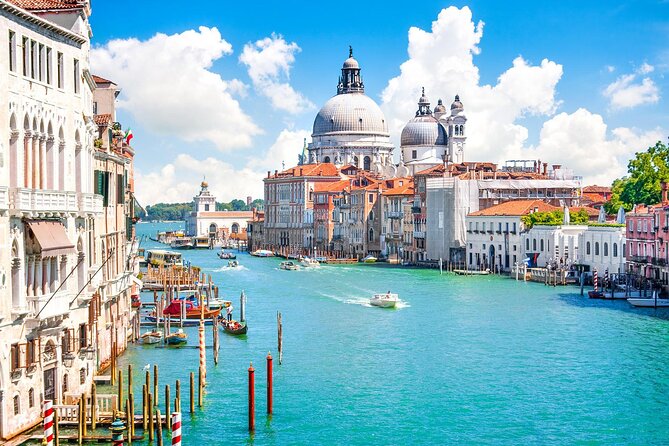
The tour’s selling point includes canals away from the heaviest tourist traffic—especially through neighborhoods like Cannaregio and Santa Croce. In real life, this often means “narrower, less interrupted by big crowds,” not total sci-fi secrecy.
That’s still a win. Venice has a way of becoming visually repetitive when you’re only following the same well-trodden routes. When you move through quieter canals, you notice new small things: water-level details, more locals’ daily rhythms, and bridges that feel more like infrastructure than backdrops.
Two practical benefits here:
- You’ll learn how to spot the nicer quieter waterways for your next day of exploring.
- You’ll get a calmer photo experience, especially if you’re traveling during high season.
Just don’t expect this to replace a guided walking tour in terms of time on the street. The canal cruising remains the main event.
Dorsoduro gondola workshop area: watching the craft survive
Dorsoduro is where the tour shifts toward Venetian craft. You pass a gondola workshop where craftsmen carve and finish gondolas by hand. You’re not just seeing the end product; you’re watching the labor behind it.
There’s also a mention of Squero San Trovaso, one of the oldest and still active places where gondolas are built. Even if you’re only passing by or catching a view of the area, it helps you understand gondolas as working craft, not just a tourist icon.
This part is great if you like:
- technique and materials
- seeing how “heritage” stays alive through skilled work
- a change of pace from sightseeing to process
If you’re wondering whether this will feel too short: it’s brief on purpose. The tour is only about two hours, and it has to rotate through the Grand Canal, the Arsenale, and the Ghetto. Think of the gondola workshop area as a meaningful stop-light, not a full workshop visit.
Accademia bridge views, church façades, and the Santa Maria di Nazareth moment
As you head back toward the wider Grand Canal cruising, you’ll pass the Accademia gallery and bridge area. From the water, this gives you another layer of Venice’s “art city” identity, with buildings lining up in a way that’s hard to replicate from the street.
You’ll also see the Baroque church Santa Maria di Nazareth while cruising down the Grand Canal. And around the Santa Croce side, you’ll pass spots like Ponte degli Scalzi near the train station.
These are mostly “pass-by” moments, but they matter because they help you learn the geography. Venice can feel like one giant labyrinth until you start recognizing anchors: bridges, major churches, museum areas, and where the canal widens.
If you’re planning to revisit later (many people do), this kind of orientation makes the next day far easier.
Boat comfort, seating, and hearing the guide: what to plan for
The tour uses a motor-launch style boat. It can be comfortable and smooth, but the big variable is seating and sightlines.
Based on real experiences, the boat may have limited outdoor seating at any one moment. In some departures, the group divides between the open-air viewing area and interior space. That can create a problem: people inside might not see as well, and people outside might have to stand to keep a clear line of sight.
If you care about photos, aim for a position where you’re not blocked by shoulders. If you care about hearing, choose a spot closer to where the guide’s commentary is best projected.
On these types of canal tours, guides typically use a microphone. Still, if there’s distracting noise onboard, it can be harder to catch every sentence. The fix is simple: if hearing is tough, politely flag it and adjust your position so you’re closer to the guide.
Weather matters too. The tour runs in all weather conditions, and during high water the route can adapt to the conditions. This is a good reason to dress for sudden damp and wind. Venice weather loves plot twists.
Price and value: $521.33 per person, and what you get for it
At $521.33 per person, this isn’t a budget canal ride. So you should ask: what am I really paying for?
Here’s the value logic that makes sense:
- You get a guided experience in English, not just “sit and drift.”
- You include two standout elements that usually cost time on your own: the Arsenale entrance via Porta dell’Acqua and the Jewish Ghetto stop.
- You also include gondola craft viewing in Dorsoduro plus Grand Canal cruising and major pass-bys.
In other words, you’re paying for a tight route with multiple “separate interests” packaged into one short outing. If this is your first day in Venice, that efficiency can be worth it because you’ll waste less time later figuring out what you actually liked.
Also, private tour as an activity can translate into a more personal feel. One day you may get a full small group; another day you might feel like it’s truly just your circle on the boat. Either way, smaller groups generally mean you can ask more questions without shouting over everyone else.
Who this cruise suits best
This tour is a strong fit if you:
- want Venice orientation fast, ideally your first day
- like mixing iconic sights (Rialto, Grand Canal) with less-crowded angles
- care about the Jewish Ghetto as more than a postcard
- want a short, guided experience that still includes real walking time
It might be less ideal if you:
- expect long Grand Canal coverage far up the canal
- need lots of time in one neighborhood rather than quick hits
- get very picky about boat type and seating comfort
And if you’re a camera person, come ready to adjust your position and timing. You’ll get great shots, but you’ll need to manage the flow onboard.
Should you book this private Venice canal cruise?
I’d book it if you want a high-value “Venice overview” that still takes you off the main pedestrian tracks. The combo of Arsenale access via Porta dell’Acqua, a real Jewish Ghetto walking stop, and a gondola craft glimpse in Dorsoduro is a smart use of two hours.
I’d be cautious if you’re very sensitive to crowded seating or if you know you’ll struggle with visibility from certain spots on the boat. In that case, pick your seat early and be ready to stand for photos during the most photogenic moments like the Rialto Bridge passing.
If you want a memorable first taste of Venice that feels guided, not rushed, this one is worth serious consideration.
FAQ
How long is the canal cruise?
It’s about 2 hours (approx.).
Where does the tour start and end?
It starts at Giardini Reali, Piazza San Marco, 30124 Venezia, and ends back at the same meeting point.
Is the tour private?
Yes. It’s listed as a private tour/activity, and only your group will participate.
Do I need to be picked up from my hotel?
No hotel pickup and drop-off is included.
Is the guide available in English?
Yes, the tour is offered in English.
How much time do you spend in the Jewish Ghetto?
You’ll disembark for about 15–20 minutes to explore the historic quarters by foot and take photos.
Does the tour include the Grand Canal?
Yes. You’ll have a Grand Canal ride, including a 1-hour Grand Canal and minor canals segment.
Do you enter the Arsenale shipyard?
Yes. You enter via Porta dell’Acqua into the historic Arsenale shipyard.
Is there a gondola workshop stop?
Yes. You’ll pass by a gondola shipyard/workshop area in Dorsoduro and also see Squero San Trovaso as you tour.
Does the tour run in bad weather or high water?
Yes, it operates in all weather conditions. During high water, the route may be partly adapted to weather conditions.