Bruges looks different from water. This private tour strings together Bruges’ medieval landmarks with a 30-minute canal cruise, so you see the city from two angles: on foot and from the waterways. You get a structured route that hits major squares and churches, then shifts to a slower pace as the guide’s stories follow the canals.
I especially like the stop-and-go rhythm. In about 2.5 hours you cover key spots like the Belfort, major squares, and the Onze-Lieve-Vrouwekerk area, with commentary built for first-time visitors. I also like how the tour ends with the canal segment from Quai du Rosaire / Rozenhoedkaai, which makes the city feel more three-dimensional than photos ever do.
One drawback to think about: the experience depends on good weather, and one review called out that the canal boat may not be fully private. If you’re booking on a rainy day, you’ll want a plan for flexibility.
In This Review
- Quick hits on this Bruges private walking tour and canal cruise
- A route designed for your first time in Bruges
- Where you start (Markt 5) and where you end (Church of Our Lady)
- Stop-by-stop: Belfort, Jan van Eyckplein, Sint-Annakerk, and Adornes Domain
- Burg Square and Stadhuis: the civic heart of old Bruges
- Vismarkt and Huidenvettersplein: everyday life in small doses
- Dijver, Gruuthusemuseum, and Onze-Lieve-Vrouwekerk
- Rozenhoedkaai canal cruise: the 30 minutes that reframe everything
- Price and value at about $197.63 per person
- Who should book this private Bruges tour (and who should pause)
- Should you book this private Bruges Historical Walking Tour with Canal Cruise?
- FAQ
- How long is the private Bruges Historical Walking Tour with Canal Cruise?
- Where do we meet, and where does the tour end?
- Is this tour private?
- What’s included in the experience?
- What should we expect for fitness and walking?
- What happens if the weather is poor?
Quick hits on this Bruges private walking tour and canal cruise
- Licensed guide storytelling across medieval squares, churches, and civic buildings
- 2.5 hours on foot followed by an easy, scenic 30-minute canal cruise
- Major Bruges landmarks in one route, with short stops that keep the energy moving
- Free entry is shown for the listed stops, so you’re not juggling extra tickets
- Private experience for your group, with mobile ticket use for smoother start
A route designed for your first time in Bruges
This tour is built for the moment when you land in Bruges and want a clear mental map fast. Instead of wandering randomly, you walk a line that connects the old market and civic core to the church area, then to the canal viewpoints. It’s the kind of pacing that helps you understand where everything sits and why it mattered.
The big win is how the stories match the places. You’re not just looking at postcard facades. You’re getting context for what you’re seeing—market life around Belfort, the role of churches in daily neighborhoods, and how wealthy families shaped the city.
And then comes the shift. The canal cruise is only 30 minutes, but it changes how you process the route you just walked. From the water, the streets and towers line up in a way that makes Bruges feel like one connected scene rather than a bunch of separate stops.
You can also read our reviews of more tours and experiences in Bruges.
Where you start (Markt 5) and where you end (Church of Our Lady)
You begin at Markt 5, 8000 Brugge, a practical spot because it’s central to the main historic area. That matters because Bruges is easy to explore, but timing gets tricky if you start far from the sites you care about.
You finish at the Church of Our Lady, Mariastraat, 8000 Brugge. That ending point is smart if you plan to continue on your own afterward. You’ll be close to more sights in the church district, plus the canal area you just used for the cruise.
Plan your day around the full duration—about 3 hours 30 minutes. If you’re also booking a food stop or a museum visit, treat this as your “backbone” tour. It sets up the rest of your Bruges time.
Stop-by-stop: Belfort, Jan van Eyckplein, Sint-Annakerk, and Adornes Domain
Your first stretch focuses on Bruges’ most recognizable civic and religious landmarks, but with enough variety to keep it from feeling like a checklist.
1) Belfort (30 minutes)
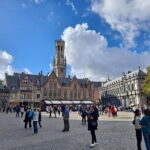
You start at the market square area, where the guide covers the history of the square and its surrounding historical buildings. This is a strong opener because market squares are where power shows up in everyday life. Even if you don’t climb or go inside anything big (the stop is marked free), you get the meaning of the architecture around you.
2) Jan Van Eyckplein (20 minutes)
Next you move to the square named for Jan van Eyck. The stop includes history tied to the square and the surrounding buildings. For art lovers, this is a quick way to connect Bruges to a major name. For everyone else, it explains why certain parts of the city got attention and prestige.
3) Sint-Annakerk (10 minutes)
A shorter church stop follows at St. Anna’s neighborhood area. The value here is the neighborhood context—churches weren’t just buildings, they were anchors for local life. A 10-minute block keeps you from lingering too long and losing the thread of the route.
4) Adornes Domain (10 minutes)
Then you hit Adornes Domain, tied to the history of the church of Jerusalem and the Adornes family. Even in a brief stop, this works because it connects place to people. You’ll understand that Bruges wasn’t only merchants and kings—it was also family lines, patronage, and religious settings linked to households.
If you want one practical tip: keep your questions simple and timely. When the group pauses at a specific building, that’s the best moment to ask what to notice next. The route format is short, so you’ll get more out of your curiosity at each stop rather than saving it for later.
Burg Square and Stadhuis: the civic heart of old Bruges
After the early church and square stops, the tour tightens into Bruges’ civic center.
5) Burg Square (20 minutes)
This stop gives you an overview of buildings around Burg Square, plus why the square matters historically. Burg Square is one of those places where you can look at the skyline and still not understand who used it and for what. The guided framing helps you see civic architecture as a living record, not just a backdrop.
6) Stadhuis (20 minutes)
From there you visit the city hall. The time here is short enough to stay efficient, but long enough to explain what you’re looking at and why the building represents civic heritage. City hall stops are underrated on walking tours because they teach you how a city governed itself—who had influence, and how authority looked in stone.
This portion is also where the tour becomes especially useful if you’ve only heard Bruges described as pretty canals. You’ll start to understand that the canals connect trade, and the trade fueled the institutions you’re now seeing.
Vismarkt and Huidenvettersplein: everyday life in small doses
Next comes a series of quicker “life in the city” stops. These are not huge stops, but they’re the ones that make your walking route feel real.
7) Vismarkt (10 minutes)
You get the history of Vismarkt and the habits connected to it. Markets were not only about buying food. They were about rhythms—when people gathered, what was available, and how work moved through neighborhoods.
8) Huidenvettersplein (5 minutes)
Then a very short stop at Huidenvettersplein, focused on history and habits of the square. This is the type of stop that might sound minor on paper, but it helps you stitch the city together. You leave with a sense of what kind of jobs or communities occupied the area.
These shorter blocks are also handy if you’ve got limited time. You still cover lots of ground, but you’re not forced to stare at one site for too long.
You can also read our reviews of more boat tours in Bruges
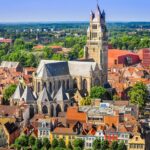
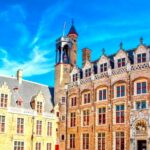
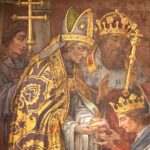
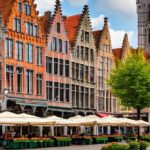
Dijver, Gruuthusemuseum, and Onze-Lieve-Vrouwekerk
The middle-to-late part of the tour shifts toward the church district and the family legacy that shaped Bruges’ look.
9) Dijver (10 minutes)
You walk along Dijver. The route here feels like a transition from big-picture squares to the canal-connected areas. If you’re trying to understand how Bruges “flows,” this is a helpful stretch.
10) Gruuthusemuseum (10 minutes)
Then you visit the Gruuthusemuseum area, focusing on the Gruuthuse family and heritage. A short stop can still be meaningful if the guide explains how families like this influenced art, buildings, and social status. Even if you don’t plan extra time inside afterward, the historical framing sets you up to recognize the bigger story.
11) Onze-Lieve-Vrouwekerk (5 minutes)
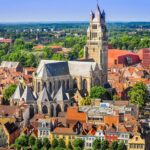
Finally, a brief highlight stop for Onze-Lieve-Vrouwekerk. Five minutes is short, but it works as a “spotlight moment” before you move to the water.
This trio is a good example of the tour’s overall style: it’s not trying to take over your entire day. It gives you the storyline so you can enjoy what you see next—on your own schedule.
Rozenhoedkaai canal cruise: the 30 minutes that reframe everything
The tour ends with a 30-minute canal cruise. The embark point is Quai du Rosaire / Rozenhoedkaai, and the canal segment is included.
This is the part I think most first-time visitors underestimate. Walking gives you height and detail. The cruise gives you alignment. You’ll notice how towers, roofs, and street lines relate to each other when seen from the water. It’s also a nice break after 2.5 hours of stops, especially if you’re traveling with someone who gets tired of nonstop talking.
Two notes to keep expectations clear:
- The cruise is the key payoff segment, so keep an eye on weather. The experience requires good weather, and poor conditions can mean a change of plans.
- Even though the tour is private for your group, one review specifically flagged that the canal boat may not be private. If you’re hoping for total exclusivity on the water, it’s worth asking the operator what private means in practice for the boat.
Price and value at about $197.63 per person
At $197.63 per person, this tour isn’t a budget add-on. It makes sense only if you value a guided route and a built-in canal experience, not just general sightseeing.
Here’s why it can feel like good value:
- You get about 3.5 hours of structured time with a licensed guide.
- You’re not only walking—your package includes the 30-minute canal cruise.
- The listed stops are marked free for admission, which reduces the “hidden ticket” feeling that can pop up on attraction-heavy days.
- It’s private for your group, so you’re not sharing your questions and pace with strangers in the same way as a large-group tour.
Where your money can feel less comfortable:
- If the canal boat turns out to be shared (as one review mentioned), the “private” label may not match your expectations for exclusivity on the water.
- On a rainy day, weather-based changes can be annoying, even if they’re handled by offering a different date or refund.
My practical take: treat this as a high-impact day-planner. If you’d otherwise spend hours figuring out the best order of sights, you’re paying for that convenience and for the guide’s ability to connect the dots.
Who should book this private Bruges tour (and who should pause)
This tour fits best if you:
- Want a first-time Bruges overview with context, not just photos
- Prefer a route that hits major landmarks plus shorter neighborhood stops
- Like the idea of ending with a calm canal cruise rather than squeezing in one more museum
It may not be your best choice if:
- You’re very sensitive to schedule changes from weather
- You strongly need the canal portion to be fully private for your group (one review raised a flag here)
- You want maximum time inside large attractions, since the stops here are intentionally time-boxed
Also factor in the physical side. The tour calls for moderate fitness. That usually means steady walking and getting from one stop to the next without long rests. If you know you’ll struggle with that, consider a shorter or more flexible alternative.
Should you book this private Bruges Historical Walking Tour with Canal Cruise?
I’d book it if your priority is a guided route that makes Bruges understandable fast, then gives you a relaxing payoff on the canals. The combination of a walking history sequence and the 30-minute cruise is exactly how you get the city to “click” rather than staying stuck in postcard mode.
I’d hesitate only if your expectations hinge on total privacy for the boat or you’re traveling in a period when rainy weather is likely and you hate the idea of plan shifts. If you can be flexible and you want a clean, guided structure, this is a strong value-for-time option.
If you do book, come ready to ask questions at each stop, not just at the end. The tour is built around those short pauses, and you’ll get the most from the guide when you’re standing right where the story happened.
FAQ
How long is the private Bruges Historical Walking Tour with Canal Cruise?
The experience lasts about 3 hours 30 minutes, including 2 hours 30 minutes of guided historical exploration and a 30-minute canal cruise.
Where do we meet, and where does the tour end?
You start at Markt 5, 8000 Brugge and end at the Church of Our Lady, Mariastraat, 8000 Brugge.
Is this tour private?
Yes. It’s listed as private, meaning only your group participates.
What’s included in the experience?
You get a guided walking tour of Bruges’ historical landmarks and a 30-minute canal cruise. The canal cruise is included.
What should we expect for fitness and walking?
The tour is designed for travelers with moderate physical fitness. It involves walking between multiple stops during the 2.5-hour guided portion.
What happens if the weather is poor?
The experience requires good weather. If it’s canceled due to poor weather, you’ll be offered a different date or a full refund.