REVIEW · BUDAPEST
Budapest: 3-Hour Live-guided Bus Tour and 1-hour River Cruise
Book on Viator →Operated by Eurama Travel Agency - Sightseeing City Tours Budapest · Bookable on Viator
Four hours, two different views of Budapest. This guided loop is a smooth way to hit big-name sights with air-conditioned bus comfort and real Danube postcard views on the 1-hour cruise. Guides such as Dora and Kristina help keep the history straight, and the stop times are built in for photos like Heroes’ Square and Fisherman’s Bastion. One thing to plan for: the Danube boat’s optional audio-by-QR can be hit-or-miss, so you may want to come prepared with headphones.
I like that this isn’t the loose, hop-off, hop-on style. You get a guided route with a coherent order, plus a Castle walk included, and the boat departs from a clear, named location (Dock no. 6, MAHART). The main tradeoff is that some departures can feel fast if you want to linger at every landmark, and a few people found bus windows tinted enough to limit shooting from certain seats.
In This Review
- Key highlights at a glance
- Why this Budapest bus-and-boat combo works
- Heroes’ Square and the Millennium Memorial stop
- Fisherman’s Bastion views (and the seven towers meaning)
- Castle District walking time without the overwhelm
- Pest-side landmarks: Parliament, the Opera, and St. Stephen’s Basilica
- Hungarian Parliament Building
- Hungarian State Opera House
- St. Stephen’s Basilica
- Danube cruise from Dock no. 6 (MAHART): what to expect
- Quick heads-up on the boat audio
- Timing and logistics: how to make it smooth
- Group size and the feel of the day
- Seat choices and window visibility
- Comfort, accessibility, and what to pack
- Price and value: is $51.66 a good deal?
- Who should book this tour—and who might skip it
- Should you book it?
- FAQ
- How long is the Budapest 3-hour bus tour plus river cruise?
- How much does it cost?
- Is the tour offered in English?
- What is included in the tour?
- Where do I meet the tour?
- Where does the Danube river cruise depart from?
- Are food and drinks included?
- Is there a mobile ticket?
- Can I cancel for free?
- What if the weather is bad?
Key highlights at a glance
- Air-conditioned comfort with live, on-bus guidance that keeps the day moving
- Heroes’ Square and the Millennium Memorial with the Seven chieftains symbolism
- Fisherman’s Bastion terraces and the meaning behind the seven towers
- Major Pest landmarks in one pass: Parliament, State Opera, and St. Stephen’s Basilica
- Danube cruise from MAHART Dock no. 6 for about an hour (with choice of departures)
- Mobile ticket + possible QR audio on the boat, which you’ll want to test early
Why this Budapest bus-and-boat combo works
Budapest is one of those cities where timing matters. Distances are manageable, but traffic and weather can slow you down fast. This tour solves the “where do I go first?” problem by stitching together a bus circuit of the big sights, then finishing with a Danube cruise that gives you a different angle of the same skyline.
You’ll get a live-guided experience, not just a map and audio track. And because the bus is air-conditioned, it’s much easier to stay comfortable during stop-and-go city driving—especially in hot summers or cold, windy shoulder seasons.
My favorite part is the pacing mix: you’re not stuck only viewing from a window. You have set photo time at major landmarks, plus a Castle walk component that helps you actually experience the Buda-side viewpoints instead of just driving past them.
You can also read our reviews of more boat tours in Budapest


Heroes’ Square and the Millennium Memorial stop
Heroes’ Square is where Budapest starts to feel like a national story, told in stone. The center feature here is the Millennium Memorial, built around Hungary’s millennium celebration themes.
This stop is especially meaningful because you’ll see the statue complex of the Seven chieftains of the Magyars, alongside other Hungarian national leaders. It’s also a great place to clear up a common confusion: the Memorial Stone of Heroes is often mistaken for the Tomb of the Unknown Soldier. The guide’s narration helps you read what you’re looking at, rather than just snapping photos and guessing.
You’ll spend about 30 minutes here, which is enough for:
- a couple of quick angles for photos,
- and a short break without losing momentum for the next hop.
If you love symbolism and want context for why certain landmarks are placed where they are, this is a strong start.
Fisherman’s Bastion views (and the seven towers meaning)
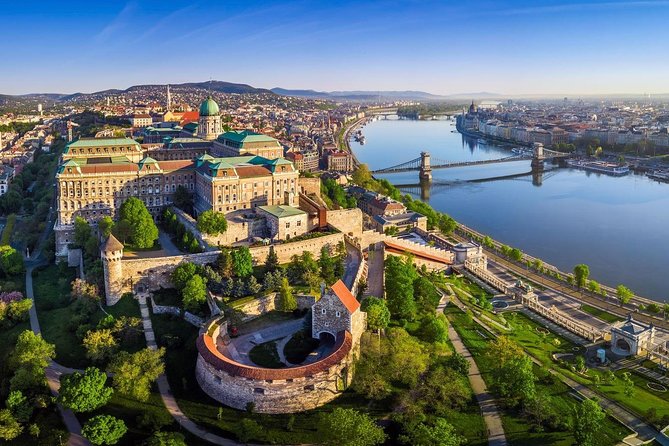
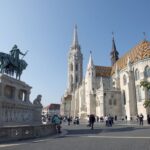
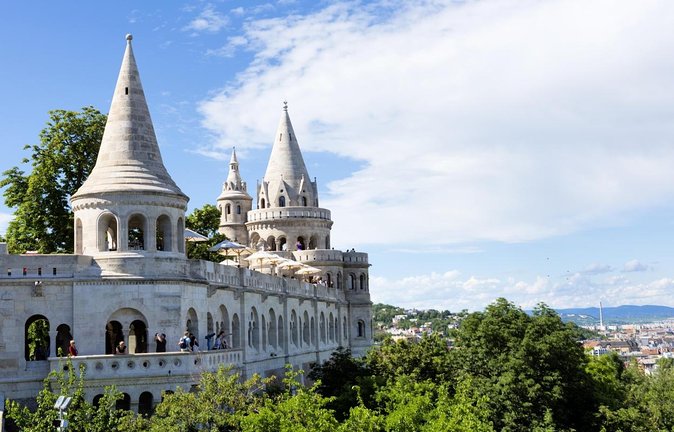
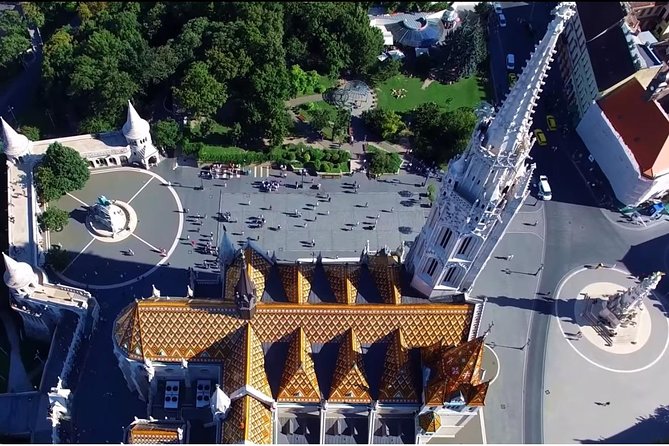
Next is Fisherman’s Bastion on the Buda Castle side, one of the city’s most recognized viewpoints. The big reason to come is the panorama—those Neo-Romanesque terraces give you a classic, “Budapest postcard” skyline view over the Danube.
What makes this stop more than a pretty lookout is the story behind the structure. The bastion’s seven high-pitched towers symbolize the seven chieftains who founded Hungary in 895. Even if you don’t study the details, it helps to know you’re looking at deliberate symbolism, not random medieval-looking architecture.
You’ll have about 1 hour here. That’s usually plenty of time to:
- walk along the terraces at a relaxed pace,
- find a couple of angles where the view lines up cleanly with the river,
- and take in the main façade that stretches roughly 140 meters parallel to the Danube.
A practical tip: if the weather is cold or windy, bundle up before you leave the bus. The terraces are exposed, and you’ll feel it.
Castle District walking time without the overwhelm
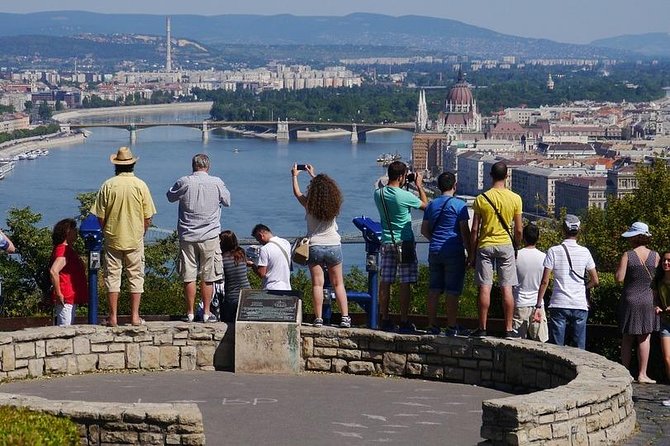
This tour includes a Castle walk, and that matters. Many short tours stop at a viewpoint and call it a day, but Budapest’s Castle District rewards actual foot movement. Walking helps you notice textures, sightlines, and how the buildings frame the city.
Some guide-led versions also cover more of the Castle area’s famous church-and-square atmosphere, so you may get a wider feel for the neighborhood than you’d expect from a bus-only schedule. The key is that you’re not stuck doing everything at street level from the vehicle window.
If you’re planning to pair this with other activities later, this Castle walk makes the day feel more complete. You’ll come away understanding how Buda and Pest “fit together” visually.
Pest-side landmarks: Parliament, the Opera, and St. Stephen’s Basilica
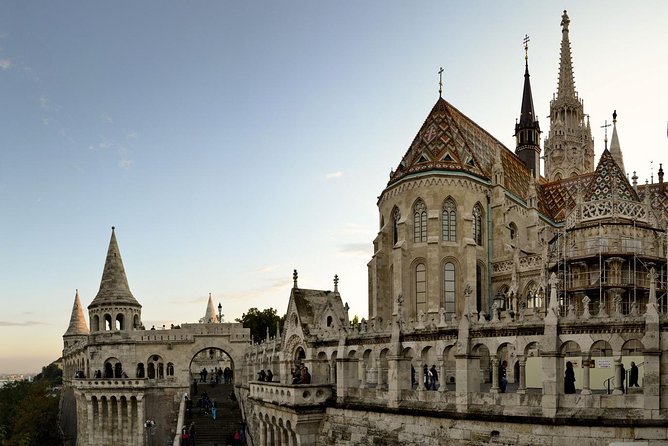
Once you’re back on the Pest side, the tour shifts into major-architecture mode. The bus circuit is where you see a lot fast—useful on a first visit when you want a high hit rate without a stressful self-guided day.
You can also read our reviews of more guided tours in Budapest


Hungarian Parliament Building
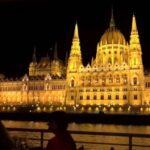
The Hungarian Parliament Building sits by the Danube in Kossuth Square and is the largest building in Hungary. It was designed by Hungarian architect Imre Steindl in a neo-Gothic style and opened in 1902.
Even if you don’t go inside, the exterior works as a visual anchor for the rest of the city tour. It’s the kind of landmark you’ll keep seeing from different angles later.
Hungarian State Opera House
Next is the Hungarian State Opera House on Andrássy út. It’s a neo-Renaissance building and was designed by Miklós Ybl. Construction began in 1875, supported by the city of Budapest and Emperor Franz Joseph I, and the opera house opened to the public on September 27, 1884.
This is another spot where the narration helps you understand why the building looks the way it does. And it’s a nice contrast after the heavy stone mood of Parliament.
St. Stephen’s Basilica
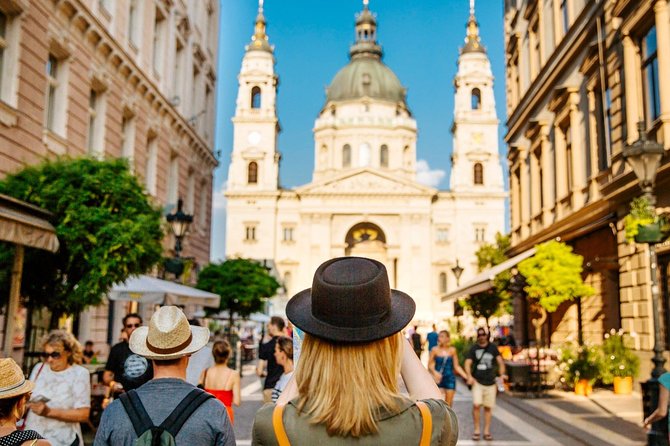
Then comes St. Stephen’s Basilica. It’s a Roman Catholic basilica named for Stephen, the first King of Hungary (c. 975–1038), whose right hand is housed in the reliquary.
What I like about this stop is the built-in way it connects architecture to identity. The basilica is also noted as the co-cathedral of the Roman Catholic Archdiocese of Esztergom-Budapest, and it’s described as the third largest church building in present-day Hungary. Again, you don’t need to memorize the stats to appreciate what you’re seeing.
If you’re the type who wants to learn while you look, the bus route does a good job keeping the story going from stop to stop.
Danube cruise from Dock no. 6 (MAHART): what to expect
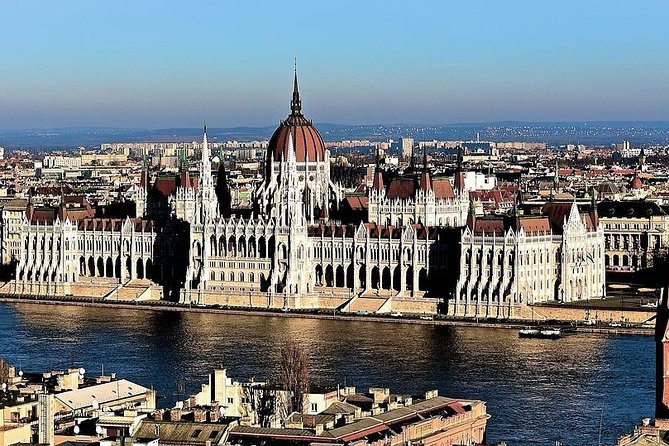
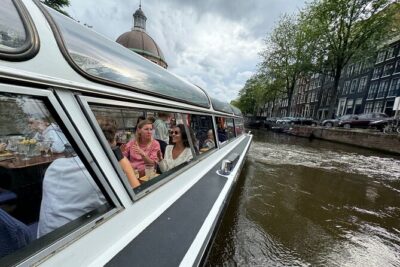
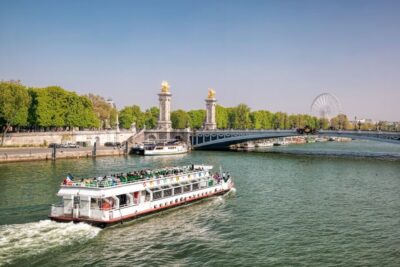
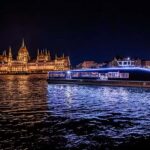
The final act is the river cruise: 1 hour on the Danube. The boat starts from Dock no. 6 (MAHART) at the MAHART terminal. The schedule also allows you to choose from more departures, which is handy if you want to pick a time that better matches daylight or your energy level.
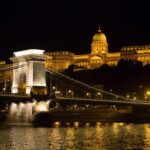
This portion gives you a skyline view you can’t get from land. Even when you know the landmarks, seeing them from water-level makes them feel bigger and more connected—especially the Parliament-area stretch of the river.
Quick heads-up on the boat audio
Here’s the potential weak spot. Some people found the boat’s audio setup required scanning a QR code, and the system wasn’t clearly explained at boarding. In a few cases, the QR audio didn’t load properly after selecting a language. Also, steamed-up windows made it harder to see the sites for people sitting inside.
What you can do:
- Bring or use headphones if you have them.
- Give yourself a minute early to test the QR link (if offered).
- If windows fog quickly, you might want a small cloth in your day bag to wipe a viewing spot.
And one more reality check: on boats, sound systems can be uneven. If you notice the commentary is hard to hear, don’t panic—you’ll still have the visuals, and that’s the main payoff.
Timing and logistics: how to make it smooth
This is about a 4-hour outing in total, combining the bus route, stops, and the river cruise. The itinerary includes a clear start and a clear finish:
- Start: Apáczai Csere János u. 12, 1051 (Budapest)
- End: MAHART PassNaveBudapest, Vigadó tér 5, 1051, with the boat departing from Dock no. 6
It’s described as near public transportation, which helps if you’re already exploring on your own before the tour.
Group size and the feel of the day
The tour has a maximum group size of 50 travelers. In practice, some departures can be quite small, which makes the experience feel closer to a personalized route. If you like your guide interaction and don’t want to shout across a huge crowd, this size ceiling is reassuring.
Seat choices and window visibility
A few people noted the bus had tinted windows and that seating position could limit what you can shoot from. If your priority is photos from the moving city streets, try to sit where you have a clear sightline—often closer to the front or an aisle seat can help, though it depends on the specific vehicle.
And if you’re sensitive to hearing one language over another, note that some guides may cover more than one language style during the tour. English is offered, but the on-board narration can feel like a mixed-language routine depending on the day’s group.
Comfort, accessibility, and what to pack
On the comfort side, the bus is air-conditioned and designed to keep you from overheating or freezing during frequent stops. That alone can make the difference between a frustrating day and a good one.
What to bring:
- Layers (Budapest weather can swing quickly).
- A small cloth if you run hot or if you expect window fog on the boat.
- Headphones if you want to use any QR-based audio on the cruise.
- Your day camera/phone—and a charger or power bank if you plan lots of photos.
If you’re traveling with mobility limits, confirm your comfort with short walks at stops. The tour includes a Castle walk, and most landmark times involve standing and taking stairs where relevant.
Price and value: is $51.66 a good deal?
At $51.66 per person, you’re paying for a tight package: air-conditioned bus, live-guided narration, a Castle walk, and a 1-hour Danube cruise. You’re also getting multiple major landmarks handled in one block of time.
The value logic is simple:
- If you’re trying to cover Parliament, the Opera, and a Buda-side viewpoint in one day, bus transport plus guided context saves time.
- The Danube cruise is a separate, scenic activity that you’d otherwise need to schedule and reach on your own.
- Most key stops on this route are listed as free in the itinerary notes, at least for Heroes’ Square and Fisherman’s Bastion.
The only real “cost” you might feel is speed. This is a highlights tour, not a slow museum day. If you want deep time inside churches or detailed interior experiences, you’ll likely want to pair this with longer, standalone visits later.
Who should book this tour—and who might skip it
Book this if:
- you want a structured first look at Budapest without building a route,
- you like history told while you’re seeing the buildings,
- you want the Danube skyline from the water,
- you prefer a guide-led circuit instead of a freestyle hop-on setup.
You might skip or adjust your expectations if:
- you need long time at a single site and hate moving on quickly,
- you’re very dependent on smooth QR-based audio on boats (it can be temperamental),
- you plan to shoot a lot of street photos from the moving bus and hate tinted glass limiting your angles.
If you’re flexible and you care more about big sights and views than perfect audio tech, this fits well.
Should you book it?
If you’re on a first trip to Budapest and you want to see the headline monuments without spending hours figuring out logistics, I think this is a smart pick. The day’s core strengths are the guided city route and the Danube cruise, both wrapped into a single, time-efficient block.
My advice: treat the boat audio as optional. The skyline and river views are the main event. And bring headphones just in case the QR system works on your sailing.
If you want a clean, comfortable way to get your bearings fast, this bus-and-boat combo earns its place on the itinerary.
FAQ
How long is the Budapest 3-hour bus tour plus river cruise?
The total experience is listed as about 4 hours, including a 1-hour bus tour component and a 1-hour Danube river cruise.
How much does it cost?
The price is $51.66 per person.
Is the tour offered in English?
Yes, it’s offered in English.
What is included in the tour?
It includes an air-conditioned vehicle, a live-guided tour, a Castle walk, and a 1-hour river cruise.
Where do I meet the tour?
The start meeting point is Budapest, Apáczai Csere János u. 12, 1051 Hungary.
Where does the Danube river cruise depart from?
The boat starts from Dock no. 6 (MAHART) at the MAHART terminal (ending point: MAHART PassNaveBudapest, Vigadó tér 5, 1051).
Are food and drinks included?
No. Food and drinks are not included.
Is there a mobile ticket?
Yes. You get a mobile ticket, and confirmation is received at booking.
Can I cancel for free?
Yes. There is free cancellation, and you can cancel up to 24 hours in advance for a full refund.
What if the weather is bad?
The experience requires good weather. If it’s canceled due to poor weather, you’ll be offered a different date or a full refund.