REVIEW · AMSTERDAM
Amsterdam: The Newest Canal Cruise with Drink Option
Book on GetYourGuide →Operated by Eco Boats Amsterdam · Bookable on GetYourGuide
Canals plus quiet electric boats equals instant Amsterdam. This 1-hour ride takes you through Amsterdam’s UNESCO-listed waterways on stylish electric Eco Boats, guided by a local English-speaking skipper with a QR booklet for extra context.
I like the way the tour stays relaxed and easy to follow, even if you’re not constantly scanning for details. One possible drawback: there are no microphones onboard, so in wind or if you’re seated farther back, you may need to ask the skipper to speak a touch louder.
In This Review
- Key things to know before you go
- Where You Meet: Amsterdam Central Station, dark green flag only
- Electric Eco Boats: comfort and weather reality
- The Skipper + the QR booklet: how you actually learn the city
- A key sound tip: no microphones
- Optional drinks: turning sightseeing into an hour you’ll remember
- The canal route: what you’ll see at each stretch
- Basilica of Saint Nicholas: first big landmark from the water
- Sea Palace: a curiosity stop for architecture watching
- Montelbaanstoren: the watchtower feeling, seen sideways
- Oudeschans and the edge-of-old-Amsterdam vibe
- The Amstel River: the waterway that keeps going
- Blauwbrug Bridge: bridge views are half the fun
- H’ART Museum and the modern-art contrast
- The Skinny Bridge and De Magere Brug: yes, it’s that famous
- Dancing Houses: the playful, iconic stop
- Oude Kerk and the old-church look from canals
- Red Light District and Zeedijk Street: the edge-of-the-center feeling
- When one hour is exactly the right amount of time
- $18 value: why this pricing works for what you get
- Should you book Eco Boats Amsterdam Canal Cruise?
- FAQ
- How long is the Amsterdam canal cruise?
- Where is the meeting point?
- Do you need English to enjoy the tour?
- What languages are available on the digital guide?
- Is the boat electric?
- Are drinks included?
- Is the boat open or covered?
- Is there a microphone on board?
- Is it wheelchair accessible?
Key things to know before you go
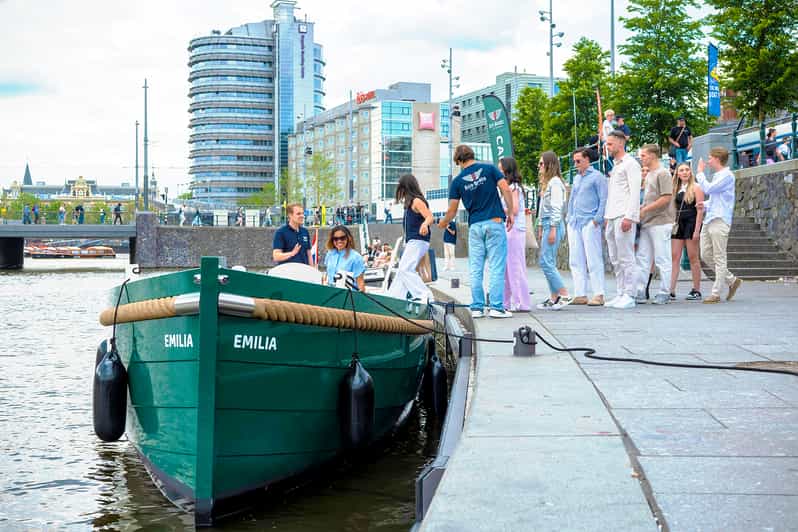
- Electric Eco Boats through Amsterdam’s UNESCO canals for an easy, low-stress sightseeing loop
- Local skipper in English (and Dutch) + QR digital guide in 8 languages
- Small-group format (up to 28 passengers) so the cruise feels more personal
- Big Amsterdam hits on the water, including the Skinny Bridge and the Dancing Houses
- Optional drinks (wine, beer, or soda) to make the hour feel even slower
Where You Meet: Amsterdam Central Station, dark green flag only
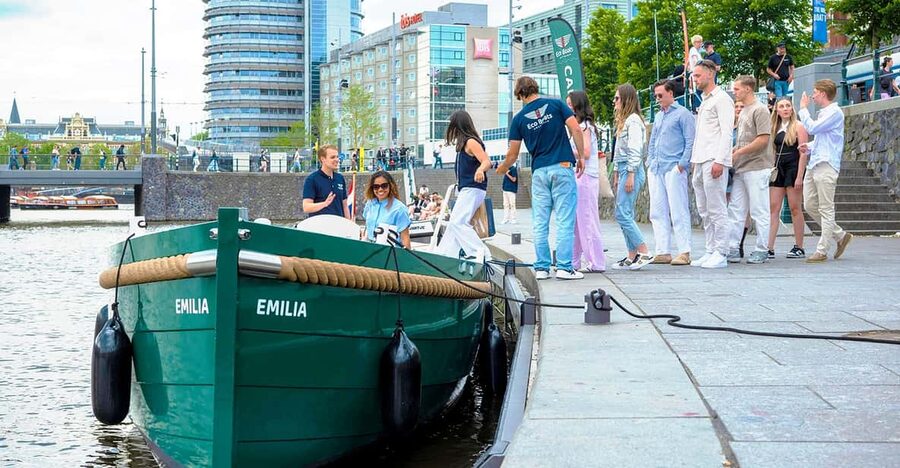
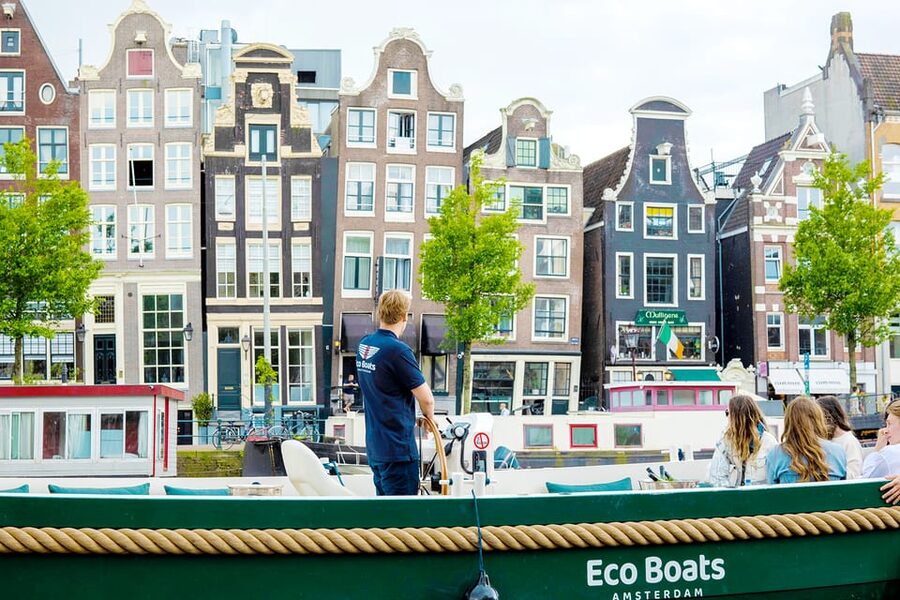
Your cruise starts right by Amsterdam Central Station, in front of the tram stops near the water. Look for the dark green beach flag and staff wearing dark blue Eco Boats shirts.
Two practical tips that will save you stress:
- Use Google Maps, not Apple Maps, to get the exact spot right.
- Give yourself a little buffer time so you’re not sprinting while the boat is boarding. These cruises run on a tight one-hour clock.
If you’re doing this as part of a bigger Amsterdam day, I’d treat it like a reset. The moment you’re on the water, the city’s scale clicks in a way walking can’t.
You can also read our reviews of more boat tours in Amsterdam

Electric Eco Boats: comfort and weather reality
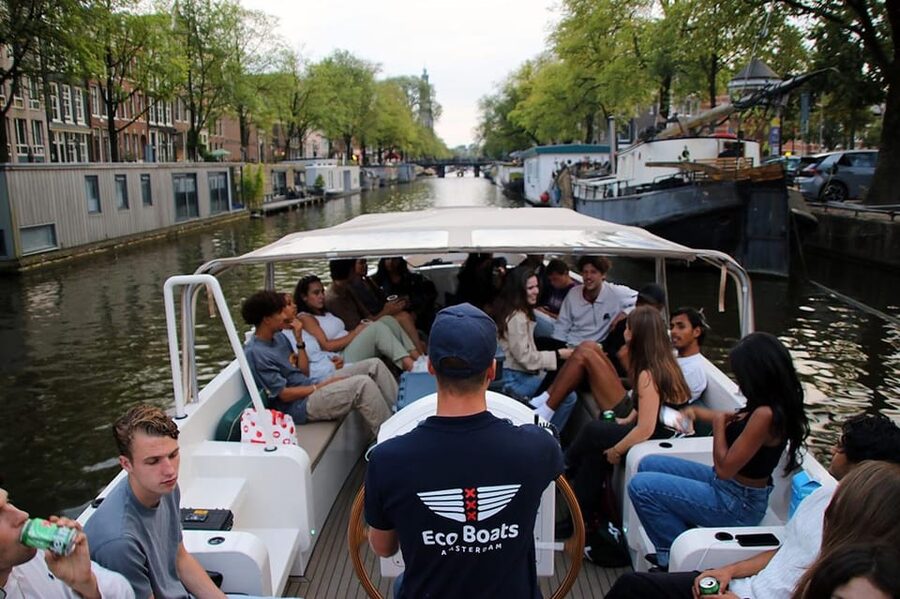
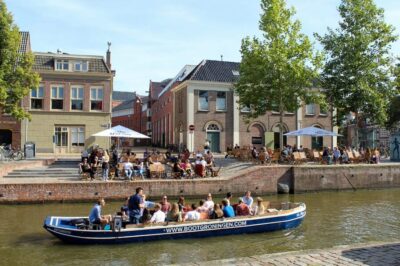
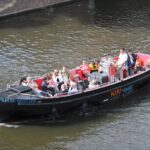
This is a modern canal cruise on an electric boat, which matters more than it sounds. The ride feels smooth and the whole experience stays grounded in comfort rather than hustle.
The other big factor is weather. Depending on the day, you’ll be on an open or partly covered (or fully covered) boat. Amsterdam can swing from clear skies to a quick shower fast, so think layers, not one perfect outfit.
From what I’ve seen described by people who’ve gone in winter months, it’s smart to come prepared for chill wind off the water. Some departures have felt cozy with blankets and extra comfort for cooler conditions, but you shouldn’t rely on that for a “no-rain-needed” plan. Bring a light rain jacket, and dress like you’ll be outside for an hour—because you will be.
The Skipper + the QR booklet: how you actually learn the city
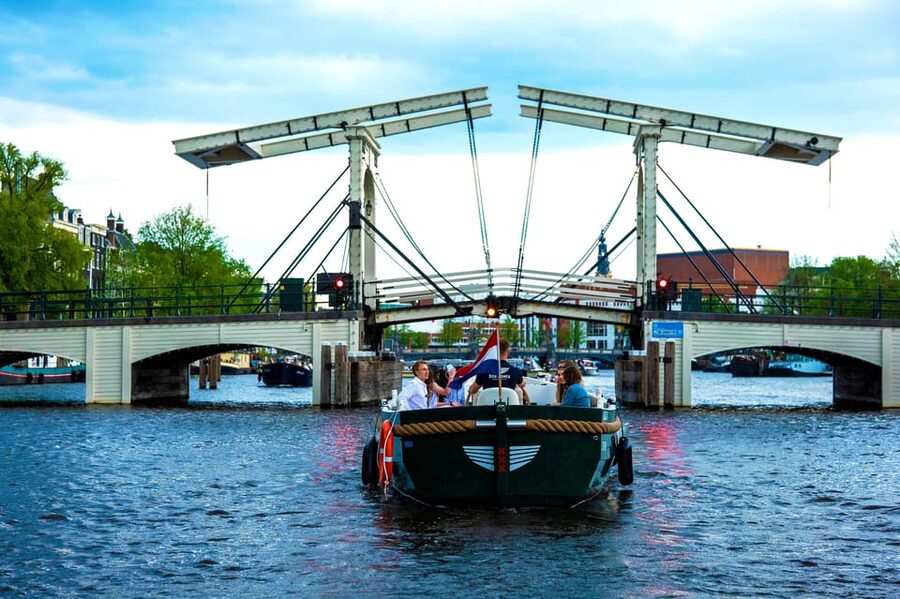
The tour’s heart is the skipper. You’re told what you’re seeing in a live, local style with an English-speaking guide onboard.
Also, there’s a free digital booklet on board via QR code. It’s available in:
English, Chinese, Spanish, Portuguese, Dutch, German, French, and Italian.
Two things make this setup work well for real life:
- You’re not stuck on one language lane. If your group varies in comfort, the QR guide gives everyone a way in.
- You can choose your pace. Some people want nonstop story mode. Others just want names and quick context for photos.
A key sound tip: no microphones
Here’s the one thing you should plan around: the boat does not use microphones. That’s great for the calm, human feel, but it means wind and distance can affect clarity.
If you can’t catch what’s being said, don’t struggle quietly. Just ask the skipper to speak louder. They’ll adjust.
If you’re sitting toward the back or on the open side in windy weather, you’ll get more out of the hour if you position yourself where you can see the skipper and the water line. Quick positioning beats straining.
And yes, the human factor matters. I’ve seen how much personality shows up on the boats—guides like Marc, Bob, JJ, Timon, and Igor are repeatedly named for being funny, engaging, and genuinely happy to explain their city.
Optional drinks: turning sightseeing into an hour you’ll remember
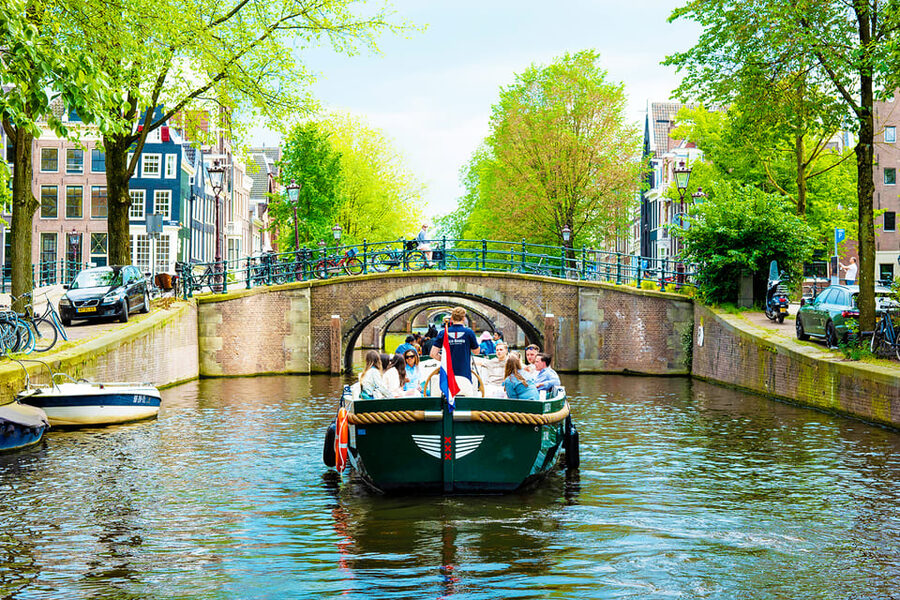
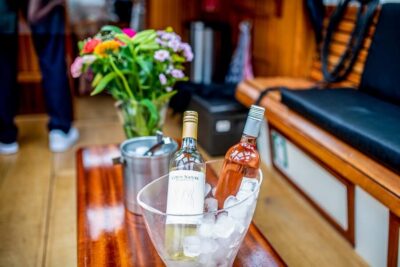
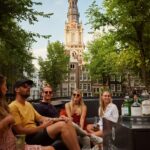
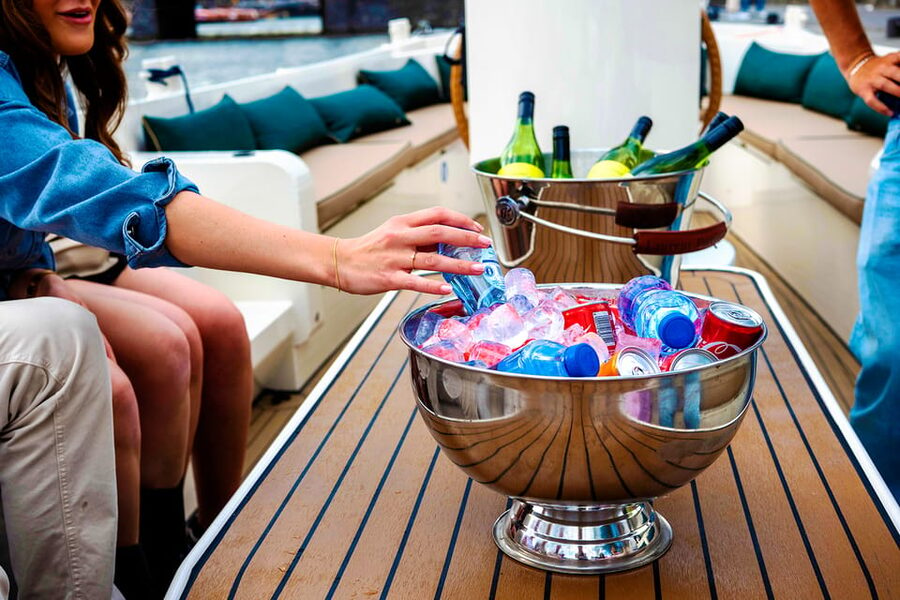
If you add the drink option, you can book wine, beer, or soda, and the tour says you get unlimited drinks for that option.
Even if you don’t plan to get tipsy, it changes the mood. You stop thinking about the next stop and start settling in. For many people, that’s the difference between a “see it, move on” cruise and a “wait, this is nice” hour.
Practical thought: if you’re photographing a lot, stick to something you can enjoy without constantly lifting cups. The point is to relax, not spill.

The canal route: what you’ll see at each stretch
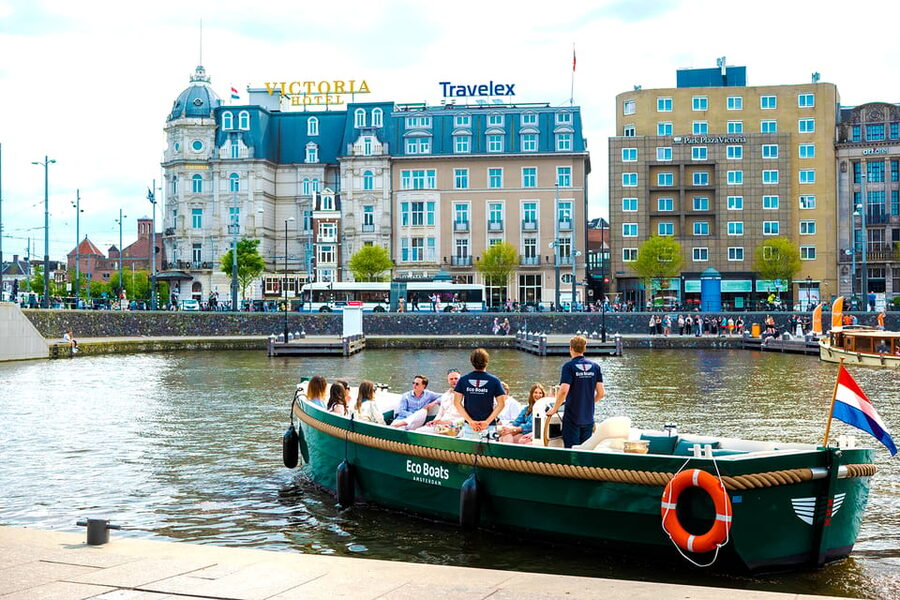
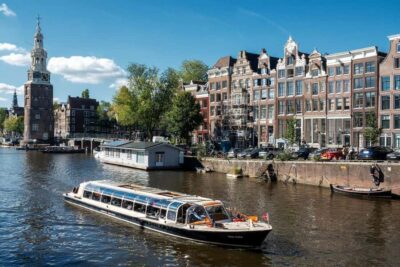
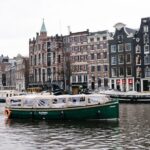
This is a one-hour loop, so you won’t get stuck in one place. You’ll move past a string of landmarks—some famous, some more local-feeling—while the skipper points out what matters.
Also note: the route can vary due to external factors. That’s normal on the water in a city like Amsterdam.
Here’s how the hour typically unfolds, in the order of the stops you’ll pass:
Basilica of Saint Nicholas: first big landmark from the water
Early on, you’ll cruise by the Basilica of Saint Nicholas. From a boat, church buildings often look more horizontal and panoramic than from street level. It’s an instant “Ah, this is Amsterdam” moment—water perspective does that.
If you want a clean photo, this is usually where you’ll be most awake. Early parts of the cruise feel crisp because you haven’t settled into the rhythm yet.
Sea Palace: a curiosity stop for architecture watching
You’ll then pass the Sea Palace. The point here isn’t deep history—it’s that canal rides are great for spotting things you’d miss on foot: building shapes, angles, and how they sit beside the water.
On a short cruise, these less-talked-about stops keep it from feeling like only postcard icons.
Montelbaanstoren: the watchtower feeling, seen sideways
Next up is Montelbaanstoren. Again, the value is the view from the water. You get the structure framed against canals and bridges in a way you don’t usually see from the street.
If you like photos with lines and symmetry, bridges and towers are your friends here.
Oudeschans and the edge-of-old-Amsterdam vibe
When you glide past Oudeschans, you start seeing the cruise shift from single monuments to canal-belt flow—an Amsterdam you’d sense more than you’d map.
This is a good part of the hour to listen carefully, because the skipper’s stories often connect how the city grew with what you’re seeing along the bends.
The Amstel River: the waterway that keeps going
You’ll reach the Amstel. For many first-timers, this is where the cruise feels like it’s really traveling, not just sightseeing.
The Amstel segment also helps if your group includes people who get restless. Seeing the river’s stretch breaks up the “just bridges and corners” feeling.
Blauwbrug Bridge: bridge views are half the fun
Then it’s Blauwbrug Bridge. Bridges are where Amsterdam shows off. Even if you think you know the city, the water makes bridges look different—thicker, closer, and more dramatic.
When the boat slows or turns, it’s also a good time to pause your phone and actually look.
H’ART Museum and the modern-art contrast
You’ll pass H’ART Museum. This stop is useful because it interrupts the classic-canal-only mindset. Even if you’re not there for museum time, you get that “this city has layers” feeling.
It’s also a reminder that the canal system isn’t stuck in one era. The skyline changes as you move.
The Skinny Bridge and De Magere Brug: yes, it’s that famous
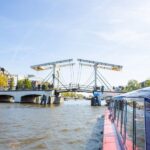
Now for one of the headline moments: the Skinny Bridge (De Magere Brug). This is a “stop-and-look” bridge. On the water, it feels thinner and more delicate than it does in a quick street glance.
If you care about photos, this is one of the best targets of the hour.
Dancing Houses: the playful, iconic stop
Right after that comes the Dancing Houses. The name is memorable, and from the canal it clicks fast. You get the curve and unusual geometry in a way that makes it hard to stay neutral.
This is the part of the cruise that usually produces the most “Oh wow” reactions in a group—because it’s visual first, explained second.
Oude Kerk and the old-church look from canals
You’ll continue past Oude Kerk. From the boat, the view feels framed—less like a building you’re approaching and more like one you’re floating beside.
Even without a long walk, it gives you a sense of Amsterdam’s older core.
Red Light District and Zeedijk Street: the edge-of-the-center feeling
The hour also includes the Amsterdam Red Light District area, plus Zeedijk Street. From the water, you see the district’s shape in a more neutral way than on streets where foot traffic takes over the mood.
If this is a sensitive area for you or you’re traveling with younger kids, you can still enjoy the cruise. Just remember this portion is included as part of the full-city loop.
When one hour is exactly the right amount of time
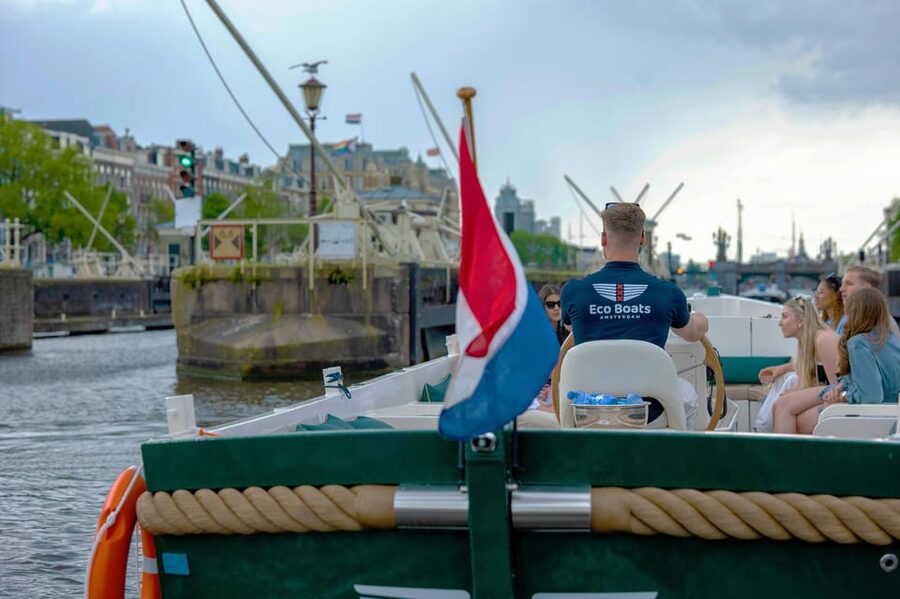
One hour sounds short until you’re on the water. In practice, it’s long enough to:
- get a guided feel for major sights,
- experience the boat environment,
- and still have energy to walk or grab a meal after.
If you’re on a packed itinerary, this cruise works because it’s scheduled in a way that doesn’t steal your whole day. You can pair it with other Amsterdam highlights without feeling like you’re constantly moving.
Also, the small-group cap (up to 28 people) helps. The vibe tends to be calmer, and you’re more likely to actually feel like you’re part of the tour instead of a number.
$18 value: why this pricing works for what you get
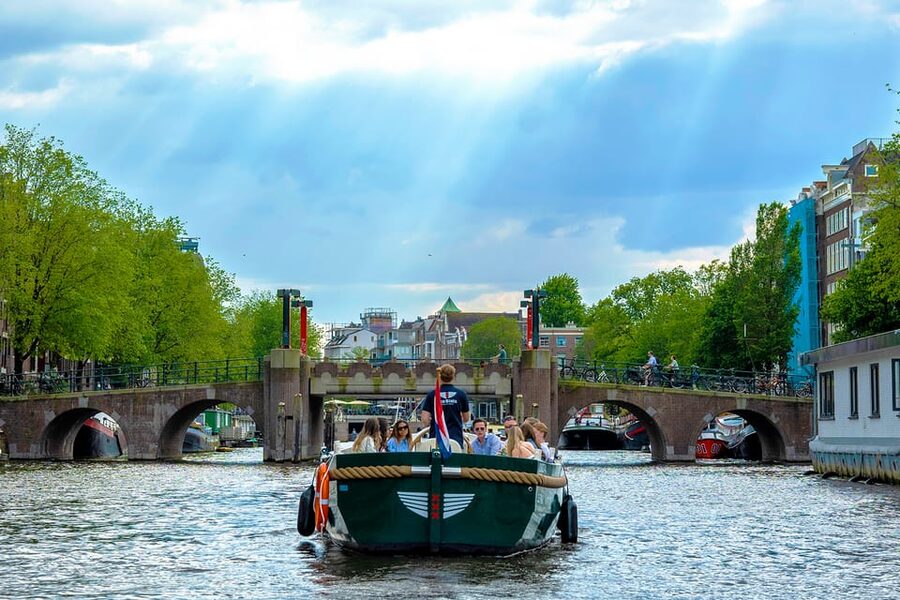
At $18 per person, you’re paying for a guided one-hour cruise on an electric boat, plus a digital guide option in 8 languages, and a local skipper who speaks English (and Dutch).
That’s strong value when you factor in:
- you don’t need extra apps or complex planning to understand what you’re seeing,
- you get city highlights in a short time window,
- and you can upgrade with optional drinks if you want the comfort factor.
The “make or break” for value is whether the sound situation works for your group. Since there are no microphones, plan to listen from a spot where you can hear, or be ready to ask the skipper to speak up.
Should you book Eco Boats Amsterdam Canal Cruise?
Book this cruise if you want:
- an easy 1-hour canal experience that fits into a real sightseeing day,
- a local English-speaking skipper and a QR guide for extra detail,
- a calmer small-boat feel (max 28 passengers),
- and the option to add wine, beer, or soda for a relaxed hour.
I’d think twice if your group strongly depends on amplified audio. Without microphones, hearing can be tougher in wind or if you’re farther back. And it’s not suitable for wheelchair users, so plan another option if mobility access is required.
If you’re deciding between a big, crowded canal tour and something smaller and more modern, this one is a practical sweet spot. You get Amsterdam’s icons—Skinny Bridge, Dancing Houses, and more—without turning your day into a long, exhausting slog.
FAQ
How long is the Amsterdam canal cruise?
It lasts about 1 hour.
Where is the meeting point?
It’s in front of Amsterdam Central Station, by the tram stops near the water. Look for the dark green beach flag and staff wearing dark blue Eco Boats clothing.
Do you need English to enjoy the tour?
No. The skipper speaks English and Dutch, and there’s also a free digital guide in 8 languages via a QR code.
What languages are available on the digital guide?
The digital booklet is available in English, Chinese, Spanish, Portuguese, Dutch, German, French, and Italian.
Is the boat electric?
Yes. The tour uses an electric Eco Boats boat.
Are drinks included?
Drinks are optional. If you select the drink option, you can get unlimited wine, beer, or soft drinks.
Is the boat open or covered?
Depending on the weather, it can be open or partly covered (the information notes different coverage options based on conditions).
Is there a microphone on board?
No. There are no microphones onboard.
Is it wheelchair accessible?
No, it is not suitable for wheelchair users.