REVIEW · CAIRO
Private 7-day Egypt Highlights Tour with Nile River Cruise
Book on Viator →Operated by Marsa Alam Tours · Bookable on Viator
A week in Egypt can feel too short. This one smartly pairs Cairo’s icons with a 3-night Nile cruise so you don’t spend your days sprinting between cities. You’ll get a private, guided experience and a packed route that still leaves you enough time to enjoy the views from the ship.
What I like most is how much ancient Egypt you cover without losing the plot. The Giza Pyramid complex + Sphinx + Valley Temple set the tone on Day 2, and then the cruise days unfold at a comfortable pace, with temple visits timed to the day’s rhythm.
One thing to think about: the days are full. You should plan for a fair amount of walking, stairs, and sun exposure—especially on the West Bank in Luxor.
Key points to know before you go
- Private guides and transfers: you’re not sharing your schedule with strangers.
- 3 nights on a Nile ship: your travel time turns into cruise time.
- Abu Simbel as an early visit: big, early payoff with less daytime stress.
- Iconic Egypt in two styles: Cairo’s museums and monuments plus temple-hopping by boat.
- Entrance fees are included, with one key exception you should watch for.
In This Review
- Cairo to Aswan by cruise: why this 7-day plan works
- Day 1 in Cairo: airport pickup and an easy landing
- Day 2: Giza Pyramids, Great Sphinx, Valley Temple, plus the Egyptian Museum
- Pyramids of Giza + Great Sphinx + Valley Temple
- Egyptian Museum (with a key note)
- Day 3 in Aswan: Philae, Felucca on Elephantine, High Dam, Unfinished Obelisk
- Temple of Philae and the Isis connection
- Felucca ride around Elephantine
- High Dam and the Unfinished Obelisk
- Day 4: Abu Simbel early, then Kom Ombo and sailing to Edfu
- Abu Simbel before the main crowds
- Kom Ombo temple and the sail to Edfu
- Day 5: Edfu Temple of Horus, Esna lock sailing, and Luxor Temple at night
- Edfu Temple of Horus
- Esna lock and sailing to Luxor
- Luxor Temple in the evening
- Day 6: West Bank Luxor essentials—Valley of the Kings, Hatshepsut, Karnak—then fly back to Cairo
- Valley of the Kings
- Colossi of Memnon
- Temple of Hatshepsut at Deir el Bahari
- Temple of Ramesses III and Karnak
- Day 7: Saladin Citadel, Old Cairo churches, and Khan el-Khalili before your flight
- Saladin Citadel and Mosque of Muhammad Ali
- Hanging Church and Old Cairo sights
- Khan el-Khalili bazaar and airport transfer
- Cruise comfort: what you can expect on the Nile ship
- Price and value: is $1,879.30 per person fair for this package?
- Should you book this 7-day Egypt Highlights with Nile cruise?
- FAQ
- How long is the Private 7-day Egypt Highlights Tour with Nile River Cruise?
- Where does the tour start?
- Does the tour include a Nile cruise?
- Are airport pickup and transfers included?
- What’s included for accommodations and meals?
- Are entrance fees included?
- Are flights included in the package?
- What is the cancellation policy?
Cairo to Aswan by cruise: why this 7-day plan works
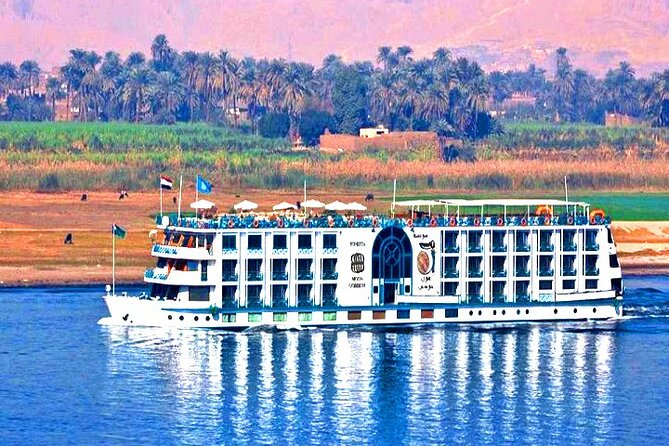
The best part of this trip is the balance. Cairo gets you the wow-factor monuments first, then the Nile cruise takes over with temples, sails, and overnight downtime on the water. In a week, that matters. Instead of racing from city to city, you’re getting a “move + see + rest” rhythm.
You’ll start with 3 nights in Cairo (bed and breakfast), then switch gears to 3 nights cruising between Luxor and Aswan on a full-board basis. That sequence is practical: Cairo does the heavy “first impressions” work, and the cruise gives you temple visits that feel more relaxed because you’re not constantly changing hotels.
Also, this is set up as a private tour/activity, so the guide can pace things around your group. That’s helpful with Egypt, where crowds can be intense and timing can make or break your experience.
Price-wise, the package isn’t just “a tour.” It’s built around transportation between major stops, included entrance fees, and the cruise. At $1,879.30 per person, it can feel like a lot—until you compare it to pricing the flight segments, hotel nights, guide time, and entry fees separately.
Day 1 in Cairo: airport pickup and an easy landing
On Day 1, you meet a Marsa Alam Tours representative at Cairo International Airport. From there, you transfer to your hotel in a private, air-conditioned vehicle. This matters more than people think. Cairo traffic can be wild, and having a pre-arranged pickup reduces the stress of getting your bearings after a long flight.
The day ends simply: overnight in Cairo. That’s a good choice because your next full day starts with major walking and museum time.
If you want a smooth first day in Cairo, this structure helps you stay fresh.
Day 2: Giza Pyramids, Great Sphinx, Valley Temple, plus the Egyptian Museum
This is the classic “Egypt begins here” day, and it’s packed in a smart order.
Pyramids of Giza + Great Sphinx + Valley Temple
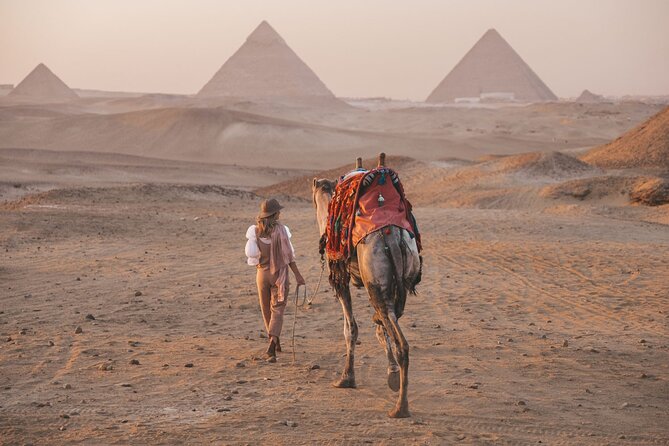
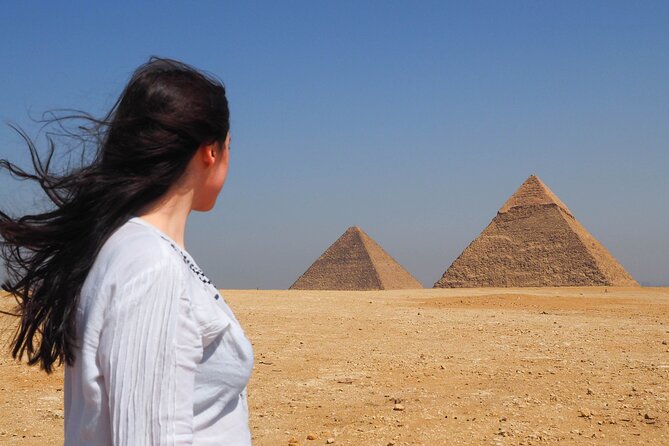
You’ll be picked up from your hotel and taken to the Pyramids of Giza to see Cheops, Chephren, and Mykerinus. After the pyramids, you continue to the Great Sphinx and then the Valley Temple.
Two hours might sound short, but it’s enough to cover the big visual landmarks while your guide gives context—what you’re looking at, why it matters, and how these sites connect.
Egyptian Museum (with a key note)
Next you head to the Museum of Egyptian Antiquities (the Egyptian Museum). The museum is described as holding over 250,000 genuine artifacts dating back some 5,000 years, including an exclusive collection tied to Tutankhamen and the treasures from his tomb.
One practical caution: the mummies room entrance fee is not included. So if that’s a must-do for you, budget extra time and money.
This day gives you both the “monument” Egypt (Giza and Sphinx) and the “objects” Egypt (museum treasures). If you’re trying to understand Egypt instead of just taking photos, that combo is excellent.
Day 3 in Aswan: Philae, Felucca on Elephantine, High Dam, Unfinished Obelisk
Day 3 is where you transition from Cairo-style sightseeing into Nile-river time.
You’ll embark on the Nile cruise and have lunch on board. Then the Aswan touring begins.
Temple of Philae and the Isis connection
You visit Temple of Philae, built to honor the goddess Isis. The information you get here is useful: Philae is described as one of the last places where worship in the classical Egyptian style continued, with construction beginning around 690 BC.
This temple is also a good “pace break.” It’s not just a big stone slab fest. It’s a meaningful site with a story your guide can walk you through.
Felucca ride around Elephantine
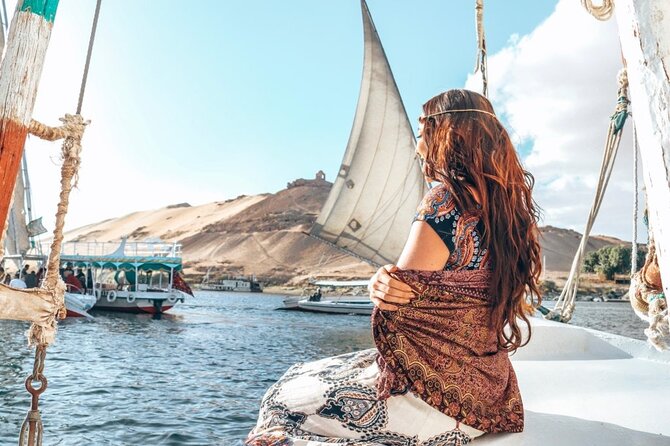
Then you take a felucca ride around Elephantine. That’s one of those experiences that costs time but pays back fast because it changes how you see the river and the towns along it.
Even if you’re not big on boats, the felucca segment helps the day feel less like a checklist.
High Dam and the Unfinished Obelisk
You also visit the Aswan High Dam, a major modern project completed in 1968 and inaugurated in 1971. It’s brief in time, but it gives important context on how modern Egypt controls and uses the Nile.
Finally, there’s the Unfinished Obelisk in the Northern Quarries. You’ll learn why this site matters: it’s tied to how ancient Egyptians worked granite and carved obelisks, with a large shaft started but left without inscriptions.
This blend—ancient temple, river ride, modern dam, ancient stonecraft—is a strong way to spend a day in Aswan.
Day 4: Abu Simbel early, then Kom Ombo and sailing to Edfu
This is a big day, and it’s built around one smart technique: do Abu Simbel early.
Abu Simbel before the main crowds
You have an early visit from Aswan. The two temples of Ramses II and Queen Nefertari are carved into the mountain between 1274 and 1244 BC. The day includes the kind of detail that makes the site click: the Great Temple dedicated to Ramses II and gods including Ra-Harakhty, Amun Ra, and Ptah, and the second temple dedicated to Nefertari and Hathor.
You also learn something practical: these temples weren’t always in their current location. They were dismantled stone by stone and rebuilt on higher ground, a preservation effort tied to UNESCO.
The duration listed is 8 hours, and that’s realistic. Abu Simbel is far and it’s worth treating like the centerpiece it is.
Admission is listed as free in the package details, which can make this day feel like extra value.
Kom Ombo temple and the sail to Edfu
After that, you sail to Kom Ombo and visit the Temple of Kom Ombo, dedicated to Sobek and Horus. This temple is mainly tied to the Ptolemaic and Roman period.
Then you sail to Edfu for overnight on board. Dinner and overnight are on the cruise, and you also have a Galabyia party listed. Even if you’re unsure what style of event it is, it’s usually a fun onboard social moment—good for loosening the day’s pacing.
Day 5: Edfu Temple of Horus, Esna lock sailing, and Luxor Temple at night
Day 5 focuses on Upper Egypt’s temple grandeur.
Edfu Temple of Horus
You start with breakfast on board and then visit the Temple of Horus at Edfu. It’s described as a large well-preserved Ptolemaic temple, built on an earlier site.
You’ll get context for what the walls depict, including the myth of Horus and Seth, likely staged as part of an annual religious drama. That kind of explanation can turn “cool pictures” into actual understanding.
Esna lock and sailing to Luxor
Then you sail to Luxor through Esna lock. This doesn’t just fill time. Locks are part of how boats actually move through Egypt’s waterways, and you get a sense for the practical side of Nile life.
Luxor Temple in the evening
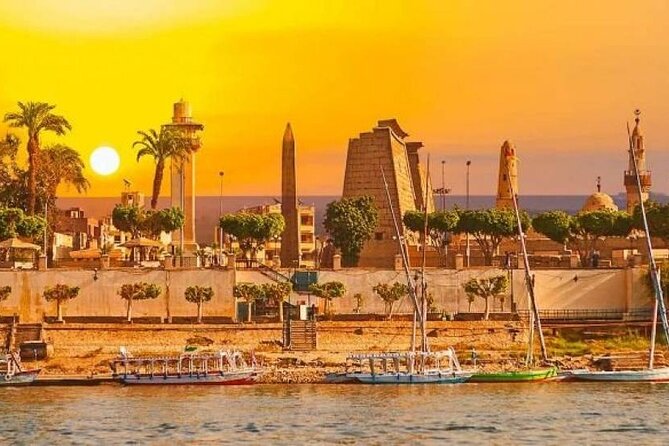
In Luxor, you visit Luxor Temple. The details here matter: it’s largely built by Amenhotep III, completed by Tutankhamon, and decorated further by Ramses II, including the First Pylon raised by Ramses II.
In the evening, temple lighting and atmosphere can feel more vivid than mid-day. Dinner and overnight stay on board.
This day is a good compromise: it keeps the pace lively, but it avoids the “do everything at once” feeling.
Day 6: West Bank Luxor essentials—Valley of the Kings, Hatshepsut, Karnak—then fly back to Cairo
This is the day many people remember most because it hits Luxor’s West Bank big names and finishes with a travel shift.
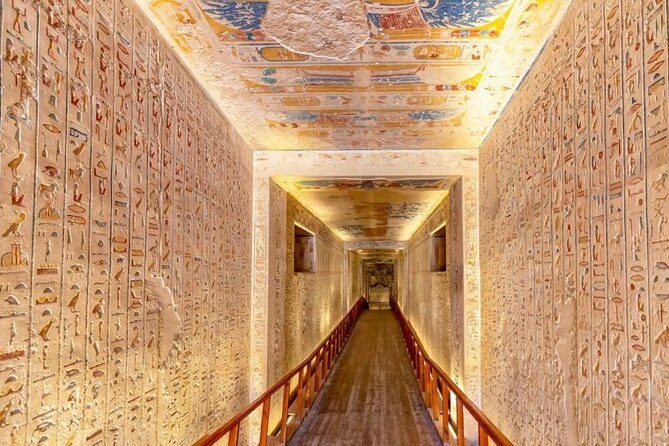
Valley of the Kings
You visit the Valley of the Kings on the west bank of Luxor. It’s described as the “great place of the truth” once, now the Valley of the Kings, dominated by a pyramid-shaped peak behind Deir el Bahri.
This is where you see how Egypt thought about immortality: pharaohs with stone sarcophagi and planned afterlife spaces.
Colossi of Memnon
Next are the Colossi of Memnon—two massive statues, about 18 meters above the plain. They’re remains of what used to be a larger complex built by Amenhotep III.
A short stop, but iconic. You’ll likely feel how large these are once you’re standing there.
Temple of Hatshepsut at Deir el Bahari
Then comes Hatshepsut’s temple, rising in terraces that blend into the limestone cliffs. This is one of the best “wow sites” on the West Bank because it looks like architecture grew out of the rock.
Temple of Ramesses III and Karnak
Your route also includes Temple of Ramesses III, Karnak. Karnak isn’t just one temple—it’s a complex of sanctuaries, kiosks, pylons, and obelisks devoted to Theban gods. You’ll learn about the worship of the Theban Triad (Amun, Mut, Khonso).
After lunch during the trip, you fly to Cairo and transfer to your Cairo hotel for overnight.
This “see more, then fly” ending is convenient when you only have a week. It also cuts down on extra hotel changes.
Day 7: Saladin Citadel, Old Cairo churches, and Khan el-Khalili before your flight
Your final day goes back to Cairo’s older layers: fortress views, religious history, and market streets.
Saladin Citadel and Mosque of Muhammad Ali
You’re picked up from your Cairo or Giza hotel at 08:00 am. You drive up to the Saladin Citadel, built in 1183 AD as a defense against Crusader armies. The listed highlight here is the sweeping views of Cairo, plus preserved historic mosques and museums.
You’ll also see the Mosque of Muhammad Ali Pasha, designed by Yousif Boushnaq, with an alabaster structure contrasted against sandstone.
Entrance is listed as free in the package details.
Hanging Church and Old Cairo sights
Then you visit the Hanging Church and nearby historic religious sites in Old Cairo. The package specifically lists major stops such as the Ben Ezra Synagogue, Church of St. Barbara, and Church of Abu Serga, described as one of the oldest Coptic churches in Cairo.
This is a very different feel from the pyramids. It’s more about streets, buildings, and layered faith history.
Khan el-Khalili bazaar and airport transfer
Finally, you head to Khan el-Khalili Bazaar, described as one of the oldest bazaars in the Middle East, with trading activity tied to the 14th century.
After that, you’re transferred to Cairo airport for your international departure.
It’s a strong finish: you get a market moment right before leaving, so your Cairo experience doesn’t end as abruptly as it often does.
Cruise comfort: what you can expect on the Nile ship
This tour is built around 3 nights on the Nile cruise with full board. That alone changes the feel of your trip. Instead of “hotel hopping,” you’re living on one floating base while Cairo and Luxor days rotate in and out.
On at least one sailing of M/S Queen of Hansa, feedback highlighted cabin steward Mustafa for consistent help, like bringing water and coffee when needed. That’s the kind of service detail that can make your cruise feel genuinely restful.
Your day structure also helps you settle in:
- temple visits and then ship time
- sails between sites
- dinner onboard
- the ship acting as your evening reset button
If you prefer travel that gives you a breather instead of nonstop motion, the cruise format is doing a lot of work for you.
Price and value: is $1,879.30 per person fair for this package?
Here’s the honest way to look at the price: you’re paying for more than sightseeing. You’re paying for a workflow.
Your included costs cover:
- 3 Cairo hotel nights (bed and breakfast)
- 3 cruise nights between Luxor and Aswan with full board
- private transfers
- entrance fees
- flight tickets listed as Cairo–Aswan–Hurghada–Cairo
- meals during the sightseeing days (lunch, dinner, breakfast counts are included)
When you add those up, you’re not just buying a guide for a few hours. You’re buying transportation, accommodation, and most entry fees inside one package.
Is it expensive? Yes. But for a one-week Egypt plan that stitches Cairo + Abu Simbel + Luxor West Bank into one schedule, it can be good value—especially if you’d otherwise have to arrange each segment yourself.
Should you book this 7-day Egypt Highlights with Nile cruise?
Book it if:
- you want major highlights without building a complex plan yourself
- you like the idea of one ship base while you do temple visits by day
- you want a guide-led experience for both Giza + museum and Luxor temples + West Bank
- you’re okay with a moderately physical pace and sun exposure
Skip it or reconsider if:
- you hate packed days and long driving
- the idea of early travel days like Abu Simbel feels too intense
- you’re relying on included fees only (because the mummies room isn’t included)
If your goal is to see Egypt’s biggest “I can’t believe it’s real” monuments in one week, this tour is built for that mission.
FAQ
How long is the Private 7-day Egypt Highlights Tour with Nile River Cruise?
It’s approximately 7 days.
Where does the tour start?
It starts at Cairo International Airport (with meeting locations listed in Cairo Governorate and nearby areas), and the start time is shown as 9:00 am.
Does the tour include a Nile cruise?
Yes. It includes 3 nights Nile cruise between Luxor and Aswan, based on full board.
Are airport pickup and transfers included?
Yes. The tour includes pickup offered and private transfer, including a transfer from Cairo International Airport to your hotel on Day 1.
What’s included for accommodations and meals?
You get 3 nights in Cairo on bed and breakfast and 3 nights on the Nile cruise on full board. The package also lists lunch (5), dinner (3), and breakfast (3).
Are entrance fees included?
Yes. The tour includes entrance fees. One note: the mummies room entrance fee is listed as not included.
Are flights included in the package?
Yes. The included flight tickets are listed as Cairo–Aswan–Hurghada–Cairo.
What is the cancellation policy?
The experience offers free cancellation. You can cancel up to 24 hours in advance for a full refund.