REVIEW · MANCHESTER
Manchester: Canal & River Cruise
Book on GetYourGuide →Operated by Irwell & Mersey Packet Company · Bookable on GetYourGuide
Manchester looks different from the water. This 1-hour canal cruise shows the industrial spine of Greater Manchester while you glide past TV studios, football sights, and George Stephenson’s 1830 railway bridge with on-board commentary that connects past to present. One thing to plan for: it is not wheelchair accessible because boarding involves steps.
I like that the trip is short and focused. You start at Salford Quays (by the Lowry Theatre) and come back to the same spot, so it fits easily between museum time and dinner.
If it’s breezy, you’ll feel it. Bring a light jumper or coat, and if you’re on the upper deck, you may want to adjust your seat to catch the narration clearly.
In This Review
- Key highlights worth clocking
- From Salford Quays to the Ship Canal: why this 1-hour trip works
- Finding the boat under the Millennium Lift bridge
- Media City and TV Manchester: seeing the modern skyline from water level
- Old Trafford, Theatre of Dreams, and the stadium view you can actually enjoy
- Stephenson’s Railway Bridge (1830) and Ordsall Chord: old and new rail in one sightline
- Locks, Pomona Docks, and Hulme Lock railway arches: the industrial machine details
- The Imperial War Museum, river routing, and why the narrative matters
- Commentary volume, seat choice, and what to bring for a comfortable hour
- Price and value: what $16.16 buys you in Manchester
- Who this cruise suits (and who should skip it)
- Should you book the Manchester Canal & River Cruise?
- FAQ
- How long is the Manchester Canal & River Cruise?
- Where do I meet for the cruise?
- Where can I park or get there by tram?
- Where does the cruise end?
- What is included in the ticket price?
- Is food or drinks included?
- Is the cruise wheelchair accessible?
- Are strollers allowed?
- Is the commentary available in English?
- Can I cancel for a full refund?
Key highlights worth clocking
- Stephenson’s 1830 bridge from up close and the rail story it carries
- Ordsall Chord contrast: old rail architecture next to newer connections
- Media City sights on the water including the BBC area and Coronation Street set location
- Old Trafford and the Theatre of Dreams angle without the stadium crowd
- Industrial working-water details like locks, Pomona Docks, and Hulme Lock railway arches
- Easy value for one hour with commentary included, plus a chance to spot wildlife along the canal
From Salford Quays to the Ship Canal: why this 1-hour trip works
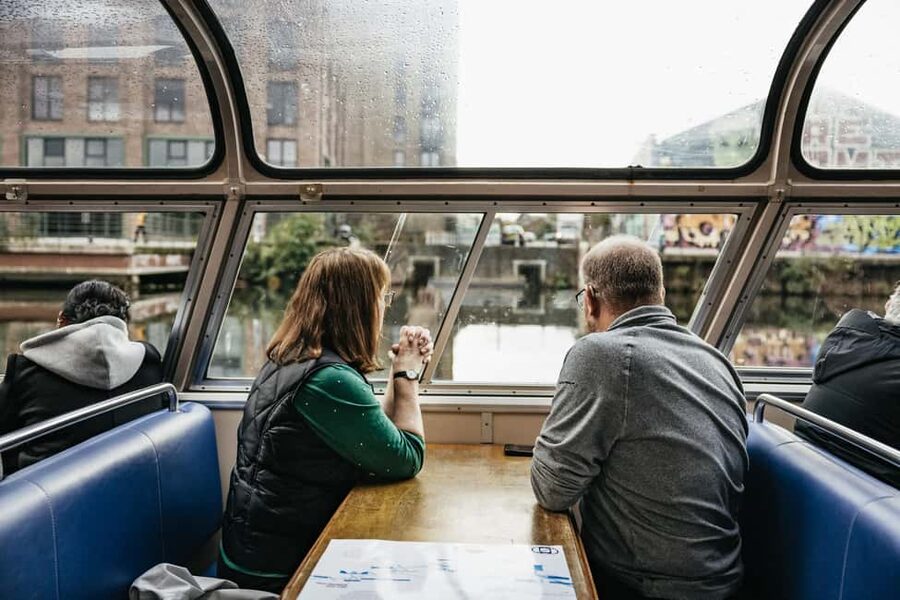
This cruise is one of those rare city experiences where the time just clicks. At 1 hour, you get a complete loop of viewpoints along the Manchester Ship Canal and the River Irwell without turning your day into a half-day logistics puzzle.
The real win is perspective. On foot, Manchester can feel like a lot of streets and landmarks at varying distances. From the water, things line up: bridges, docks, locks, and stadium-size buildings all appear in a single sweeping view. You start to understand how this city grew around moving goods and moving people.
The narration helps too. The commentary is built around what made the Ship Canal such a big deal in the 19th century, and it also points to what’s being built now. If you like cities that have both history and reinvention, you’ll get that here.
Finding the boat under the Millennium Lift bridge
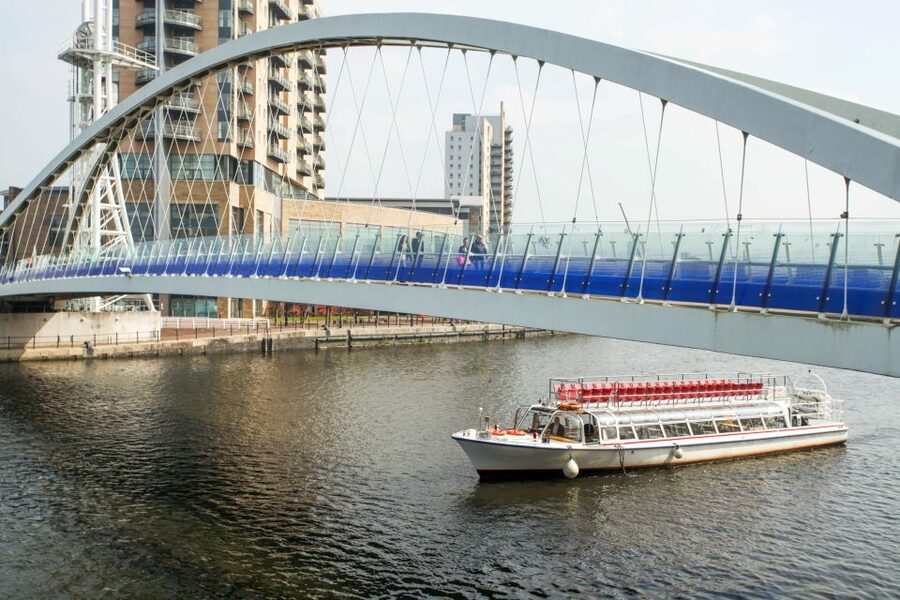
Your boarding point is straightforward: you meet under the Millennium Lift bridge (blue and white) just by the Lowry Theatre at Salford Quays. This matters because boarding is Salford Quays only, not the central city area.
If you’re driving, aim for Quayside Mall (closest parking noted). If you’re using public transport, the closest trams are Media City or The Imperial War Museum. Either way, build in a few minutes to walk from transit to the water once you’re in the Quays district.
The trip ends where it starts—back at the same Salford Quays meeting point—so you won’t get stuck planning an extra return. That’s a small thing, but it makes the experience feel low-stress.
Media City and TV Manchester: seeing the modern skyline from water level
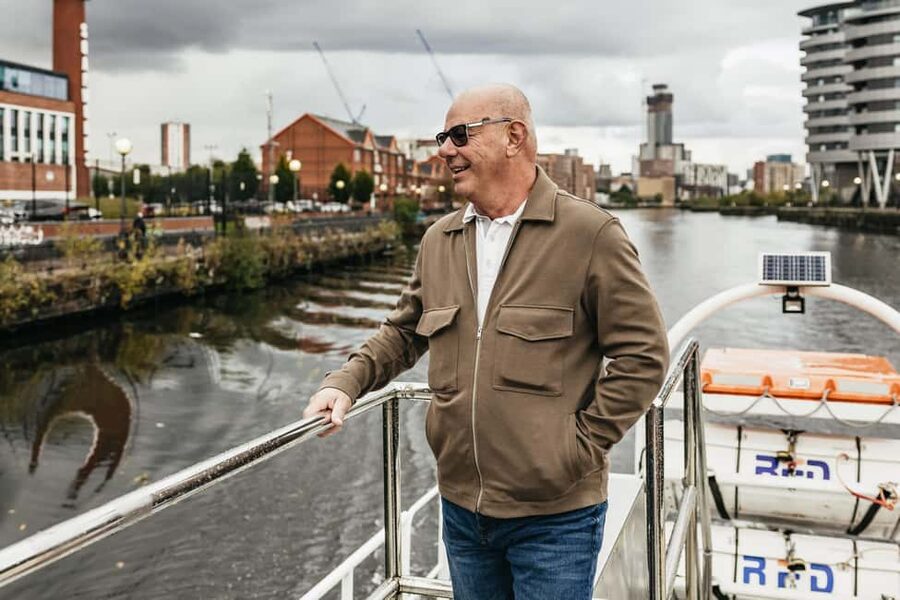
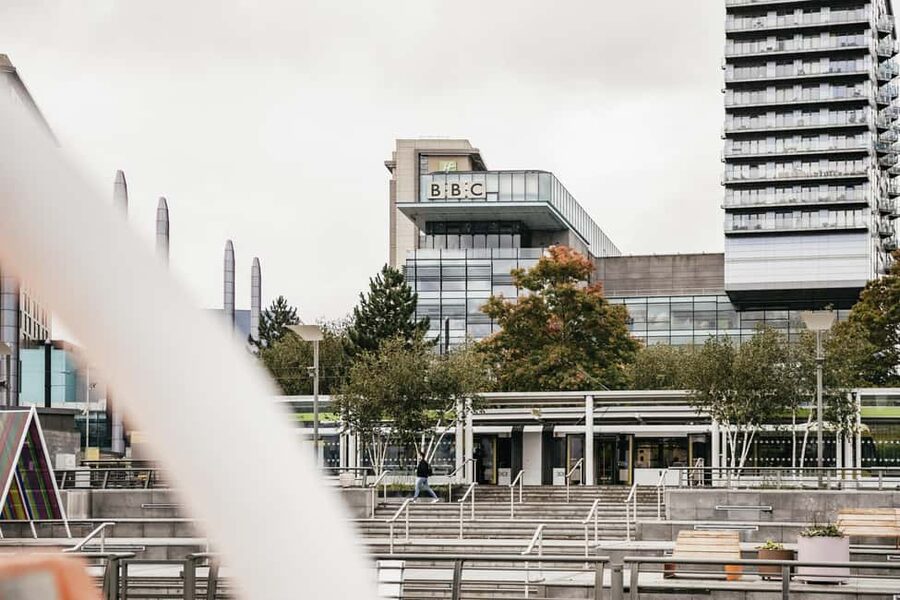
Once you’re onboard, the first part of the ride gives you the “current Manchester” look. From the water, Media City reads like a clean, modern edge to the old industrial world that surrounds it.
The cruise passes the area home to the BBC and the new home of ITV’s Coronation Street. From ground level, you’re often looking up at modern buildings. From the canal, you see them as part of the broader urban system—how these entertainment workplaces sit beside docks, rail, and rivers that once drove the city’s economy.
This section is also a good moment for relaxed looking. The boat rhythm is steady, so it’s easy to take in views without feeling rushed. If you’re traveling with someone who doesn’t want an all-day tour, this is a strong halfway “yes” moment.
Old Trafford, Theatre of Dreams, and the stadium view you can actually enjoy
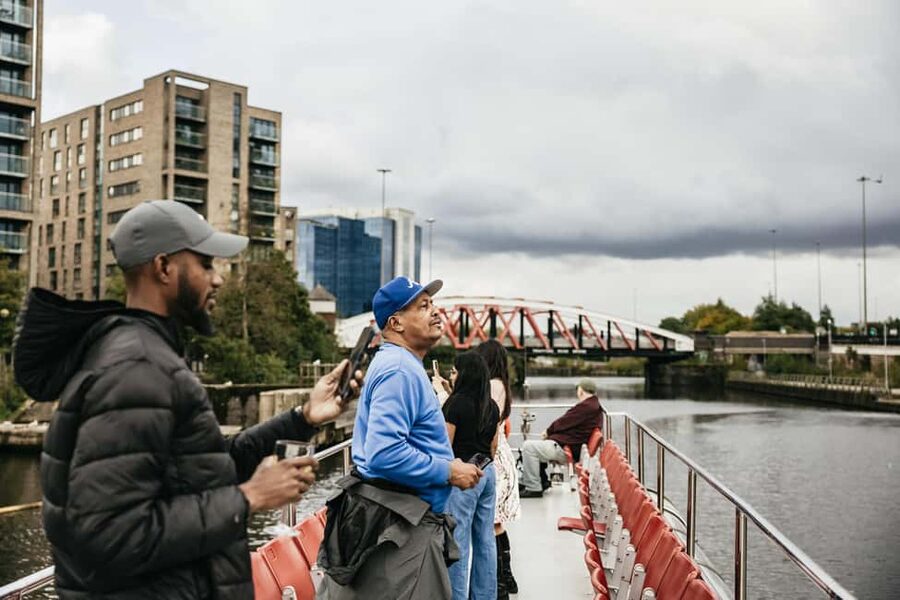
Next comes one of the most famous stops on the map: Old Trafford—the home of Manchester United, often nicknamed the Theatre of Dreams. Seeing a stadium from the river and canal is different from watching it on TV or approaching it on foot. You get the scale without the hassle of match-day routes.
From the water, the stadium feels like a landmark set into the city’s industrial geometry. You notice how the infrastructure lines up: roads, rail corridors, and water all play together here. It’s one of the reasons this cruise feels more “Manchester” than “tour bus.”
If you’re a football fan, this is your straightforward highlight. If you’re not, it’s still worth enjoying because it helps you orient the city while the commentary ties it back to how Manchester functions as a whole.
Stephenson’s Railway Bridge (1830) and Ordsall Chord: old and new rail in one sightline
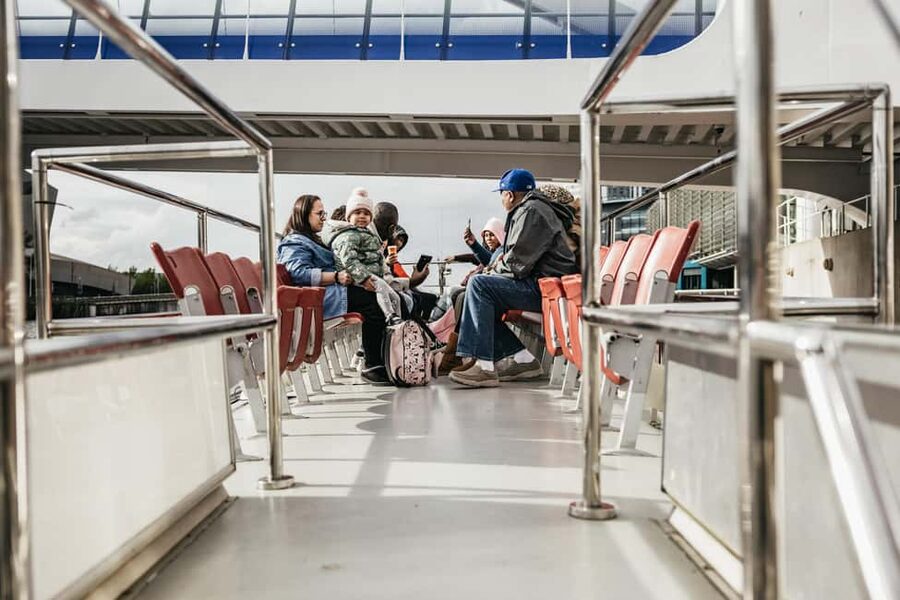
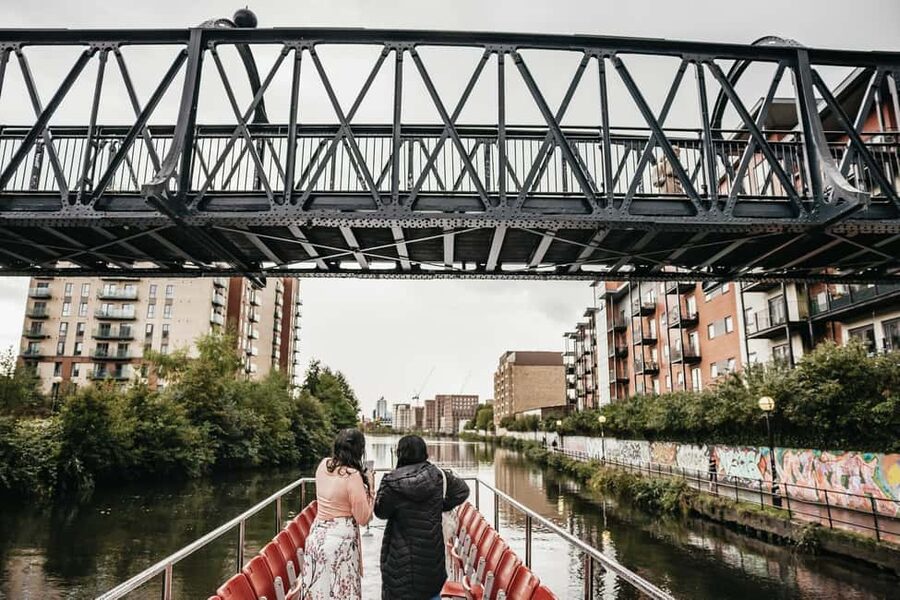
This is the part I’d circle on your day. The cruise brings you alongside George Stephenson’s 1830 railway bridge, one of the famous engineering landmarks tied to Manchester’s rail story. Seeing it from the water gives you a better sense of why canals and rail mattered so much: goods needed efficient routes, and Manchester built them.
Then you get the contrast: the commentary highlights the Ordsall Chord as a different chapter of railway connections. When you watch these structures from a moving boat, you understand them less as isolated monuments and more as a network—layers of infrastructure added over time to keep up with demand.
In plain terms, you’re looking at how Manchester kept retooling its transport routes as the city changed. If you like architecture or tech history, this segment will land hard.
Locks, Pomona Docks, and Hulme Lock railway arches: the industrial machine details
After the modern and sports visuals, the cruise steps into the working-water side of Manchester. You pass important industrial markers like the Imperial War Museum and Pomona Docks, then head toward the heart of the city along the River Irwell.
You’ll also see the first of the 120-meter-long locks of the Manchester Ship Canal. Even if you’ve never used a lock yourself, it helps to watch it from a distance while the commentary explains why these systems mattered. Locks weren’t just engineering for engineers. They were how a canal stayed usable across changing water levels.
One more standout detail is the railway arches over Hulme Lock. This is one of those sights that makes you do a quick mental swap. The arches feel like a rail structure you’d expect on land, but here they function over a water operation—proof that Manchester didn’t separate its industries neatly. It stacked them.
The Imperial War Museum, river routing, and why the narrative matters
A big part of the value here is the way the commentary threads together geography and economics. As you move from Salford Quays toward the industrial heartland, the narration explains how the Ship Canal helped make Manchester a 19th-century powerhouse—and then shifts to the city’s future plans.
That story matters because it keeps you from just “seeing buildings.” You’re learning what connected those buildings: trade routes, transport improvements, and the city’s ongoing shift from heavy industry toward newer uses.
I also like that the cruise doesn’t pretend the past is all romance. It explains the industrial past as practical infrastructure, then shows you how the city is building again around that same space.
Commentary volume, seat choice, and what to bring for a comfortable hour

The cruise includes a live onboard driver and an audio guide in English. The narration is a core part of the experience, so take it seriously when picking a seat.
If you’re sensitive to sound, you might find the narration easier from certain spots than others. Some people report the upper deck can be a bit less audible. My practical advice: choose a seat where you can hear clearly, and be willing to shift if the sound is getting swallowed by wind or chatter.
This is a one-hour ride, so you don’t need to pack a weekend. Still, the basics help:
- Bring a jumper or coat in case the air gets windy on the water.
- Wear comfortable shoes for the short walk to the dock area.
- Remember that food and drinks aren’t included, so don’t plan on snacks being part of the cruise.
The boat itself is described as comfortable, and the vibe is relaxed. It’s the kind of trip where you can sit back and let the city come to you.
Price and value: what $16.16 buys you in Manchester
At about $16.16 per person (plus you choose your departure time based on availability), this cruise is priced like a budget-friendly add-on. But what you’re actually buying is not just a ride. You’re getting a guided look at multiple major sights in one loop plus commentary that explains what you’re seeing.
That’s why it feels like good value. For a similar cost to some single-entry attractions, you get a panoramic city experience that connects the dots between:
- modern Media City
- football-scale Old Trafford
- engineering history at Stephenson’s bridge
- working water details like locks and docks
In other words, it’s efficient sightseeing with context. And it’s also easy to pair with time around Salford Quays after your return.
Who this cruise suits (and who should skip it)
This cruise is ideal if you want a focused hour with lots of landmarks and an explanation that keeps you oriented. It works well for couples, solo travelers, and anyone who likes cities through infrastructure and design rather than only through museums.
You’ll also appreciate it if you plan to spend time around Salford Quays anyway. The meeting point puts you near the heart of Media City activity, so you can make a mini-plan around it: walk, cruise, then keep exploring.
There are a few clear mismatches to consider:
- Wheelchair users: the cruise is not wheelchair accessible due to steps (one step up and four steps down to board).
- School groups: it’s not suitable for school groups and should be booked privately.
- Anyone who needs food built in: food and drinks aren’t included.
- Stroller needs: non-folding strollers aren’t allowed, and full-sized baby strollers can’t be accommodated; foldable strollers must fit under the seating.
If you fit the “I want an easy, narrated city view” profile, this is a smart use of time.
Should you book the Manchester Canal & River Cruise?
I’d book it if you want a low-effort way to connect Manchester’s past and present in about an hour. For the price, you get a real mix of sights—Media City, Old Trafford, Stephenson’s 1830 bridge, and the working canal details—plus commentary in English.
I’d skip it if access needs are strict (because of the steps) or if you need a food-and-drink experience to feel like a full outing. Also, if hearing narration is crucial for you, plan to sit where the audio is easiest to hear, especially if it’s windy.
If you’re staying near Salford Quays, this cruise is one of the easiest “yes” options for making Manchester feel bigger and more understandable fast.
FAQ
How long is the Manchester Canal & River Cruise?
The cruise duration is 1 hour.
Where do I meet for the cruise?
You start under the Millennium Lift bridge (blue and white) just by the Lowry Theatre at Salford Quays.
Where can I park or get there by tram?
Closest parking is at Quayside Mall. Closest tram stops are Media City or The Imperial War Museum.
Where does the cruise end?
The activity ends back at the meeting point at Salford Quays.
What is included in the ticket price?
Your ticket includes the cruise and onboard commentary (with an English audio guide).
Is food or drinks included?
No. Food and drinks are not included.
Is the cruise wheelchair accessible?
No. The cruise is not wheelchair accessible because boarding involves one step up and four steps down.
Are strollers allowed?
Non-folding strollers are not allowed. Full-sized baby strollers can’t be accommodated, and all strollers must be foldable to be stored under the seating.
Is the commentary available in English?
Yes. The audio guide and narration are in English.
Can I cancel for a full refund?
Yes. You can cancel up to 24 hours in advance for a full refund.