REVIEW · AMSTERDAM
Amsterdam 1-Hour Canal Cruise With Live Guide
Book on Viator →Operated by Captain Jack Amsterdam · Bookable on Viator
One hour, and Amsterdam starts to click. You glide past the big names from a quiet electric-powered boat, with cushioned seating plus blankets (and heating/covered comfort in winter). I love the way the live guide turns random canal houses into a story you can actually picture. One thing to plan around: it’s a tight hour, and a few practical issues like late departures or audio volume can affect your experience.
I recommend this cruise if you want to get your bearings fast without hunting down stops on foot. It’s also a nice pick when the weather flips from sunny to chilly, because the boat setup is made for comfort.
In This Review
- Key Things You’ll Notice on This Canal Cruise
- Electric Quiet + Heated Comfort: What’s On the Boat
- Price and Value for a $26.59, 1-Hour City-View Reset
- Meeting at Prinsengracht 261a: How to Start Without Stress
- The 1-Hour Route Explained: Stop by Stop What You’ll Float Past
- 1) Anne Frank Area: Learning the Setting From the Water
- 2) Romantic Wooden Bridge Views: The Skinny Bridge (Magere Brug)
- 3) Canal Ring Basics: Why Amsterdam’s Grachten Look Like a Plan
- 4) Rijksmuseum Dock Front: Big Architecture Moment
- 5) Jordaan and Prinsengracht: A Neighborhood Loop You’ll Recognize Later
- 6) Houseboat Museum Area: How Amsterdammers Live
- 7) Boutique Streets and Local-Eats Mood
- 8) Entertainment Zone: Bars, Restaurants, and Nightlife Energy
- 9) Spiegelgracht and Museumplein View Angle
- 10) Duifkerk: A Church Story With Restoration Layers
- 11) Amstel River Origins: The Dam That Became Amsterdam
- 12) Westerkerk, Carré, and Culture Along the Amstel
- 13) Hermitage Amsterdam and the Blue Bridge (Blauwbrug)
- 14) Stopera Area: Dutch National Opera and Modern Architecture Neighbors
- 15) Zuiderkerk and Christian Landmarks in the City Shape
- 16) Museum Pass-Bys: Moco, Foam, and Photography
- 17) Light Installations and Seasonal Amsterdam
- 18) Markets and Church of the Common People: Noordermarkt and Noorderkerk
- 19) Nieuwmarkt Area: De Waag, Chinese Area, and Red-Light District Edge
- 20) Amsterdam’s Cheese Museum and Food-Story Stops
- 21) Inner Waterways: Singel and the Medieval City Edge
- 22) More Canal Bridges: Munttoren and Small-Scale Landmark Thinking
- 23) Bloemenmarkt (Flower Market): Tulip Bulbs and Souvenirs
- 24) Hortus Botanicus and More “Pick a Day” Attractions
- Comfort on Board: Blankets, Umbrellas, and a Bar You’ll Actually Use
- Live Guide Style: Light, Funny, and Still Useful
- Potential Snags You Should Know Before You Go
- Should You Book This 1-Hour Canal Cruise?
- FAQ
- How long is the Amsterdam 1-Hour Canal Cruise?
- Where is the meeting point?
- Does the tour end back at the meeting point?
- Is the boat open-air or covered?
- Do I get a live guide?
- What comfort items are included?
- Is alcohol included?
- Are snacks included?
- How many people are on the cruise?
- Is the cruise dependent on weather?
Key Things You’ll Notice on This Canal Cruise
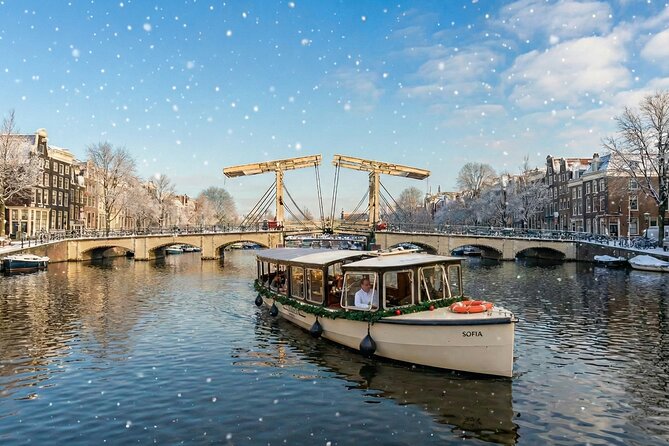
- Electric quiet and open-deck comfort on most days, with heating/closed boat in winter
- Live commentary that strings landmarks together, from Anne Frank to the Rijksmuseum dock area
- Cushioned seats, blankets, and umbrellas so you’re not frozen while you learn
- A small max group size (30 guests) that keeps the vibe personal and question-friendly
- An onboard bar for nonalcoholic drinks and beer, with drinks service available during the cruise
Electric Quiet + Heated Comfort: What’s On the Boat
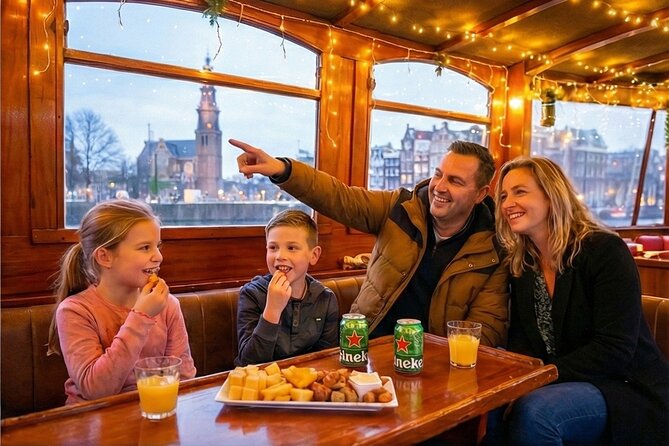
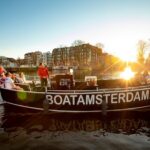
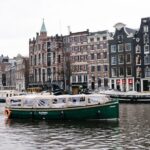
This is a luxury-style canal cruise, but the big practical win is the electric-powered boat. You trade the loud roar of older boats for a quieter ride, which makes the guide’s narration easier to follow.
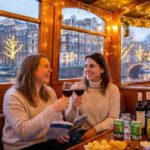
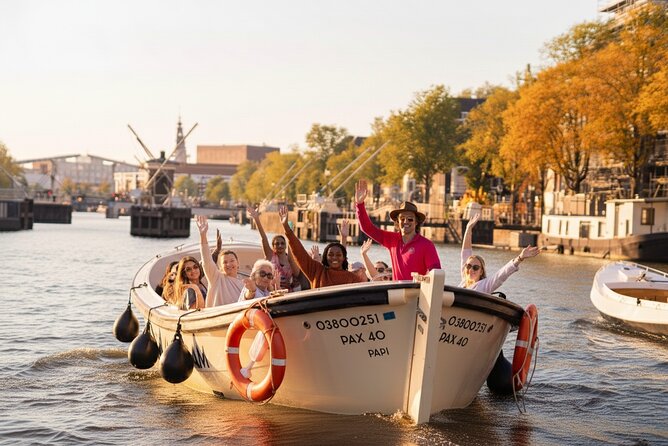
Comfort is handled upfront. You sit on a spacious open-air deck with cushioned seats, and on chillier days you get blankets and heating (the operator notes that in winter you use a closed and heated boat). Umbrellas are also included, which matters more in Amsterdam than you’d think. Even on a bright day, canal wind can turn brisk fast.
And yes, there’s a reason this feels relaxing instead of like a moving classroom. It’s still sightseeing, but your comfort keeps you present. You can focus on the buildings, bridges, and canal shapes without constantly adjusting your jacket.
You can also read our reviews of more boat tours in Amsterdam


Price and Value for a $26.59, 1-Hour City-View Reset
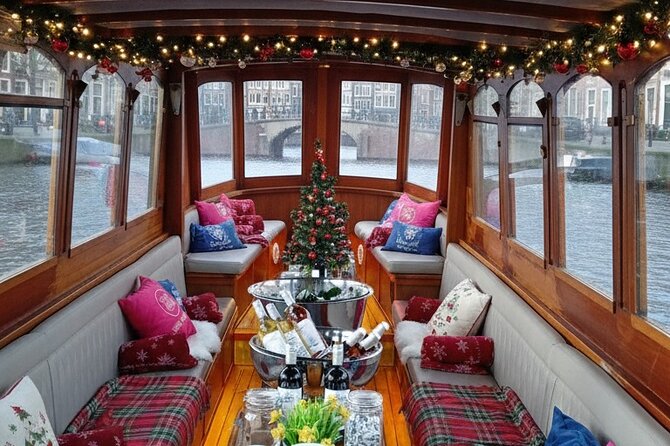
At $26.59 per person for about one hour, you’re paying for three things: (1) the boat ride itself, (2) the guide-led context, and (3) the comfort extras like blankets and umbrella. It’s not priced like a private charter, and it’s not trying to be a museum visit either.
For most visitors, this is the value zone. You get a guided overview of the canal system and key landmarks in a short window. If you’re only in Amsterdam for a few days, that kind of orientation saves time later when you’re choosing what to enter and what to simply photograph.
The onboard bar is extra, but it’s available for those who want something cold or something nonalcoholic during the cruise. Snacks are also not included (nuts are available for purchase), so plan to eat before or after if you want a full meal.
Meeting at Prinsengracht 261a: How to Start Without Stress
The meeting point is Prinsengracht 261a, 1016 GV Amsterdam. The cruise ends back at the same spot, so you’re not stuck figuring out a new neighborhood at the end of the hour.
Here’s the practical tip: give yourself a little buffer time. Some departures have run late in past experiences, and there are also notes about the company needing to be more proactive about helping guests identify the right boat when multiple cruises are lined up. Arrive early enough that you can calmly locate your vessel and get seated without rushing.
It also helps to think of this as a boat that boards in a simple, city-street way. One review flagged that boarding can be a bit hard for seniors, so if you’re mobility-sensitive, plan to take your time at the dock and keep an eye on crew instructions.
The 1-Hour Route Explained: Stop by Stop What You’ll Float Past
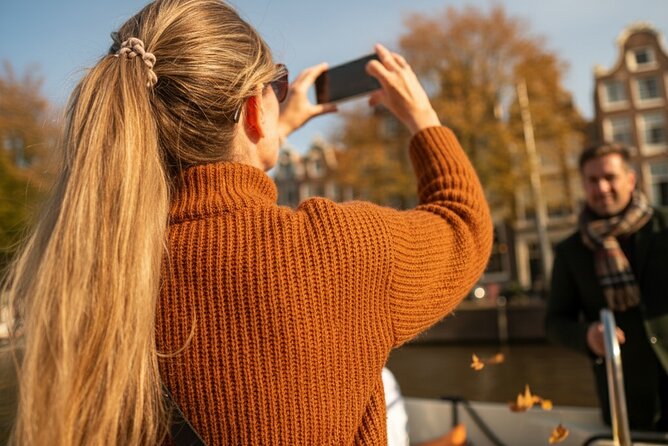
This cruise is designed as a guided pass-by experience. You’re not entering any museums during the ride, but you’ll get front-row water views and a mental map of why Amsterdam’s canal belt looks the way it does.
1) Anne Frank Area: Learning the Setting From the Water
The commentary begins with the museum where Anne Frank and her family hid from the Nazis. Even if you’ve already read the diary, seeing the area from the canal helps you understand how the city layout shaped what “hiding” meant—tight streets, enclosed canal segments, and buildings close enough to feel like neighbors.
You can also read our reviews of more guided tours in Amsterdam

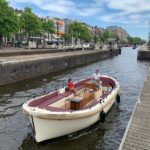
2) Romantic Wooden Bridge Views: The Skinny Bridge (Magere Brug)
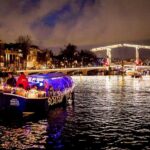
Next up is the wooden drawbridge called Magere Brug, also known to many as the Skinny Bridge. You’ll hear about why it earned that nickname: it used to be narrow enough that it could be difficult for two pedestrians to pass. The wider replacement bridge came in after rising traffic needs.
This stop works well on the cruise because bridges are visual landmarks. From the water, you can actually track how the bridge crosses the Amstel and how the river corridor pulls you through the city.
3) Canal Ring Basics: Why Amsterdam’s Grachten Look Like a Plan
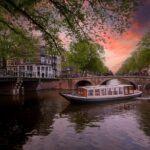
The guide then explains the big structure behind Amsterdam’s world-famous canal look: the Grachtengordel, built in the 17th century during the Dutch Golden Age. The core canals are Herengracht, Prinsengracht, and Keizersgracht, forming concentric belts around the city. The canal ring area (including Prinsengracht, Keizersgracht, Herengracht, and Jordaan) became a UNESCO World Heritage Site in 2010.
The useful part for you: this isn’t trivia for its own sake. Once you know what the canal ring is, you start recognizing patterns everywhere—where the neighborhoods sit, why some waterways feel more central, and how the city’s planning still shows up in your photos.
4) Rijksmuseum Dock Front: Big Architecture Moment
You’ll dock right in front of the Rijksmuseum. That means you get a strong, clear water-side view of the building and the canal frontage.
The guide also connects the stop to Rembrandt’s famous painting De Nachtwacht (Night Watch). Again, you won’t be touring the museum during the cruise, but you’re given the spotlight moment: look up at the façade, then look across the water and see how the museum sits like a landmark in the canal city.
5) Jordaan and Prinsengracht: A Neighborhood Loop You’ll Recognize Later
The tour notes that it starts and ends in the Jordaan, and that’s a big deal. Jordaan is where many visitors go for classic canal-house streets, small boutiques, and that “old Amsterdam” feel.
You’ll also hear about the Prinsengracht, including how it got its name (one theory ties it to French Jardin, while another links it to Jordaan/Jordan). Construction details are included in the guide’s talk, which can help you understand the canal’s age and why these waterways look engineered rather than accidental.
6) Houseboat Museum Area: How Amsterdammers Live
One of the most memorable segments from the pass-by list is the section along the Prinsengracht with the houseboat museum. This is one of those stops where the guide’s context really matters: you’re seeing daily life patterns, not just scenery.
It can be fun for kids too, because it’s a real-world “how do people live here” moment, not an abstract history lecture.
7) Boutique Streets and Local-Eats Mood
As you float through the Jordaan area, the route includes a pass-by of shops and smaller boutiques rather than chain storefronts. The focus here is the local feel: smaller restaurants, local designers, and vintage shopping streets.
This section is more atmosphere than landmark, but it’s a good reminder to you that Amsterdam’s charm isn’t only in the famous monuments. It’s also in the street-level texture you’ll want to walk later.
8) Entertainment Zone: Bars, Restaurants, and Nightlife Energy
The cruise passes through an entertainment area with lots of bars, restaurants, night clubs, and concert halls. The guide’s framing here is useful: it helps you place why some squares and waterways feel “social” while others feel quieter and more residential.
9) Spiegelgracht and Museumplein View Angle
You’ll also pass or reference the Spiegelgracht, described as connecting Prinsengracht with Lijnbaansgracht, and running into Nieuwe Spiegelstraat. The area is linked to the Spiegelkwartier, known for galleries and antique shops. If you’re planning museum time after the cruise, this is a helpful “where to go next” map moment.
10) Duifkerk: A Church Story With Restoration Layers
Next is De Duif (Duifkerk), with a historical arc that includes an earlier 17th-century hiding church and later building plans. You’ll hear how financial issues led to decay and how the church reopened in 2002 after restoration, when original murals reappeared under layers of wall paint.
This stop gives you something important: not every landmark is one straight line of time. Amsterdam’s buildings can be palimpsests—updated, covered, and uncovered again.
11) Amstel River Origins: The Dam That Became Amsterdam
The guide explains the Amstel as the biggest canal-like waterway and ties Amsterdam’s founding to the idea of a dam built by fishermen, creating the name Amsterdam. The talk also connects Amstel to beer.
From the water, that origin story becomes more believable. You’re literally cruising the river corridor where settlement patterns would make sense.
12) Westerkerk, Carré, and Culture Along the Amstel
You pass the Westerkerk area, then the route includes Royal Theatre Carré (Koninklijk Theater Carré), a neo-Renaissance theatre near the Amstel river originally designed as a permanent circus building and now mainly used for musicals, cabaret, and pop concerts.
The point for you is that culture in Amsterdam isn’t only museums. It’s also performance spaces, and the cruise helps you spot where these venues sit within the city.
13) Hermitage Amsterdam and the Blue Bridge (Blauwbrug)
Another major pass-by is Hermitage Amsterdam, a branch museum of the Hermitage Museum in Saint Petersburg, located on the banks of the Amstel river in the former Amstelhof building from 1681.
Then you’ll see the Blauwbrug (Blue bridge), an historic bridge over the Amstel connecting the Rembrandtplein area with the Waterlooplein area, south to Stopera.
14) Stopera Area: Dutch National Opera and Modern Architecture Neighbors
The cruise mentions the Dutch National Opera, based in the Stopera building (Dutch National Opera & Ballet), described as opening in 1986 and designed in a modern style.
This is another “pattern recognition” stop. You see how Amsterdam keeps adding new layers of architecture while still living inside an older canal system.
15) Zuiderkerk and Christian Landmarks in the City Shape
Next is the Zuiderkerk, described as the first Protestant worship church designed specifically for Protestant use in Amsterdam. It’s associated with neighborhood expansion and is located near what’s now the Nieuwmarkt neighborhood.
16) Museum Pass-Bys: Moco, Foam, and Photography
The route includes Moco museum for modern and contemporary art, plus pass-by mentions of photography-focused museums like Foam (also on Keizersgracht) and Huis Marseille (a photography museum in a monumental canal house dating from 1665).
Even without walking inside, it helps to have a sense of where these institutions sit. Later, when you’re deciding which museum ticket to buy, the cruise gives you location confidence.
17) Light Installations and Seasonal Amsterdam
The list includes Amsterdam’s winter light festival, with international artists illuminating streets and waterways. If you’re traveling in colder months, this is a reminder that your canal views can look completely different with lighting in the mix.
18) Markets and Church of the Common People: Noordermarkt and Noorderkerk
You’ll pass or reference the Noordermarkt, an old market on Mondays and Saturdays, with a tradition dating back to the 17th century. Nearby, you’ll hear about Noorderkerk, built 1620–1623 to serve a growing Jordaan population, designed by Hendrick de Keyser.
The useful angle here is social history: the cruise isn’t only about buildings. It frames who these places were for.
19) Nieuwmarkt Area: De Waag, Chinese Area, and Red-Light District Edge
The itinerary includes the area combining the Chinese quarter and red-light district vibe, with a pass-by of De Waag. You’ll hear it was a 15th-century city gate later used as a hedge and had other functions over time, including as an anatomical theater.
From the canal, this part of Amsterdam can feel surprisingly readable. You can connect street-in-your-face reality with older structures that still exist.
20) Amsterdam’s Cheese Museum and Food-Story Stops
The route also mentions the Amsterdam Cheese Museum, framed as an “experience” with Dutch cheese history and tasting. It’s a fun stop if you like food-themed learning, and on a cruise it works because it adds personality to the city map.
21) Inner Waterways: Singel and the Medieval City Edge
You’ll get mention of the Singel, a canal that once encircled the city like a moat until the city expanded beyond it. It runs from the IJ bay near Central Station to Muntplein where it meets the Amstel river and is now the inner-most canal ring.
This is one of those “small detail that clicks” moments. It helps you understand why some waterways feel more “old city” while others feel like later extensions.
22) More Canal Bridges: Munttoren and Small-Scale Landmark Thinking
The route includes the Munttoren (Mint Tower), formerly part of medieval Regulierspoort, built between 1480 and 1487, and used for minting coins in the 17th century.
This is useful because tower-and-gate landmarks are often easier to recognize from a moving boat than low house details.
23) Bloemenmarkt (Flower Market): Tulip Bulbs and Souvenirs
You’ll pass the Bloemenmarkt and the flower market stalls selling tulip bulbs and classic Dutch souvenirs. It’s short, but it adds color to the cruise, especially when the canal wind is already making you want warm distractions.
24) Hortus Botanicus and More “Pick a Day” Attractions
The route mentions Hortus Botanicus Amsterdam, a botanical garden with thousands of plants in an area around 1.2 hectares. It also includes references to other museum spots like the Amsterdam Museum and various canal houses that you might want to revisit later.
A cruise can’t replace entry tickets. But it can help you choose what deserves your time on foot.
Comfort on Board: Blankets, Umbrellas, and a Bar You’ll Actually Use
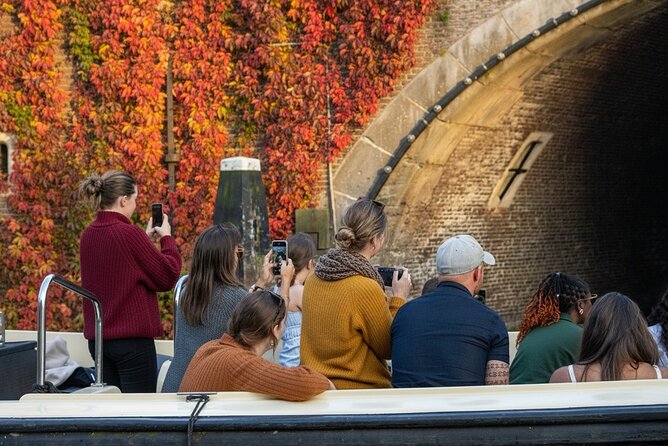
Let’s be honest: the comfort features are part of the value. Cushioned seats and blankets mean you can keep your hands free for photos and still enjoy the guide.
In winter, the switch to a closed and heated boat is a big plus. You won’t have to choose between learning and surviving the cold.
Also, there’s a bar onboard. Alcoholic beverages are not included, but you can buy drinks during the cruise. One recurring positive note is that beer can be cold and replenished quickly when you’re getting your next sip.
If you’re planning to bring your own snacks, the data only says nuts are available for purchase, and it doesn’t mention outside food rules. So I’d stick to the safer plan: plan your meals around the cruise and use the bar for drinks only.
Live Guide Style: Light, Funny, and Still Useful
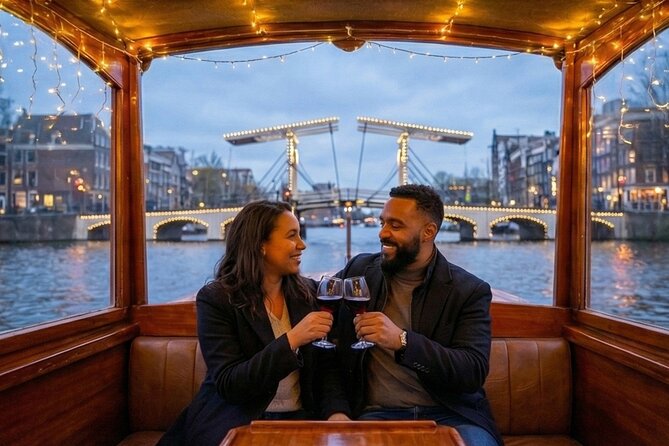
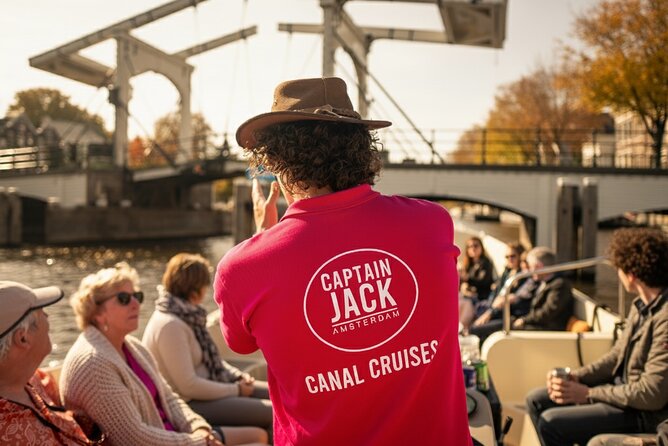
This cruise is built around live guide commentary, and the tone is often described as fun and entertaining rather than stiff. That’s actually the right style for a canal cruise. If the guide is too formal, you’ll spend your hour listening instead of looking.
The best part for me is that the guide doesn’t just point out names. You get context about the canals, why the ring exists, why UNESCO status matters, and how the city’s social history shows up in churches and neighborhoods.
There can be a downside. One complaint mentions the captain radio being loud enough to make the guide harder to hear. That’s not something you can control. What you can do is be ready to adjust your position on board and flag it immediately if you truly can’t hear.
Potential Snags You Should Know Before You Go
Here are the realistic considerations, based on past experiences:
- Timing slips can happen. If you’re connecting to another walking plan, build in buffer time.
- Audio can vary. The radio is needed for safety, but it can interfere with hearing the guide if volume is too high.
- Boarding may be awkward for seniors. If you have mobility concerns, go slowly and follow crew help.
- You’ll likely still get a standard pass-by route with onboard bar. One complaint said there was confusion about what was included, so make sure your expectations match a 1-hour sightseeing cruise format with the bar available.
None of this sounds like a dealbreaker. It’s just smart to go in with eyes open.
Should You Book This 1-Hour Canal Cruise?
Book it if:
- You want a guided canal overview that helps you understand the city fast.
- You’re traveling with kids or teens who do better with stories than straight museum time.
- You care about comfort and you don’t want to freeze on an uncovered deck in colder weather.
- You like tours where you can ask questions and interact without feeling rushed, thanks to the small group size.
Skip it if:
- You need extremely detailed, stop-by-stop depth like a full walking museum tour.
- You strongly dislike any risk of audio issues from onboard safety radio volume.
- You’re the type who absolutely must be on schedule minute-by-minute.
For most people, though, this is a high-value way to see Amsterdam as a system: canals, bridges, neighborhoods, and the big landmark anchors like Anne Frank’s area and the Rijksmuseum.
FAQ
How long is the Amsterdam 1-Hour Canal Cruise?
The cruise lasts about 1 hour.
Where is the meeting point?
Meet at Prinsengracht 261a, 1016 GV Amsterdam, Netherlands.
Does the tour end back at the meeting point?
Yes, it ends back at the meeting point.
Is the boat open-air or covered?
It’s open-air on many outings. The operator also states that in winter time they use a closed and heated boat.
Do I get a live guide?
Yes. The cruise includes live guide commentary.
What comfort items are included?
Included items are blankets and umbrellas.
Is alcohol included?
No. Alcoholic beverages are not included, though there is a complete bar where you can buy drinks (non)alcoholic beverages.
Are snacks included?
No. Snacks are not included. Nuts are available for purchase.
How many people are on the cruise?
The tour has a maximum of 30 travelers.
Is the cruise dependent on weather?
Yes. It requires good weather. If it’s canceled due to poor weather, you’ll be offered a different date or a full refund.
If you’d like, tell me your travel month and whether you’re more into history, architecture, or photo stops. I’ll suggest the best time of day to do this cruise and what to pair it with next.